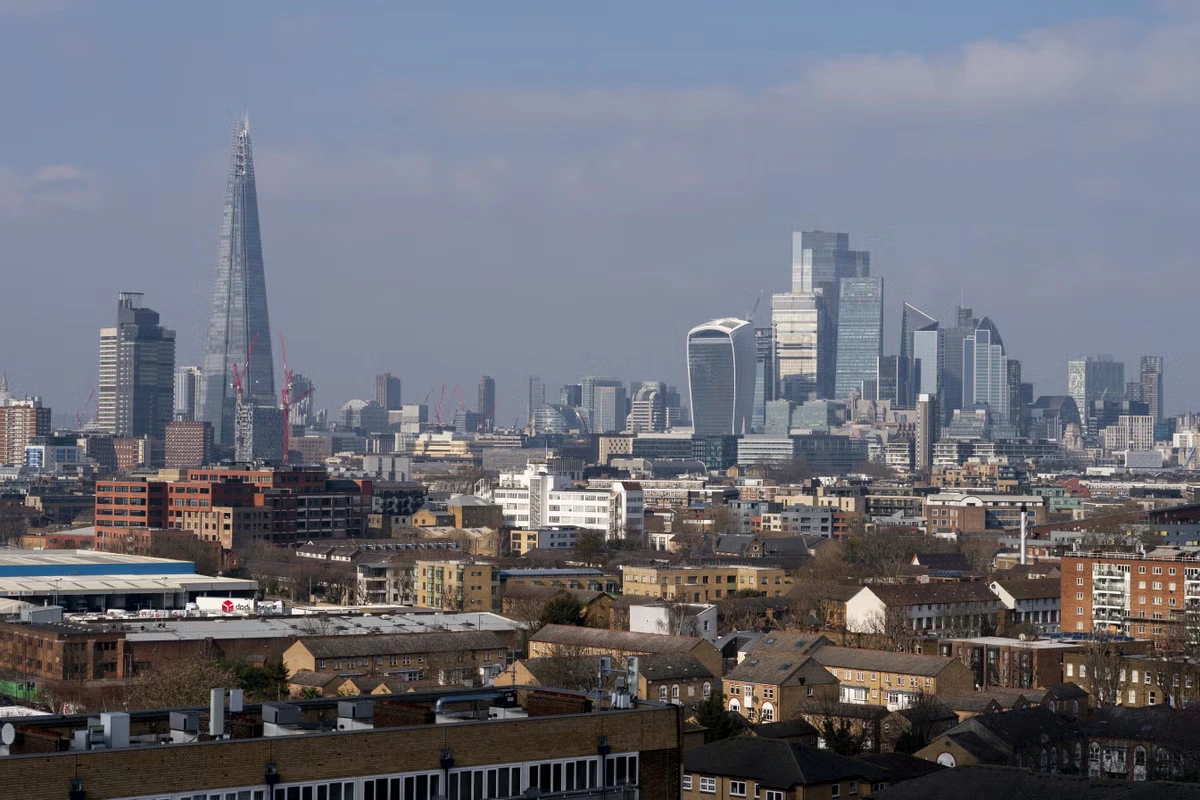
The UK economy is expected to have remained stagnant for another month, with industries under pressure and geopolitical tensions hindering growth.
The Office for National Statistics (ONS) will publish May’s gross domestic product (GDP) figures on Thursday.
Economists widely anticipate GDP either flatlined or declined in May, following April's 0.1 per cent slip. This marked a sharp pullback from 0.3 per cent growth in March and 0.4 per cent in February, the first contraction since last August.
The April decline was led by a fall in the dominant services industry, despite offsetting growth in construction and manufacturing. Surging fuel and energy costs squeezed businesses and households through April and May, though wholesale prices have recently eased.
Chancellor Rachel Reeves commented on the impact, stating it was "not a war we wanted or joined, but one that will have an impact at home".
Pantheon Macroeconomics said it was forecasting another weak performance for the services industry but a more mixed bag across the wider economy, with subsectors like energy supply boosted by higher oil prices.
Its analysts are expecting GDP to have shown no growth in May.
Deutsche Bank said it was expecting GDP to have declined by 0.1 per cent in May in a more downbeat outlook for the economy.
Its chief UK economist Sanjay Raja predicted that services activity remained “sluggish” in May, including information, professional and financial services, and real estate.
However, Mr Raja said it was “not all bad news” for the economy, adding: “Anecdotally, retailers pointed to a combination of promotions and warmer weather boosting demand for items such as outdoor furniture and fans.”
Looking ahead, he also suggested that some sectors could get a boost this month as England has gone further in the Fifa World Cup and some pubs and bars have benefited from extended opening hours and busier periods.
Ms Reeves, who spoke to the BBC’s Sunday With Laura Kuenssberg in what could be one of her final major broadcast interviews as Chancellor, acknowledged the public was “impatient for change” when asked why Sir Keir’s ministry was being ousted in a Labour leadership contest.
She said: “I’m impatient for change, and I totally get that people want to see their lives changed faster, and that will be the job for Andy Burnham when he becomes a prime minister of our country in just over a week’s time.
“But he’s becoming prime minister because of the majority that we secured.
“I also know because of the work that I have done, Andy will take over an economy that is much stronger than the one that I inherited from the Conservatives just two years ago.”