Andy Burnham is expected to become Britain’s prime minister in just 25 days’ time after Sir Keir Starmer announced his resignation on Monday with an emotional statement in Downing Street.
Just under two years since leading Labour to a historic landslide election victory, Sir Keir said he accepted he had lost the support of his MPs and vowed to step down “with good grace”.
He said nominations would be taken on 9 July for his replacement, opening the way for a possible contest – but a “coronation” of the former Greater Manchester mayor was all but confirmed when his main rival Wes Streeting backed him to lead the party, making it almost certain that Mr Burnham will be the only candidate when nominations close on 16 July.
Some Labour MPs tried to persuade Sir Keir’s chief secretary Darren Jones to stand in order to force a contest, but a source described that outcome as “unlikely”.
Mr Burnham was greeted with loud cheers from the Labour benches in the House of Commons as he was finally sworn in as an MP following last week’s by-election victory in Makerfield. His train journey from Manchester Piccadilly to London Euston was tracked live on news channels.
One MP heckled his signing-in, joking: “He’s not the messiah!” Acknowledging the reference to Monty Python’s Life of Brian, Mr Burnham replied: “Naughty boy.”
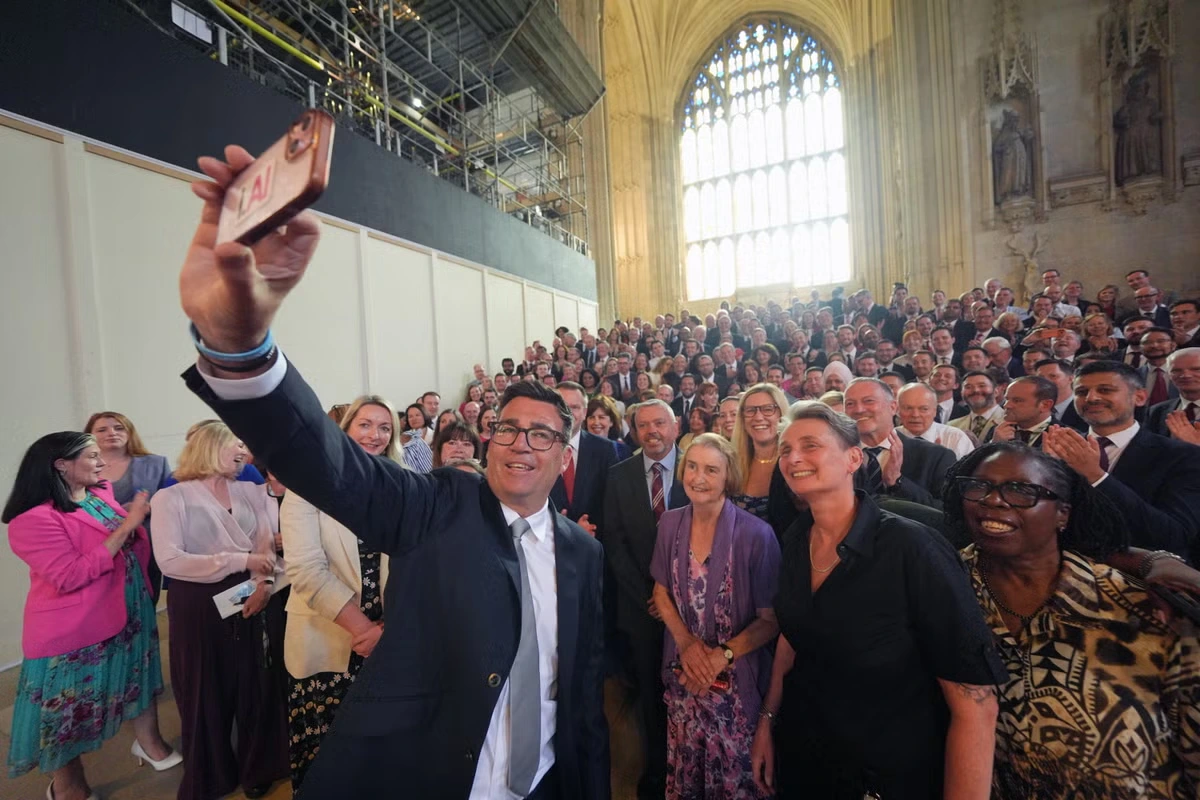
Labour MPs – except Sir Keir – then joined him in Westminster Hall for a photo with the man they expect to be their next leader, with one wryly describing the day’s events as “regime change”.
Mr Burnham now has until 17 July, when nominations officially close for candidates, to form his top team and confirm his policy priorities.
Sir Keir stays on until a successor is appointed. He said he would ask Labour’s ruling National Executive Committee (NEC) to set out a timetable that would see the new leader in place when parliament returns from its summer recess on 1 September.
However, the anointing of a new leader could come much sooner, with nominations closing on 16 July. Potential candidates have until then to amass the support of at least 81 Labour MPs. But if Mr Burnham is the only candidate to have gained enough supporters by that point, he will become leader without a vote of the membership and is likely to become prime minister on either 17 or 18 July.
Sir Keir announced his resignation after giving up on fighting to save his job following a weekend at Chequers reflecting with his closest political allies, friends and family.
Flanked by Lady Victoria, with his closest aides gathered behind him, he said he had “saved the Labour Party” and reeled off a series of achievements in government, but conceded he could no longer lead the party having lost the support of MPs.
He said his party had asked “whether I am best placed to lead us into the next general election”, adding: “I have heard the answer of my parliamentary party to that question, and I accept that answer with good grace.”
He pledged to give his successor “full and unequivocal support, knowing that they will inherit a Britain that is far stronger and fairer than the one I inherited two years ago”.
His voice cracking with emotion, he added: “When I leave the biggest job in the country, I shall spend more time on the most important job, being the best husband I can to my fantastic wife, Vic, who has been a rock by my side through good times and bad, and being the best dad I can to my beautiful children, who are my pride and joy.”
The resignation follows Mr Burnham’s dramatic victory in the Makerfield by-election, a result that was seen by many in Labour as proof the former Greater Manchester mayor is able to communicate Labour’s message and beat Reform UK in a way Sir Keir could not.
Having promised a new age of stability “after the Tory chaos”, Sir Keir’s dramatic downfall came after his personal ratings hit rock bottom amid the fallout over the Mandelson scandal and concerns over the direction of government, including rows on welfare and defence spending.
With at least a dozen resets, a major reshuffle, at least 13 U-turns and the sacking of some of his inner circle of staff, Sir Keir was never able to get on the front foot with his government.
It is a remarkable fall from grace for a man who, in July 2024, brought Labour back from 14 years in the wilderness with a massive majority of more than 170.
Sir Keir has spent his 23 months in power largely under siege. His government never enjoyed a honeymoon period, and he was hit by a summer of riots after the Southport murders, before facing major backlash over the government’s hugely unpopular attempts to slash winter fuel payments for pensioners, as well as welfare cuts for those with disabilities.
This was followed by months of plots to replace him, but it is the saga over the appointment of Peter Mandelson, who had been a key figure in both the Tony Blair and Gordon Brown governments, that has dogged the prime minister for months.
It raised questions about Sir Keir’s integrity and judgement of character, which came to the fore when new revelations about Lord Mandelson’s close links with Epstein became public.
Sir Keir’s decision to quit means the UK will now have its seventh prime minister in a decade.
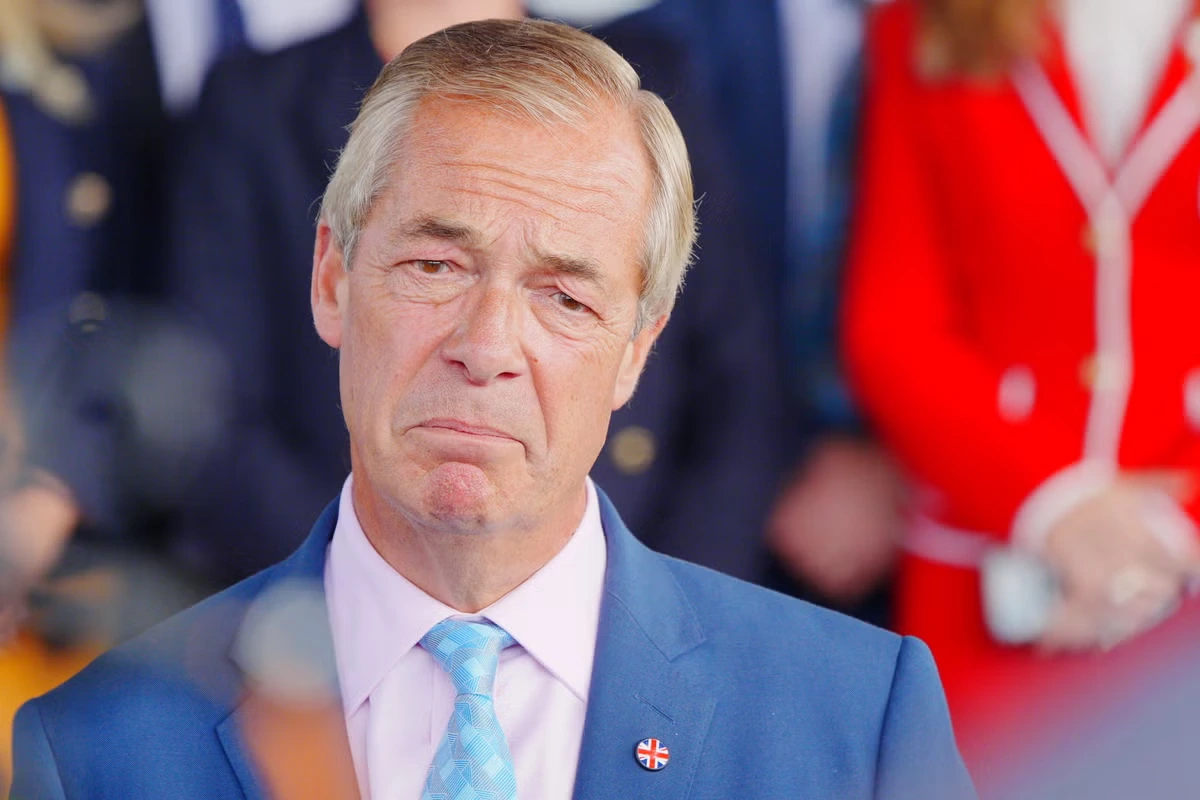
Reform UK leader Nigel Farage called for a snap general election: “If Labour thinks it can shove another professional politician into No 10, it has another thing coming.”