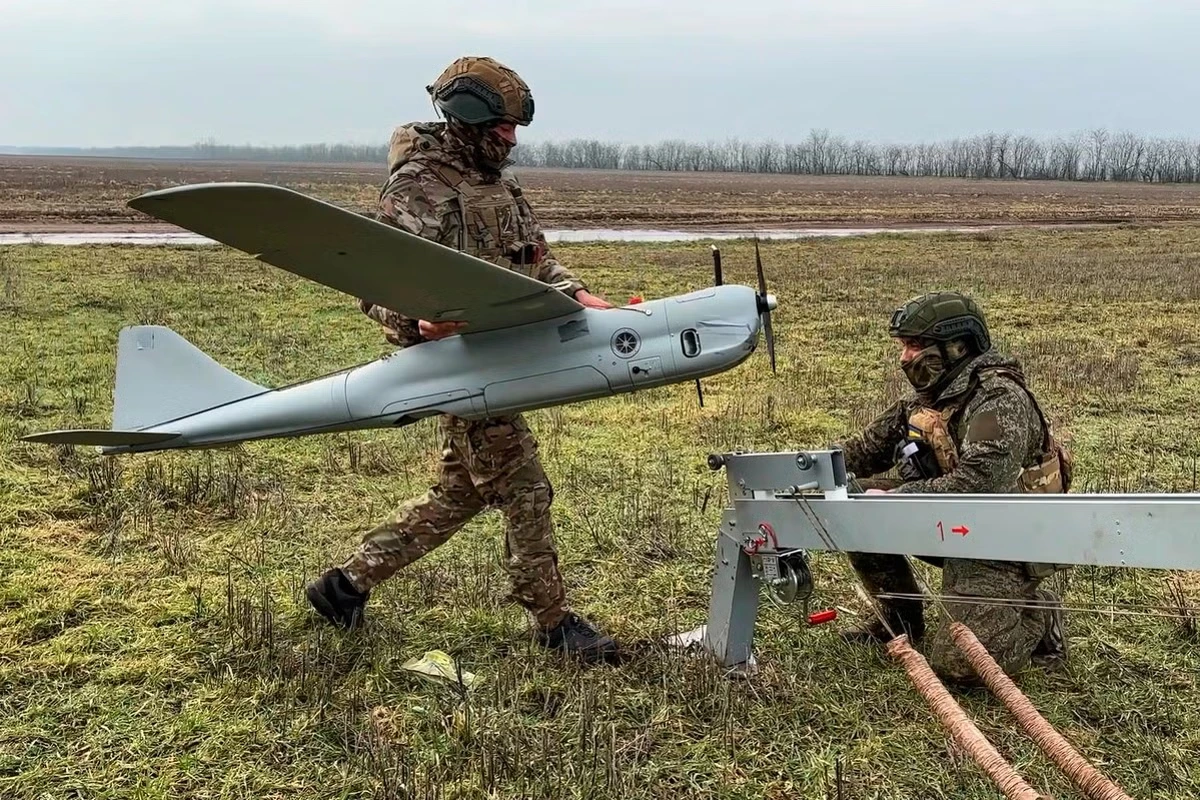
The Kremlin orchestrated a major surveillance campaign on nuclear sites across Europe – including Britain – using drones launched from one of Russia’s shadow fleet tankers, experts believe.
The findings could bring to an end a two-year mystery that started when drones were spotted flying over four sensitive US military bases in the UK.
Investigators believed they were being flown by live operators, but no launch sites were found.
Now experts at the International Institute for Strategic Studies (IISS), a London-based think tank, have discovered that HAV Dolphin, a Russian-crewed cargo vessel, was docked near Hull at the time. Another vessel, the Seasons 1 tanker, was also in the North Sea near Essex.
Having tracked the HAV Dolphin’s movements, they say it is “highly likely” that Putin waged a drone campaign in Nato airspace across Europe between August 2024 and February 2026, as part of what they say is the “Kremlin’s wider unconventional war on Europe”.
The concerted surveillance campaign targeted nuclear sites in the UK, France, Belgium and the Netherlands, the researchers said.
And an analysis of 144 incidents in more than a dozen countries over an 18-month period concluded Russian intelligence had operated with “substantial impunity”, according to the report, first published by The Times.
It warns: “The unmanned aerial vehicle (UAV) campaign operated with substantial impunity across European airspace - representing both a series of tactical successes for the Kremlin and a strategic failure of allied air defence.”
In November 2024 drones were spotted over RAF Lakenheath and RAF Mildenhall, in Suffolk, RAF Fairford in Gloucestershire and RAF Feltwell, in Norfolk.
At the time four B-52 bombers were based in RAF Fairford as part of an American task force.
The drones were also heard buzzing above Lakenheath, where facilities were being built to house nuclear weapons.
The US has had military bases in the UK for more than 70 years.
The report’s authors said that Moscow’s success was because of the “basic strategic insight” that “Europe’s air-defence architecture was designed to detect and defeat conventional air threats operating in a recognisable battlespace” rather than drones.
They said vessels could have acted as a “network relay system”, with one or two deploying and recovering drones and a third providing intelligence to the drone and its operator.
HAV Dolphin, which sails under the flag of Antigua and Barbuda, is currently thought to be off the coast of Portugal.
Earlier this week Keir Starmer unveiled the long-awaited defence investment plan (Dip), with a promise to increase defence spending by £15 billion, and modernise the armed forces so they are prepared for drone attacks and the threat posed by Russia.
But the government is yet to spell out how almost a third of the blueprint will be funded, with a decision on where that £4.7 billion will come from to be made at the Budget in the autumn. That will prove a headache for Sir Keir’s likely successor Andy Burnham, who was only briefed about the financial ‘black hole’ on Tuesday.
Ministers also recently announced new laws designed to crack down on Russian interference in the UK, warning saboteurs that if they deliberately damage vital undersea internet cables around Britain, they will face jail.
Miniser Baroness Lloyd said the UK’s message to Putin was simple: “We can see what you are doing and any interference will have serious consequences.”
This is a breaking news story, more follows ...