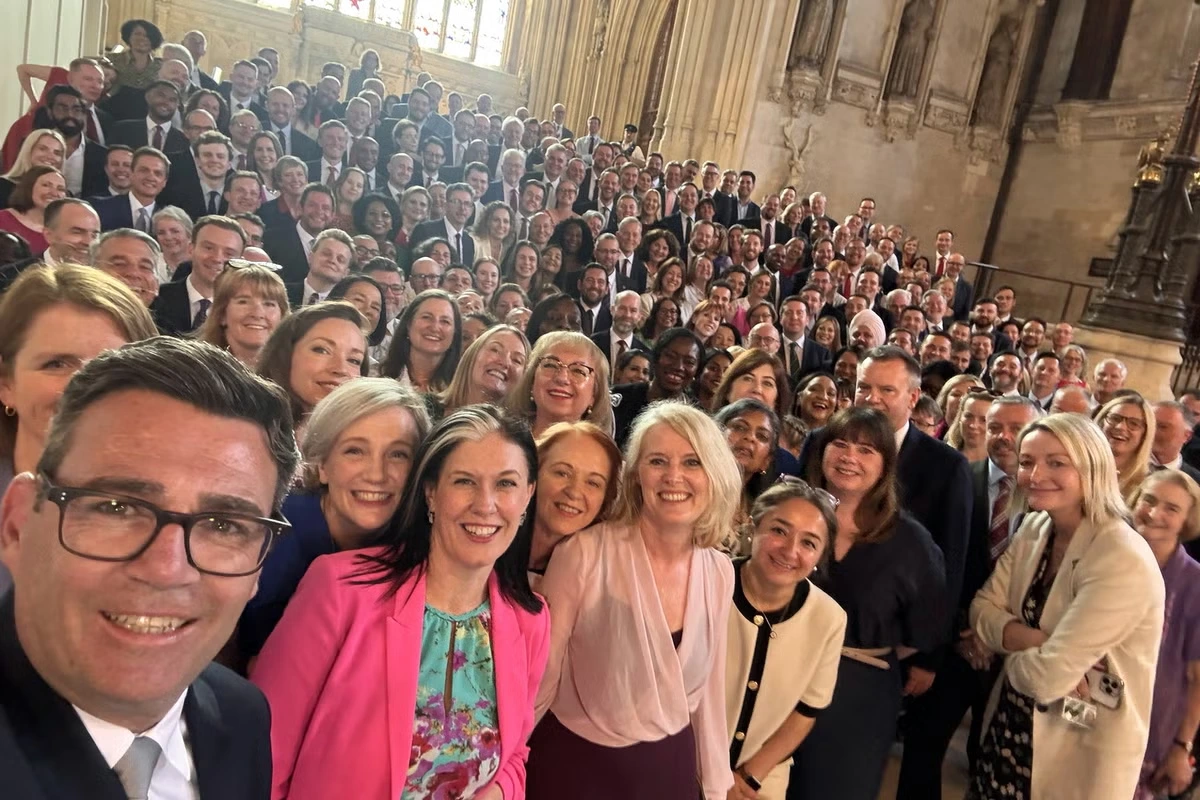
The young and old may disagree on many things, but there is one subject that they all agree on: the government over the last ten years has been an unmitigated disaster. Andy Burnham, who won the Makerfield by-election by a landslide, looks likely to be our seventh Prime Minister in a decade. To the younger generation it makes leadership in this country feel less like stable stewardship and more like a reality TV contest, and the type where 'characters', not necessarily talent, wins.
Being an adult witnessing all of this is depressing enough, but it is leaving a younger generation with the impression that no one is in charge. And a world characterised by political incompetence and growing cultural and social division is having a devastating effect on young minds and hearts who have never looked at the state of play in the UK and thought, ‘this seems to be going well’.
Lady Eleanor Holles is a private day school in Hampton that places a focus on a sophisticated understanding of politics and encourages critical thinking and debate. Speaking to Year 12 students Mya Mahal, Mimi Marson, Lucy Lovatt and Zahra Buchanan (all 17), as yet another prime minister handed in his resignation, the feeling of being let down again was palpable.
They were all in agreement that the chaotic nature of the political system sets a poor example to them and their peers and, as Mimi said, "our whole leadership has been reduced to a meme and a joke on TikTok, with people volunteering their dads, pets and random celebrities as the next PM, as they'd probably do a better job."
The girls, who were seven when David Cameron left power, think his coalition government with Nick Clegg was the last time the UK looked even remotely stable. And then that was just because he actually stayed the course – despite the fact he was the harbinger of Brexit.
All the girls believe there would be a different result if the referendum was held again today, as their generation have grown up with the pain and division wrought by Brexit. Lucy Lovatt worries how much extremist politics now appeals to her generation because "people of all ages get attracted to 'characters' who make promises they can't keep, and benefit from society being divided."
The fact that, to these girls, Larry the Cat seems the most stable element of the current UK government means something has gone very wrong indeed. More so when you consider that nobody in charge seems to have many ideas about how to fix it, and no one currently in politics stands out to them as someone who excites them as a potentially transformative leader.
Attending a comprehensive in Wembley, Solly, 15, comes from a very different background to these girls, but what is striking is how similar his view of government is. He lives on an estate with his mum and three siblings, and describes a world where everyone feels like the government is obsolete in every way. And, even worse, he believes, to some extent people are taking advantage of that.
He explains: "Where I live, there is a lot of crime and a lot of poverty, and everyone I know has figured out the system has stopped working for them, so they are just taking care of themselves. People know if they shoplift nothing is going to happen. I know at least ten people who are dealing (drugs) just to survive and they aren't worried, because the police aren't bothered anymore.
"One of my mates' sisters got raped. Nothing was done. And everyone knows there isn't even any room in prison anymore. It's like everything has broken down, no one is in charge, so of course people are just looking out for themselves."
I ask Solly if he thinks things have gotten worse in the last ten years? He explains, "I would say so, definitely. Petty stuff is off the scale, but it's not because people are more criminal, it's because they literally can't afford to feed their families. My mates aren't stealing, like, trainers. They're stealing groceries and bits for their mums. And because people have less and less, tension rises and people carry knives and even guns. But no one cares unless some footballer's Rolex gets nicked. But no one is talking about people not being able to afford food."
'Broken' is a word you hear endlessly talking to young people. For the younger generation, a broken political system is just another broken thing in the mess of a broken economy, broken jobs system and many, many broken institutions – all of which are impacting their present and future.
When someone comes in and promises to be different, and also offers them something many of them have never felt, a sense of pride, this is a compelling message. And might explain how Reform and Restore are turning heads among this cohort.
Stuart, 16, parents have voted Labour his whole life, something Stuart now feels intensely angry about. "Labour and all their idiots in charge have made it like a crime to be proud of being British. But that's mad. If you can't be proud of your country, how can you be expected to take care of it, or fight for it or look after your neighbour?
"I was quite up for Nigel Farage, but my best mate is Sikh, and his grandad has worked here since the sixties and is awesome. I am just so depressed with our country. It's like there's absolutely no one who is going to do anything and not be useless or a criminal."
What's interesting is that one might assume this perception of chaos and brokenness might be inspiring Generation Z and older Generation Alpha into becoming the change they want to see. But such is the youthful pessimism among them that the majority – across the socioeconomic spectrum – now believe government, as it currently exists, makes no difference at all – and, in many ways, it's hard to argue with this.
This is a generation whose formative years were spent against a backdrop of government incompetence, self-enrichment, failed promises and endless squabbling, but with no real change or improvement from a Labour government led by Keir Starmer. Young people are increasingly of the view that politics is all hot air and broken promises that benefit absolutely no one except the already privileged – and usually older people.
Until someone puts their concerns first and fulfils the pledges of affordable housing, cheaper university, fairer education and dropping crime rates, whoever is in power has become quite meaningless.
Indeed, the one thing that young people perceived as 'theirs' and provided a kind of alternative economic and cultural system was social media. Cosima Wiltshire (20), who is a strategist and researcher for UCL, UNICEF and FlippGen, believes the government has made a huge error in ignoring how young entrepreneurs were able to make money from social media, as it was a system that often worked for them. Whether selling stuff on the TikTok Shop or creating a following out of being knowledgeable about anything from skincare or cricket, personal brands were being built on-line and money was being made.
This is now set to be taken away next spring, leaving thousands of young people who had found an income and professional identity online bereft and even angrier at leaders who they feel have waged war on young people, and harmed them every step of the way.
Whoever steps into No. 10 in the coming months needs to not only to show they care about young people, but also recognise how furious they are and make their needs a priority. There is a distinct belief with young people – but older generations too – that this is all a bit of a game to politicians and, when the cameras stop rolling and the House of Commons adjourns, there is a bit of back-slapping and they all go and get an expensive glass of wine on expenses.
But without any solid leadership forging a hopeful path, the game is over. This country's youth has been pushed to the absolute limit and there is zero faith in government irrespective of where on the political spectrum they sit. If the next Prime Minister wants to have a country to rule, young people need to feel a real change in their lives. A new leader and cabinet should start at the bottom, where the youngest and most in need sit, and build from there.
Andy Burnham has talked a lot about hope. If he does become our next prime minister, he would do well to recognise there isn't anything more hopeful than to invest in the next generation. Do things to make them feel safe, cherished and proud to be part of this country. These are the people who have our future in their hands. There's a lot of work to do to win them over.