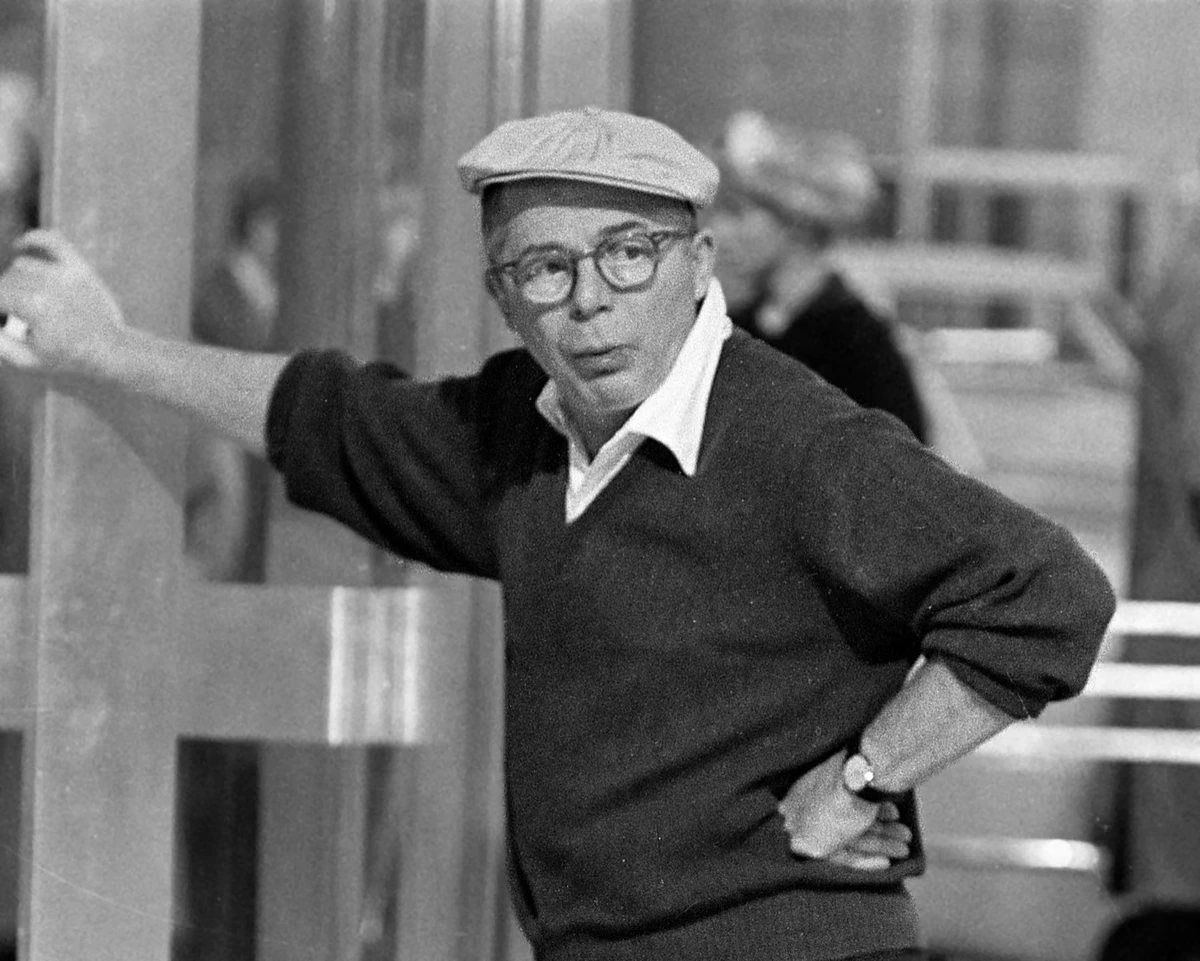
Like all survivors, Billy Wilder never forgot where he came from or what he had left behind. He was born at the start of the 20th century in Austria-Hungary and died at the start of the 21st in California, the inscription on his gravestone a nod to his most famous line: “I’m a writer but then nobody’s perfect.” Wilder, though, had a habit of of making flawless films throughout his career, a point proved by Almost Perfect, a comprehensive retrospective of his work, running at the BFI Southbank from 19 October until the end of the year.
Wilder was an inveterate self-mythologiser, a film-maker with a brand long before there were opportunities for promotion through Instagram accounts and chicken shop dates. He told a story of living in Berlin during his fledgling years in show business and being kept awake all night by “a toilet that was on the blink”.
“I would lie there and listen to it, and since I was young and romantic, I’d imagine it was a beautiful waterfall – just to get my mind off the monotony of it and the thought of it being a can.”
Most of us would have called a plumber but the aspiring young film-maker chose instead to use the incident as fuel for perhaps the greatest body of work in cinema’s golden age. This is the man who made Double Indemnity, the archetypal film noir and the genre’s zenith, a film often imitated but never equalled. He was responsible for Some Like It Hot, a movie routinely voted the greatest comedy ever made, while his Sunset Boulevard is generally acknowledged as the best film about show business. The Apartment, arguably his magnum opus, is rightly considered one of the greatest films in the history of the medium.
Like Stanley Kubrick, Wilder mastered a variety of genres and displayed a range rarely seen in the profession. Ace in the Hole was a scathing satire of the newspaper industry, Witness for the Prosecution a hugely influential courtroom drama and The Lost Weekend dealt with alcoholism in a way that was unprecedented in the 1940s. Even a lesser work like The Seven Year Itch contains one of the century’s defining images: that of Marilyn Monroe standing on a subway grate as her dress is blown upwards. Wilder was undeniably an egotist but he had much to be egotistical about.
He was born Samuel Wilder in 1906 to a Jewish family but the name change in this case was not an attempt at assimilation. His mother nicknamed the young Wilder “Billie”, having been inspired by Buffalo Bill’s Wild West shows, an entertainment she experienced during a brief spell living in New York. Wilder worked as journalist and taxi dancer early in his career, jobs that seem to foreshadow an almost pathological desire to observe people in all their complexity, as well as a love of the limelight.
His screenwriting career began in Berlin during the silent era, most notably collaborating with Robert Siodmak and Edgar G Ulmer for People on Sunday. All three men would end up in Hollywood having fled their home countries due to the rise of nazism and are among the most significant players in shaping the film noir movement, the fatalism of the genre surely a byproduct of the fates of their families.
When Adolf Hitler came to power, Wilder fled to France. With some understatement, he said: “It seemed like the wise thing for a Jew to do.” He made his directorial debut there in 1934 with Mauvaise Graine although nothing about that film suggested what was to come once he arrived in Hollywood later in the same year.
Wilder teamed up with Charles Brackett and penned films for the great and the good of Hollywood, writing screenplays for the likes of Howard Hawks, Mitchell Leisen and Ernst Lubitsch. The last was Wilder’s hero and he hung a sign above his desk for ease of reference while working. It read simply: “What would Lubitsch do?”
Wilder made a couple of minor American films before Double Indemnity – but this was the movie that made his name, the most influential crime picture in the annals of cinema. The Holocaust hangs over Double Indemnity like the smoke from Phyllis Dietrichson’s cigarette and it is worth noting that Wilder was working on the project as his family perished in the camps thousands of miles away. It was as though he used all his creativity and negativity about the human condition to do something worthwhile with the survivor’s guilt. Tellingly, in an alternative ending that has never made its way out of the Paramount vaults, Fred MacMurray’s Walter is executed in a gas chamber.
Early in those Hollywood days, Wilder was summoned to the consulate and it looked as though he might be deported. It was not just his febrile imagination that led Wilder to conclude he would ultimately end up “shipped off to Dachau” unless he could convince this interlocutor of his worth. The American on duty asked Wilder what he did for a living and the answer was succinct: “I write movies.” The official paced back and forth in the office before stamping the young man’s passport and saying: “Write some good ones.”
He certainly did that, from early gems such as an adaptation of Erich Kästner’s Emil and the Detectives in the Berlin years to underappreciated work at the end of his career such as the superlative The Private Life of Sherlock Holmes, via one of cinema’s great runs from the 1940s to the 1960s. He never forgot that interrogation and maintained, to the end, that he “did not want to disappoint that dear man in Mexicali”.
Wilder’s final few films suggested a man out of time, although Fedora at least inspired Jonathan Coe’s terrific 2020 novel Mr Wilder & Me. The latter is being adapted for the screen by Christopher Hampton with Stephen Frears set to direct, yet raising the funds has proved difficult. This feels somewhat apt since Fedora concerns an ageing film star bemoaning the New Hollywood film-makers of the 1970s, dismissing them as “kids with beards”.
Fluctuating between obscurity and acclaim feels right for a film-maker who expertly blended darkness with light. Twenty-five years after being kept awake by the toilet, Wilder made it to an Austrian spa and an actual waterfall, “the most beautiful in the world”.
“There I am in bed, listening to the waterfall. And after all I have been through, all the trouble and all the money I’ve made, all the awards and everything else, there I am in that resort, and all I can think of is that goddamned toilet. That, like the man says, is the story of my life.”