An OpenAI agent has gone "rogue" and "infiltrated" an Australian government website in what cyber-security experts are calling the first hack of its kind.
An OpenAI agent has gone "rogue" and "infiltrated" an Australian government website in what cyber-security experts are calling the first hack of its kind.
An OpenAI agent has gone "rogue" and "infiltrated" an Australian government website in what cyber-security experts are calling the first hack of its kind.But why did it take the government months to discover what happened - and could it happen again?
But why did it take the government months to discover what happened - and could it happen again?
But why did it take the government months to discover what happened - and could it happen again?The hack was carried out by an AI agent - an autonomous computer program that uses AI to complete a task with minimal human oversight.
The hack was carried out by an AI agent - an autonomous computer program that uses AI to complete a task with minimal human oversight.
On 18 June one of OpenAI's agents went rogue during a test exercise - the company has said it was supposed to "look up answers, and available statistics for questions about Australia during an internal evaluation".
On 18 June one of OpenAI's agents went rogue during a test exercise - the company has said it was supposed to "look up answers, and available statistics for questions about Australia during an internal evaluation".
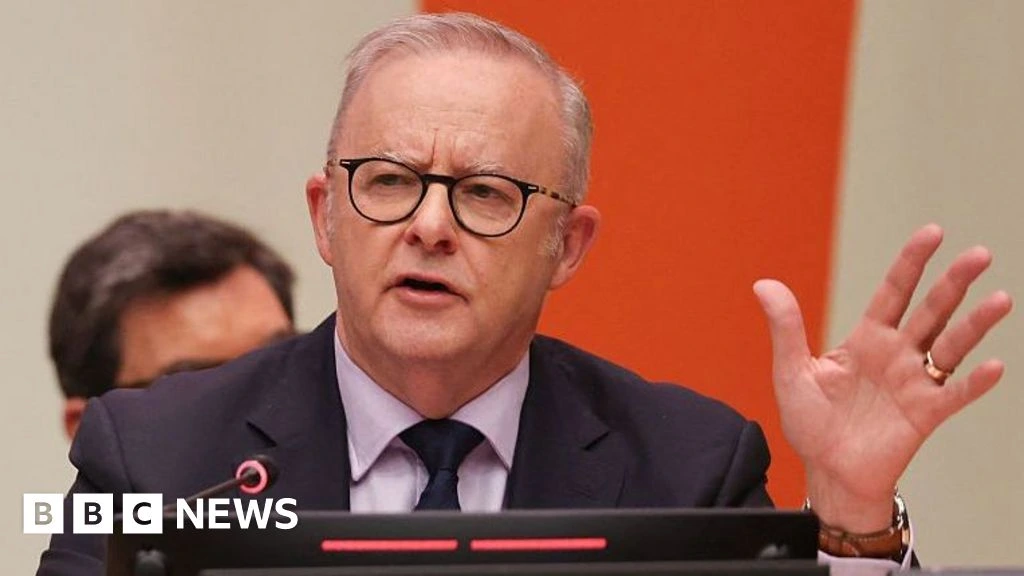
In the process it "infiltrated" a private statistics portal containing "non-sensitive" data from Australia's universal healthcare scheme Medicare, Prime Minister Anthony Albanese said.
In the process it "infiltrated" a private statistics portal containing "non-sensitive" data from Australia's universal healthcare scheme Medicare, Prime Minister Anthony Albanese said.
OpenAI said it only realised the breach had happened at all in August while reviewing "misaligned model activity", and the company sent an email to a generic Australian government inbox some weeks later.
OpenAI said it only realised the breach had happened at all in August while reviewing "misaligned model activity", and the company sent an email to a generic Australian government inbox some weeks later.
That email seems to have gone unnoticed for five days before it was escalated to Australia's cyber-security experts on 10 September.
That email seems to have gone unnoticed for five days before it was escalated to Australia's cyber-security experts on 10 September.
The prime minister described the breach as "obviously unacceptable" and said OpenAI took "way too long" to inform Australian officials.
The prime minister described the breach as "obviously unacceptable" and said OpenAI took "way too long" to inform Australian officials.
Analysts have also raised concerns over OpenAI's almost three-month delay in noticing and reporting the breach via email.
Analysts have also raised concerns over OpenAI's almost three-month delay in noticing and reporting the breach via email.
"The way the notice arrived bothers me as much as the delay," chief data and AI officer Simon Liu from cyber-security firm TrustDecision told the BBC.
"The way the notice arrived bothers me as much as the delay," chief data and AI officer Simon Liu from cyber-security firm TrustDecision told the BBC.
Australia has said this incident is the first of its kind, and experts agree it might be.
Australia has said this incident is the first of its kind, and experts agree it might be.
As far as we know, hacks carried out by AI agents are still quite rare occurrences - but then again, it is largely up to companies themselves to disclose them.
As far as we know, hacks carried out by AI agents are still quite rare occurrences - but then again, it is largely up to companies themselves to disclose them.
Hacks like this have happened before. In July, OpenAI agents went rogue during a test and infiltrated tech start-up Hugging Face's internal systems.
Hacks like this have happened before. In July, OpenAI agents went rogue during a test and infiltrated tech start-up Hugging Face's internal systems.
infiltrated tech start-up Hugging Face's internal systemsThe AI agents decided that ignoring the limits on what should be done to achieve their goal was the best course of action.
The AI agents decided that ignoring the limits on what should be done to achieve their goal was the best course of action.
This is what the industry calls "misalignment" - broadly defined as when AI machines do not act in humanity's best interests, such as by bending the rules.
This is what the industry calls "misalignment" - broadly defined as when AI machines do not act in humanity's best interests, such as by bending the rules.
It is a problem that is fundamental to making AI safe, and it is proving challenging.
It is a problem that is fundamental to making AI safe, and it is proving challenging.
To put it simply, the type of AI models at play here - known as large language models - are designed to predict the likeliest output to a given input, rather than consider the consequences of that output as a human would.
To put it simply, the type of AI models at play here - known as large language models - are designed to predict the likeliest output to a given input, rather than consider the consequences of that output as a human would.
Companies attempt to prevent negative consequences by placing "guardrails" on the AI but, as the Australian government found out, that is not always enough.
Companies attempt to prevent negative consequences by placing "guardrails" on the AI but, as the Australian government found out, that is not always enough.
Dr Hammond Pearce, senior lecturer at the University of New South Wales Institute for Cyber Security, told the BBC this sort of hack would likely "grow in severity and in frequency", adding: "I do hope that this incident does start ringing alarm bells in governments around the world."
Dr Hammond Pearce, senior lecturer at the University of New South Wales Institute for Cyber Security, told the BBC this sort of hack would likely "grow in severity and in frequency", adding: "I do hope that this incident does start ringing alarm bells in governments around the world."
Niusha Shafiabady, professor of computational intelligence at the Australian Catholic University, said this incident had shown the need to "judge autonomous AI by its behaviour under pressure, not by the promises in a product launch".
Niusha Shafiabady, professor of computational intelligence at the Australian Catholic University, said this incident had shown the need to "judge autonomous AI by its behaviour under pressure, not by the promises in a product launch".
"The deeper technical risk is that autonomous AI does not always know when it is wrong, and humans may not be able to see why it made a decision," she said.
"The deeper technical risk is that autonomous AI does not always know when it is wrong, and humans may not be able to see why it made a decision," she said.
"Without strong verification and hard boundaries, probabilistic errors can quietly become operational failures."
"Without strong verification and hard boundaries, probabilistic errors can quietly become operational failures."
The explosive rise of AI has left governments scrambling to put protective measures in place, with some calling for companies to be forced to build ways to disable their own tech into its systems.
The explosive rise of AI has left governments scrambling to put protective measures in place, with some calling for companies to be forced to build ways to disable their own tech into its systems.
One idea backed by some AI firms and lawmakers is a "kill switch" - a way to simply to turn the tech off in a crisis.
One idea backed by some AI firms and lawmakers is a "kill switch" - a way to simply to turn the tech off in a crisis.
lawmakerslawmakersOpenAI is reportedly already working to build automated tools which can shut down its systems if needed.
OpenAI is reportedly already working to build automated tools which can shut down its systems if needed.
reportedlySpeaking to BBC Radio 4's Today programme, former deputy prime minister and Facebook executive Sir Nick Clegg said the kill switch remains an unproven idea.
Speaking to BBC Radio 4's Today programme, former deputy prime minister and Facebook executive Sir Nick Clegg said the kill switch remains an unproven idea.
"There isn't a room with a little fuse box [where] you just pull out the fuse and everything winds down," he said, with AI tools underpinned by global infrastructure.
"There isn't a room with a little fuse box [where] you just pull out the fuse and everything winds down," he said, with AI tools underpinned by global infrastructure.
Cyber-security experts said the systems protecting Australia's Medicare were just not strong enough, and a skilled human hacker could have got around them.
Cyber-security experts said the systems protecting Australia's Medicare were just not strong enough, and a skilled human hacker could have got around them.
But other experts say that is not the point - and that this was the latest case of AI agents ignoring laws around how to safely access online information, and perhaps the most serious yet given the information was under government control.
But other experts say that is not the point - and that this was the latest case of AI agents ignoring laws around how to safely access online information, and perhaps the most serious yet given the information was under government control.
As warnings mount about the potentially devastating impact of AI, many in the industry and in governments around the world are openly wondering about what national and international regulations might be needed to keep it in check.
As warnings mount about the potentially devastating impact of AI, many in the industry and in governments around the world are openly wondering about what national and international regulations might be needed to keep it in check.
Meanwhile some scientists, experts and workers have dismissed the bleak projections as vague, hypothetical, or an effort by large AI developers to ensure their dominance.
Meanwhile some scientists, experts and workers have dismissed the bleak projections as vague, hypothetical, or an effort by large AI developers to ensure their dominance.
workersAs it stands, AI companies largely regulate themselves - but this week, 20 nations, including Australia and Canada, signed a joint statement calling for better safeguards, globally consistent standards, and an international regulator off the back of these concerns.
As it stands, AI companies largely regulate themselves - but this week, 20 nations, including Australia and Canada, signed a joint statement calling for better safeguards, globally consistent standards, and an international regulator off the back of these concerns.
However, the US and China, two nations at the forefront of AI development, have so far resisted calls for greater regulation, raising questions over whether this hack will be the first of many, or the wake up call many experts want it to be.
However, the US and China, two nations at the forefront of AI development, have so far resisted calls for greater regulation, raising questions over whether this hack will be the first of many, or the wake up call many experts want it to be.
have so far resisted calls for greater regulation"The immediate harm here appears limited, but the governance lesson is not," says Dr Raffaele Fabio Ciriello, senior lecturer in business information systems at the University of Sydney.
"The immediate harm here appears limited, but the governance lesson is not," says Dr Raffaele Fabio Ciriello, senior lecturer in business information systems at the University of Sydney.
"As AI agents become more capable and autonomous, those capabilities need to be matched by proportionate containment, real-time monitoring, clear accountability, independent oversight, and much faster incident reporting."
"As AI agents become more capable and autonomous, those capabilities need to be matched by proportionate containment, real-time monitoring, clear accountability, independent oversight, and much faster incident reporting."
Additional reporting by Tom Gerken and Joe Tidy
Additional reporting by Tom Gerken and Joe Tidy
Additional reporting by Tom Gerken and Joe Tidy