He thinks you’ve completely f***ed yourselves.” This was Washington DC in June 2016, a couple of days after the Leave victory, lunch with one of Barack Obama’s inner circle, and his response to my question about how the president had viewed the outcome.
My guest continued: “We just don’t understand why you would call a referendum which you didn’t need to hold without being absolutely certain of getting the right answer. Why would you do that? And what happens now you’ve blown yourselves up?”
I noticed people staring at me with a near-horrified look in their eyes: “What have you done?”
A friend in the state department said: “Some of us are wondering what the point of the UK is now you’re going to leave the EU.”
That was the Democrats and the state department professionals. Republicans saw things somewhat differently.
Republican politicians would congratulate me on our “bid for freedom”, as if the EU were some sort of penal colony in which we had been imprisoned against our will.
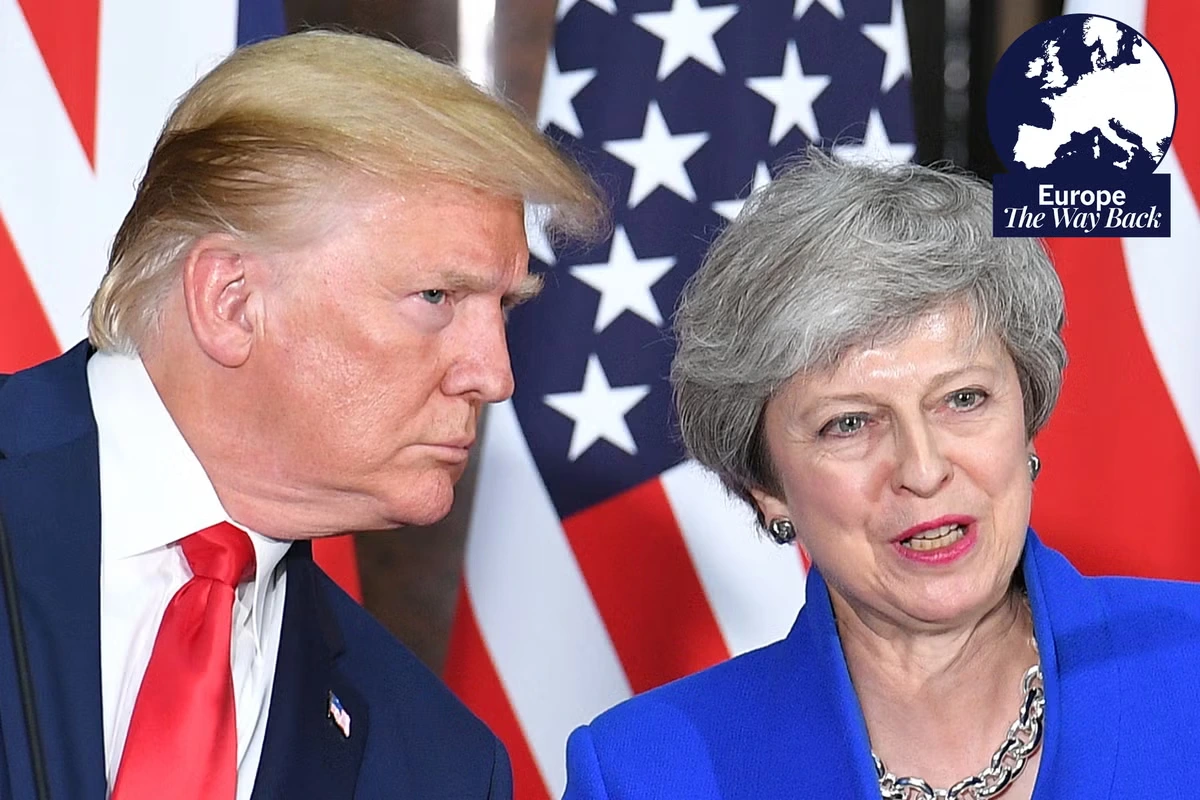
Theresa May came to Washington a week after Trump’s inauguration. He volunteered some personal advice on how to handle the Brexit negotiations with our former partners: “The first thing you should do is sue the European Union.”
Theresa May, of course, didn’t sue. For years afterwards, Trump would say, “If only she’d taken my advice, Brexit would have worked out so much better.”
The point of summarising this woeful negotiating history is to prompt the following question: how did the UK look to the rest of the world while all this was going on? And the answer is, at least as perceived from a seat in Washington DC, it did us huge damage.
Few Americans fully understood what was going on… but people got the big picture: the keystone cops were running the show. I and my embassy colleagues were being asked a dozen times a day: “What on earth is going on over there?”
A senior state department figure said to me in a bewildered tone and with a look of pity in his eyes: “We are used to government collapses and chaos in some of your European neighbours, but we thought you were the sensible ones.” In short, a centuries-old reputation for stable government and an orderly parliament, all run in accordance with ancient traditions, was lost.
President Trump (in his first term in the White House) would always ask how Brexit was going and listen in silence to the assurances that it would come right on the night. But there was a look in his eye that suggested he was getting a very different account from other sources.
And throughout this humiliating collapse, we were being invited by the Foreign Office to present episodes like backbench rebellions, cabinet resignations and lost votes as if they were all part of some Baldrick-style cunning plan. Even Trump, with his gifts for exaggeration and invention, would have struggled to bluster his way through this script.
It was striking that, when Boris Johnson resigned, Joe Biden, who succeeded Trump in 2021, didn’t even mention him.
Liz Truss was there only for a moment. She designed a budget which crashed the British economy in a couple of days. In 100 years’ time, she’ll be an answer in a quiz show – perhaps a 2120 edition of Pointless.
She surely represents the absolute low point in the UK’s post-Brexit saga, the full stop at rock bottom. If Brexit were a Whitehall farce in which sooner or later everyone fell over or lost their trousers, she was poleaxed in the act of walking on the stage.
My American contacts were saying, “Now you really have lost it – we’ll never see you in the same way again.”
Rishi Sunak stabilised the ship… and, unlike his two immediate predecessors, behaved like a prime minister.
The reality is that we are both diminished and isolated. Diminished because the starting point for influencing, for shaping events, is to be in the room. And our presence at G7, G20 and Nato summits does not compensate for our self-imposed exile from the EU.
Where once we might have been leading voices in the debate around the table, nowadays we are given the final, agreed texts and invited to follow suit.
As a medium-sized country floating uneasily in the mid-Atlantic, we are profoundly vulnerable to future storms. We risk having EU tariffs imposed on us as well as the US tariffs – a literal double whammy. So we have to go, metaphorically on our knees, both to the US and to the EU.
If we are to retain our historically and at times uniquely close and influential relationship with the US, we need to look like a country approaching the peak of its powers, not one struggling through rehab.
The most egregiously self-harming aspect of our Brexit deal is that, notwithstanding our history as one of the great free-trading nations of the world, we erected a hard border with the EU, saddling our Europe-facing businesses with vast amounts of paperwork and bureaucracy alongside a range of new tariffs.
There was no need for this theologically driven outcome. We need to regain our national self-confidence. We should be out there on the global stage making the case for free trade, for action on climate change and for our values.
There is a vacancy – for the next few years, none of this will be coming from America.
Adapted from ‘The Brexit Effect: 2016-2026’ edited by Anthony Seldon and published by Cambridge University Press on 18 June (£16.99)
Sign up to our free Europe: The Way Back newsletter here, or by entering your email address using the form below:
What you will get by joining: