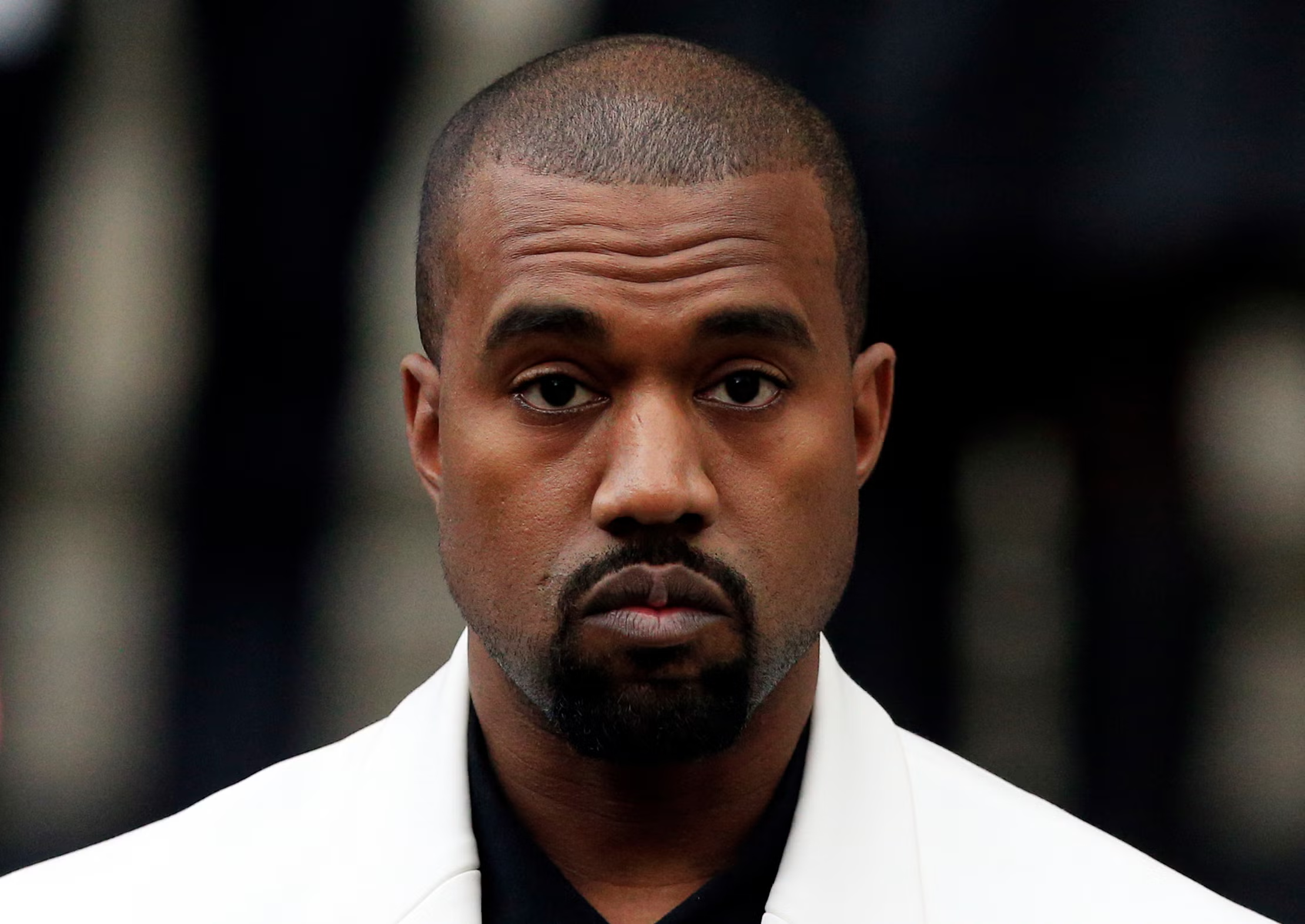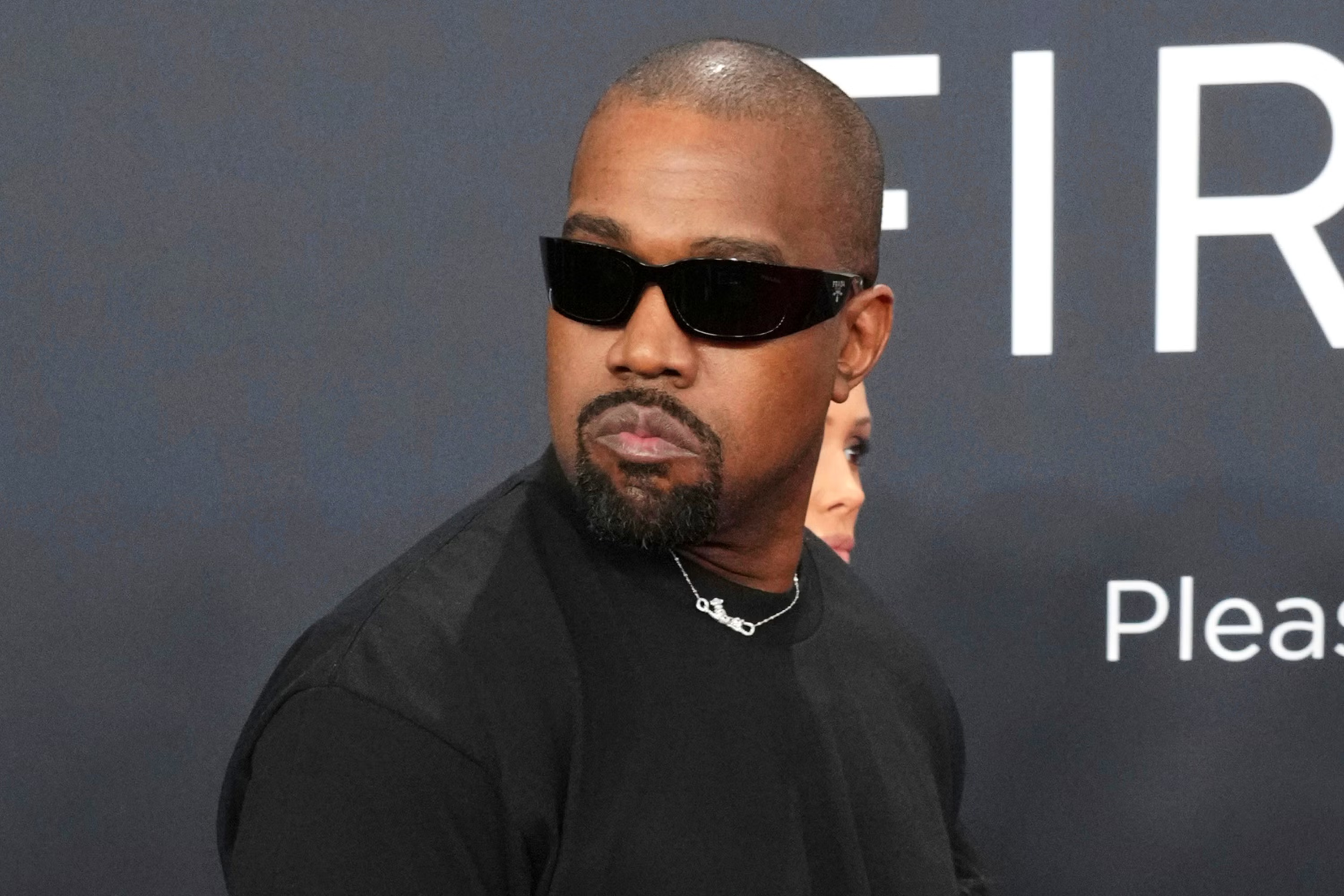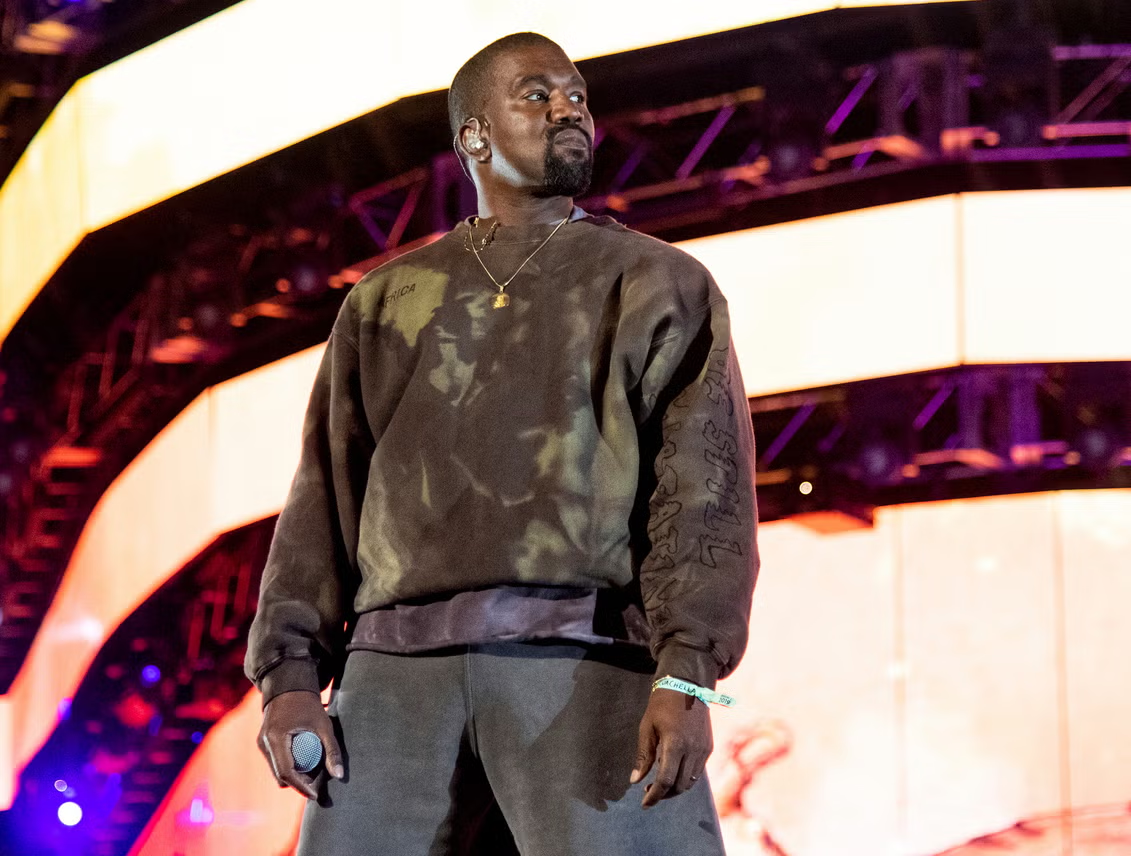
Wireless Festival has been cancelled for the first time in its 21-year history after headliner Kanye West was denied entry into the UK to perform – and now it’s been estimated that the saga could cost the festival over £30m in potential earnings.
The London-based festival, which is owned and managed by entertainment company Live Nation and its subsidiary Festival Republic, announced on Tuesday (7 April) that the three-night event would not go ahead in July after West’s Electronic Travel Authorisation (ETA) was cancelled.
“The Home Office has withdrawn YE’s ETA, denying him entry into the United Kingdom,” a spokesperson said. “As a result, Wireless Festival is cancelled and refunds will be issued to all ticket holders.”
It comes after West made a series of antisemitic statements last year, which included the release of a song titled “Heil Hitler” and his site selling T-shirts featuring a swastika. The rapper, 48, apologised in January for the comments, claiming that neurological damage caused by a near-fatal car crash in 2002 compounded his bipolar disorder and was responsible for his outbursts.
While it’s not currently known how much Wireless had already spent on the festival, which crashed and burned in the space of just a few hours, an industry expert has estimated how much they may have lost in potential earnings as a result.
Speaking to The Independent, John Rostron – the CEO of the Association of Independent Festivals – said that the event may have lost out on over £30m in turnover due to cancelling the event.
“Wireless is roughly 50,000 people. You’re talking about a show that has got to be turning over around £10m a day – that would be a sensible guess,” he said.
“At that level, it’s probably a £30m revenue loss. That’s a guess, but based on other shows of that size.”
Rostron added that the amount lost may be more. “They would have brought in through ticket income, sponsorship and food and beverage spend, merch – and that’s now gone.”
The Independent has contacted Festival Republic for comment.
While the festival would have been insured for losses as insurance is needed to operate as a limited company, it’s hard to know whether this would cover the full amount.
“What it would pay out on is the questionable part of that booking and that show,” Rostron added.
As for whether West will still be paid despite being barred entry into the UK, Rostron speculated that he may already have received a pay cheque as part of an overall deal.
“With most independent festivals, you book an artist and pay for that artist before the show through a series of deposits and then the balance. Broadly speaking, if you’re responsible for the cancellation, then the artist gets paid, but it’s different if the artist cancels,” he said.
“Live Nation is a different beast. They are often doing global deals with artists that can be about buying the artist out on tours and festivals. They sometimes do deals where they pay a certain amount of money [to an artist] and then gather that back by giving them performance opportunities.”
Live Nation often enters into exclusivity deals with artists to act as their promoter – choosing venues and ticket operators for concerts and performances. It is unknown whether West entered into a contract with Live Nation or any of its subsidiaries.
It is currently unknown just how much West would have been paid to perform at Wireless or as part of a wider deal with Live Nation.
Rostron – who partners with festivals like End of the Road, Lost Village and Love Saves The Day as part of the AIF – said that while Wireless’ cancellation has everyone “suddenly talking about festivals”, it’s the decisions of a few who operate the biggest that dominate the conversation.
“We wouldn’t judge all humans on the actions of one and we shouldn’t judge all festivals on the basis of one,” he said.
“Festival Republic say that multiple stakeholders were spoken to in advance and it’s evident that they weren’t, or that some were and others weren’t because the government and the local authority both suggested that they weren’t aware of this.
“Good practice in the festival industry is to speak with residents and stakeholders in the build-up and before your event to explain what you’re going to do and why you’re doing it, and to listen to their concerns because you want the community on side. That’s good preparation for a festival.”
Mayor of London, Sadiq Khan, condemned West’s booking as “not reflective of London’s values” on Thursday, while Prime Minister Sir Keir Starmer recently said that the rapper should never have been invited to headline the festival.