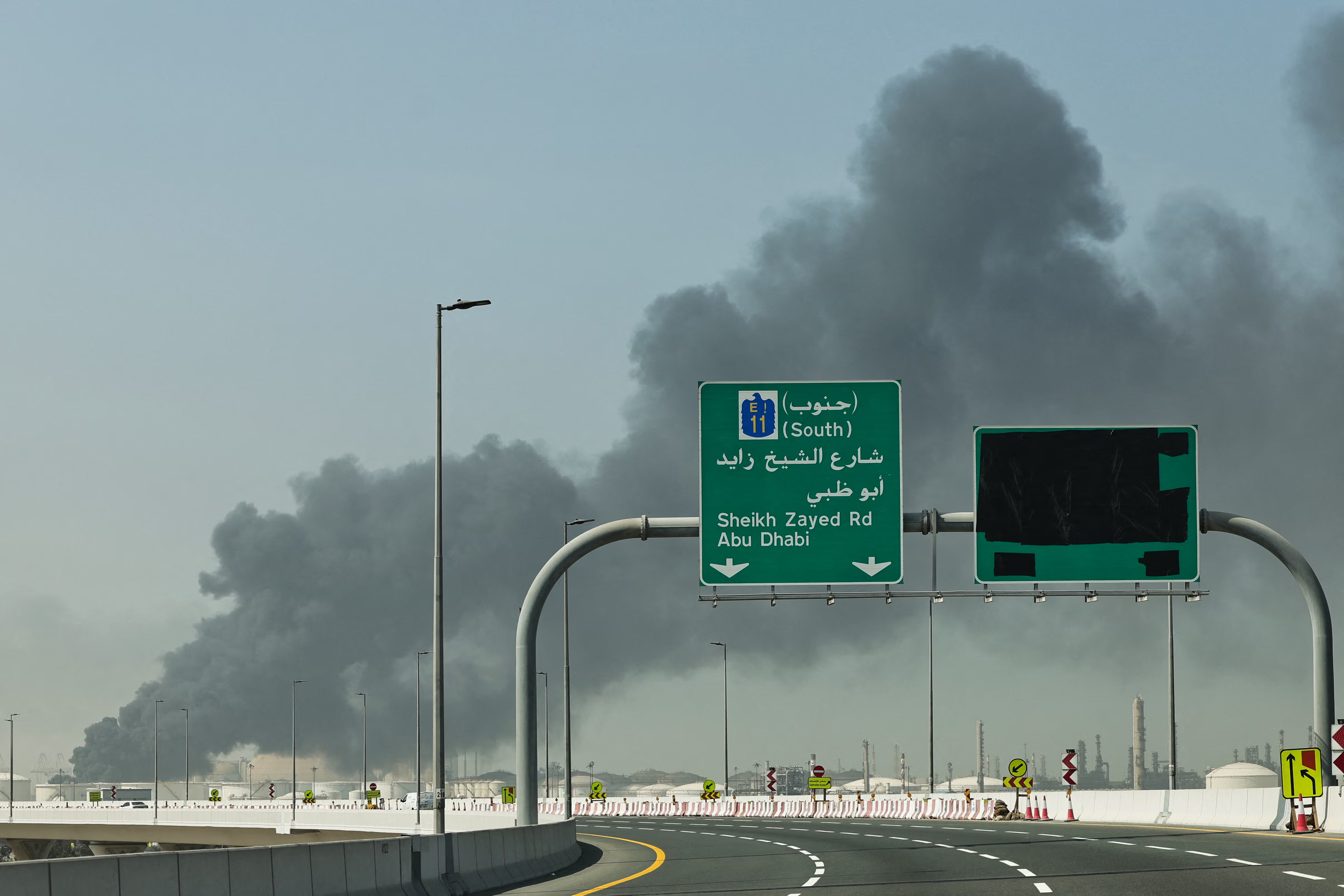
Israel and the US have launched fresh waves of intensive attacks across Iran on the second day of their military campaign to overthrow the country’s government, which has plunged the Middle East into a new regional conflict with no certain timeline or outcome.
The renewed violence on Sunday comes amid heated rhetoric from Washington and Tehran that suggests further escalation in the coming hours and days.
The US president, Donald Trump, said on Sunday that the US would hit Iran “with a force that has never been seen before” if Tehran carried out threats to retaliate after the death of the supreme leader, Ayatollah Ali Khamenei, in an Israeli airstrike on Saturday.
“Khamenei, one of the most evil people in history, is dead,” Trump wrote in a social media post. “He was unable to avoid our intelligence and highly sophisticated tracking systems and, working closely with Israel, there was not a thing he, or the other leaders that have been killed along with him, could do.”
Trump said the goal of the military campaign, which began on Saturday morning with a barrage of missiles and airstrikes, was regime change and he called on “the Iranian people to take back their country”.
In Tehran, a huge blast sent a plume of smoke into the sky on Sunday morning and shook the ground. The explosion appeared close to the country’s police headquarters and Iranian state television, as well as Tehran’s revolutionary court and a defence ministry building.
The Israel Defense Forces said their air force was striking “in the heart of Tehran” with efforts focused on destroying Iran’s remaining air defences.
Amir-Saeid Iravani, the Iranian ambassador to the UN, told an emergency security council meeting on Saturday that hundreds of civilians had been killed or injured in the US-Israeli strikes. He said they had deliberately attacked civilian neighbourhoods in multiple cities.
The joint US-Israel offensive opens a new chapter in US intervention in the Middle East and brings the prospect of a wider war in the region and months of chaos. The offensive is the second time in eight months that the Trump administration has used military force against Iran.
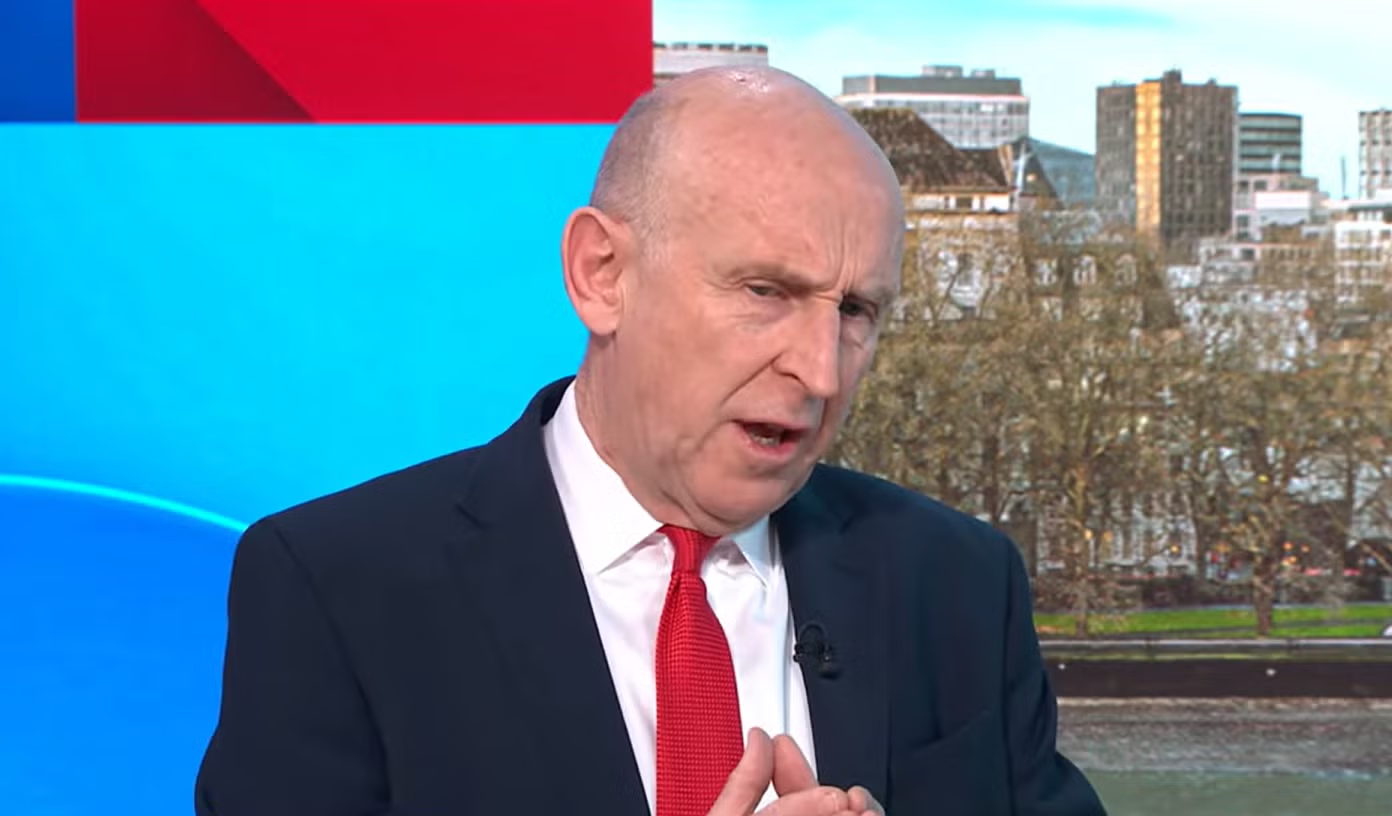
“This is a really serious and deteriorating situation, [with] rising risks of increasing Iranian indiscriminate retaliatory attacks,” the British defence secretary, John Healey said on Sunday morning. Healey accused Iran of “lashing out”.
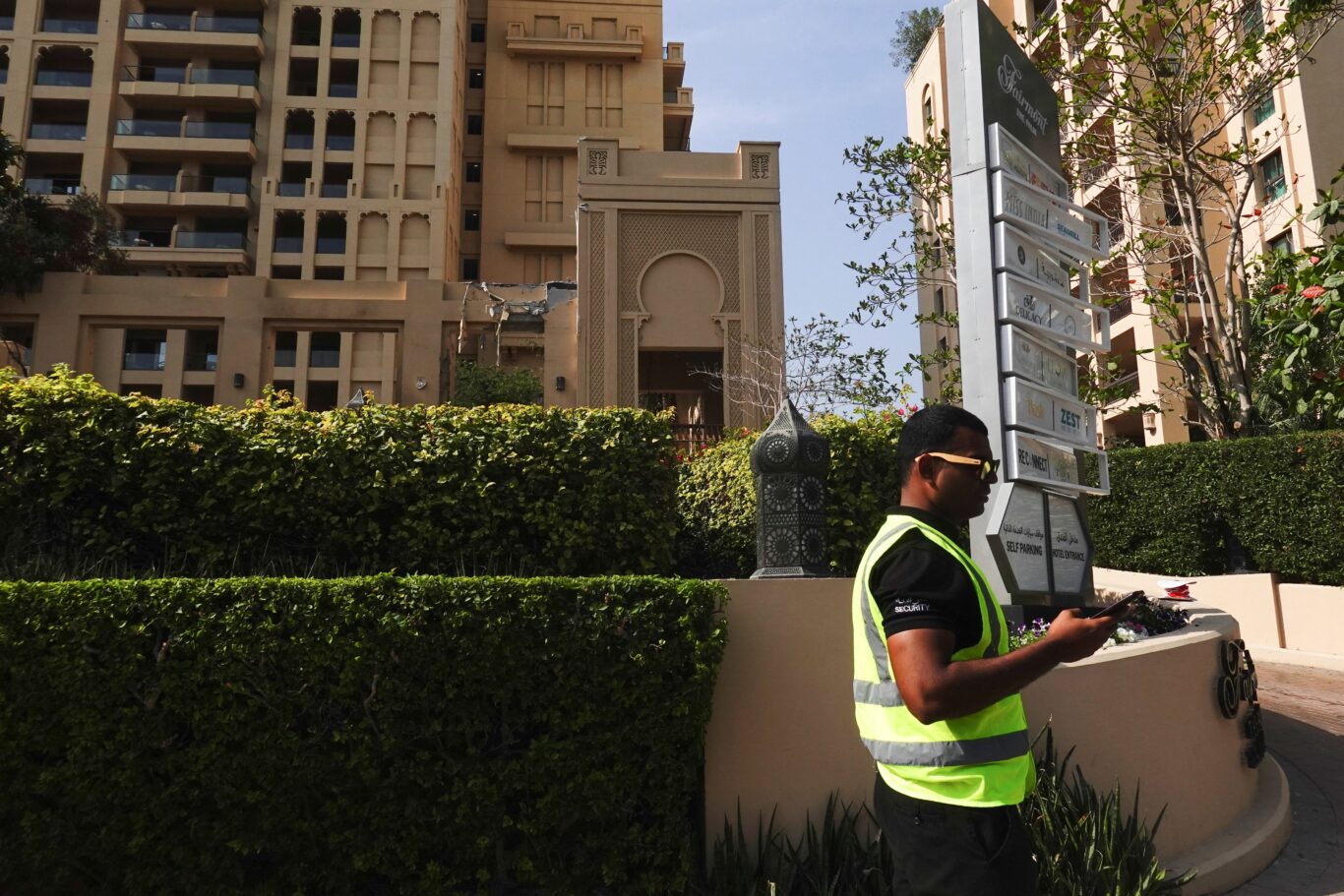
Iranian retaliation has targeted Israel as well as civilian infrastructure and US military bases across the Arab Gulf states. Loud blasts were heard for a second day on Sunday in Dubai and over Qatar’s capital, Doha, witnesses said.
Puffs of white smoke from missile interceptions were glimpsed in the skies over Dubai, while billows of dark smoke rose over its port, one of the busiest in the Middle East.
Dubai’s Burj Al Arab hotel and its airport, which handles more than 1,000 flights a day, were damaged in Iranian attacks overnight on sites that also hit airports in Abu Dhabi and Kuwait. The airport in Dubai, the world’s busiest international travel hub, remained shut, along with other major Middle East airports, causing one of global aviation’s most severe disruptions in years.
Analysts have long warned that a war launched against Iran could lead to global economic turmoil.
Air raid sirens sounded repeatedly across Israel early on Sunday, with a series of loud explosions heard in Jerusalem and Tel Aviv as Israel’s sophisticated air defence system sought to intercept the latest Iranian offensive.
Ships have reported hearing a radio broadcast purporting to come from the Iranian navy announcing that transit through the vital strait of Hormuz, the narrow maritime corridor which is a crucial chokepoint for the world’s oil supplies, was banned, raising expectations of a sharp jump in oil prices. Authorities in Oman reported damage to at least one oil tanker, though it was not immediately clear who attacked the vessel.
There are few details of damage or casualties in Iran, but Iranian authorities said more than 100 children were killed at a school in the southern city of Minab.
Across the country, Iranians said they felt a mixture of terror and hope as the bombings continued. Some expressed relief that the long-expected strikes had arrived and opponents of the regime spoke of hope that they might lead to political change – but both were tempered by fear that the attacks would bring more civilian deaths to a country already reeling from recent bloodshed.
Iran’s top security official, Ali Larijani, accused the US and Israel of trying to plunder and fragment Iran and warned “secessionist groups” of a harsh response if they attempted to intervene, state television said.
Iran’s parliament speaker, Mohammad Baqer Ghalibaf, said Netanyahu and Trump had “crossed a red line” and “will pay for it”, according to state media.
Senior Iranian officials said a temporary leadership group would be appointed and Ghalibaf also said Iran would “continue Khamenei’s path”.
Iran’s leaders have faced multiple crises in recent months, with an economy suffering from US and other sanctions, massive protests that were bloodily repressed in January, and regional proxies severely weakened by Israeli attacks.
Trump said the airstrikes aimed to end a decades-long threat from Iran and ensure it could not develop a nuclear weapon.
“This is not only justice for the people of Iran, but for all great Americans, and those people from many countries throughout the world, that have been killed or mutilated by Khamenei and his gang of bloodthirsty thugs,” Trump wrote on Truth Social.
Both Trump and Benjamin Netanyahu, Israel’s prime minister, have called on Iranians to overthrow the radical clerical regime that took power after the 1979 revolution against the shah.
Many Israeli officials appeared convinced that the death of Khamenei would prompt an almost immediate country-wide uprising, analysts in Israel said.
But while the deaths of Khamenei and other Iranian leaders will undoubtedly weaken the regime, Iran’s rulers still have strong support among parts of the 93 million population and key institutions, such as the powerful and ideologically committed Islamic Revolutionary Guard Corps, remain loyal.
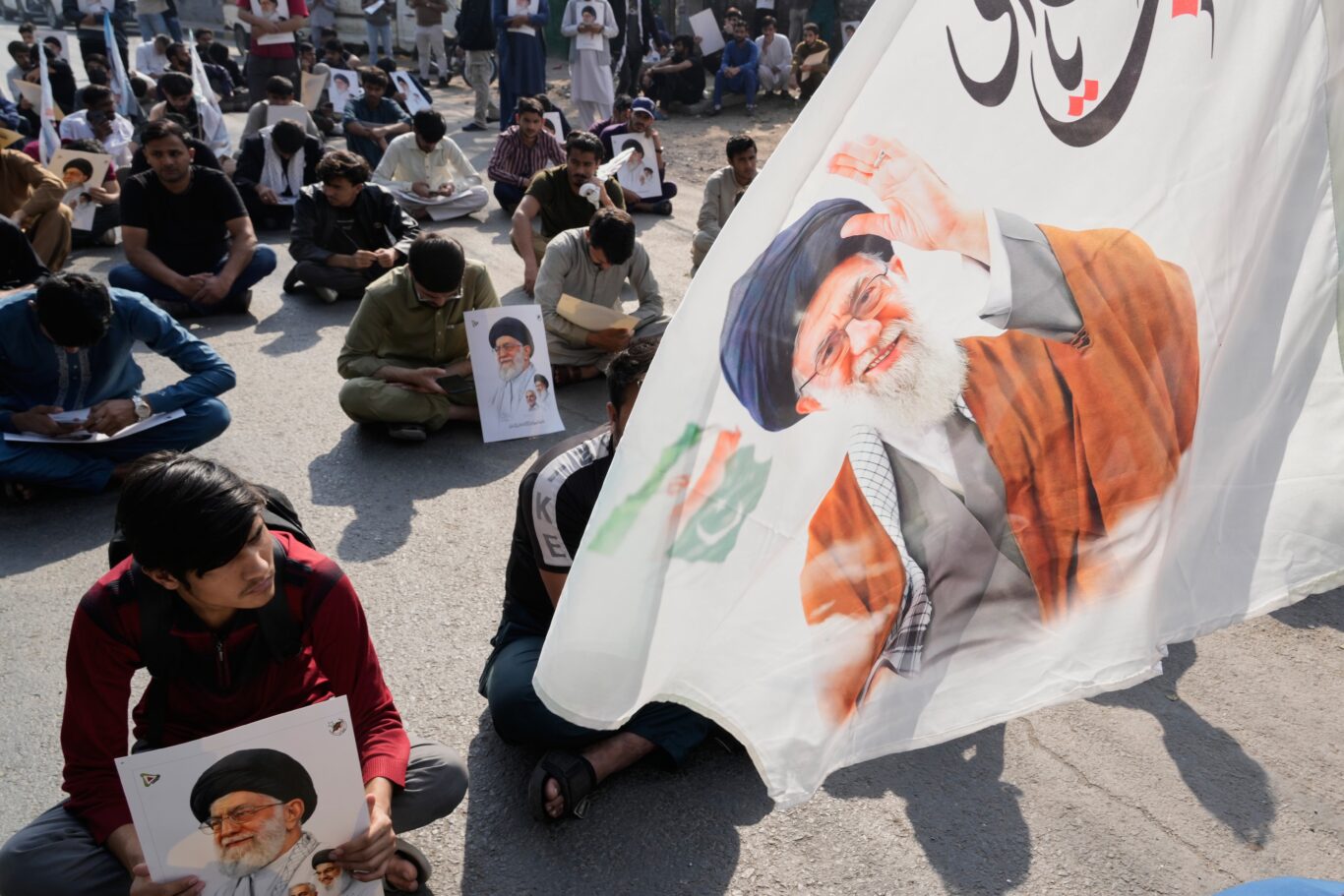
The US and Israeli offensive has rocked much of the Islamic world. There were protests in Pakistan, where police on Sunday clashed with protesters who breached the outer wall of the US consulate in Karachi, leaving nine people dead, and outside the Green Zone in the Iraqi capital, Baghdad, where the US embassy is located.