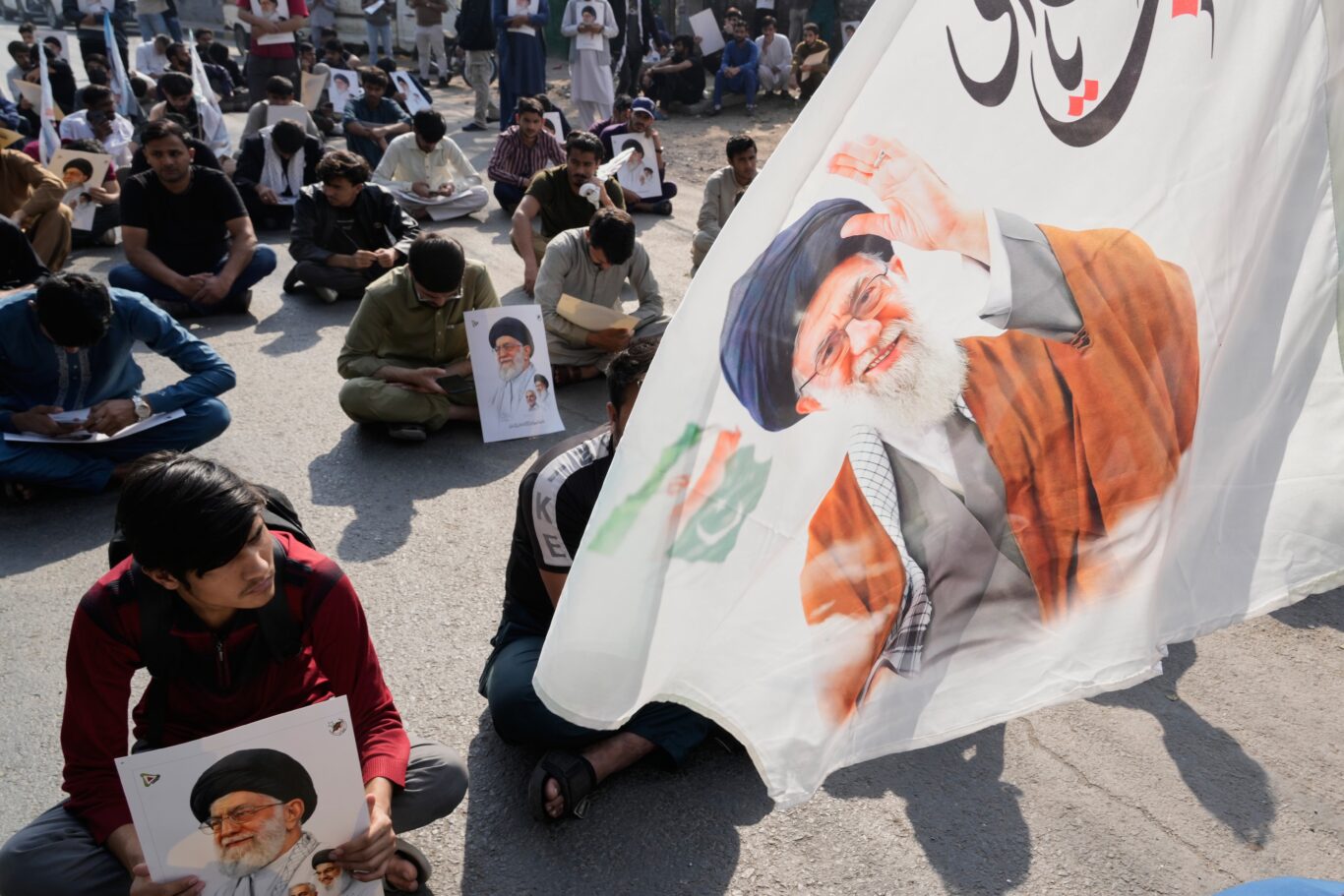
One can be forgiven a snigger at Vladimir Putin calling the Israeli-American assassination of Ayatollah Ali Khamenei and many of his senior staff “cynical murder” when that is what he wanted to do to Ukraine‘s president – but failed.
His invasion of Ukraine has been a bloody disaster for Russia because he did not understand the country.
The US-Israel killing of Iran’s supreme leader is blatantly illegal under international law. It may also prove to be as disastrous as Putin’s war on Ukraine – because Trump doesn’t understand the country.
Like Putin, Trump has surrounded himself with “yes” men and women. He removed anyone and everyone who might have shown independent thought, first from the intelligence services, then the armed forces, and then surrounded himself with MAGA fanatics in the Oval Office.
His administration is also deeply affected by evangelical Christian extremists, who have blindly backed Israel’s far-right government through its mass slaughter of the Palestinians in Gaza and its land grabs on the West Bank.
Magical thinking and ideological dogma lead to distortions of reality. Putin learned this when his assumption, based on the intelligence he was fed, was that Kyiv would fall in a few days. He was told what he wanted to hear rather than that Ukrainians would fight for their survival.
Now Ukraine is into the fifth year of war, gaining the upper hand, and Nato is bigger with Finland and Sweden now part of the alliance, while Russia faces international sanctions and pariah status.
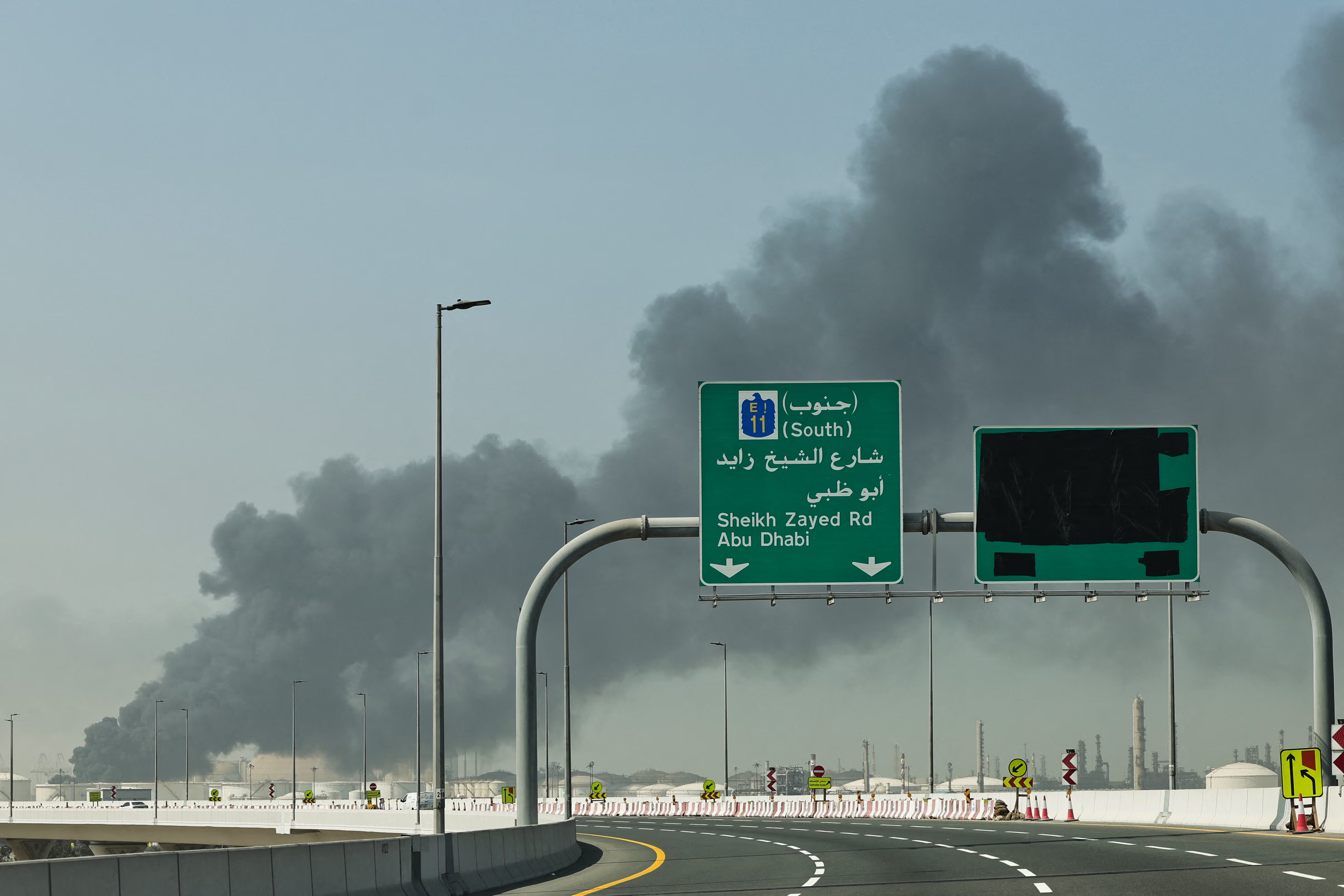
Putin and the late Ayatollah were allies. Iran supplied the Shahed drones that torment Ukraine every night and are now being flown across the Arabian Gulf in retaliation for Israel and America’s bombardment.
Trump said after Khamenei was killed by an Israeli bomb, acting, he claimed, on US intelligence, that: “This is the single greatest chance for the Iranian people to take back their country”.
He is right about that. He may have been told by the yes people in Washington that the decapitation of the regime, in a strike that also killed the head of the Iranian Revolutionary Guard Corps and several senior advisers to the supreme leader, would herald a democratic revolution in Iran.
It may. Clearly, there is no love for the theocratic regime. Opinion polls reveal that only 40 per cent of Iranians identify as Muslims and only 32 per cent as Shi’a Muslims, according to a 2020 survey by academics at the Universities of Utrecht and Tilburg in the Netherlands. They surveyed 50,000 Iranians.
Thousands of anti-government protestors were killed by regime forces in January. They rose against the oppression of their daily lives but also against the corruption and collapsing economy of a country four times the size of Germany.
Trump’s people would be right to assume that Iranians wanted to see the end of the rule of ayatollahs. Ramita Navai, British-Iranian author and broadcaster, has been on the phone to people in several locations, including Tehran, who have held their phones out of their windows so she could hear the jubilation on the streets after the killing of Khamenei was announced.
But the regime has not fallen. Iran’s economy is 40 per cent controlled by the secret services, which are still run by the IRGC, even without its leader. Its structures will fight hard to stay in control, and for now, no one is taking to the streets.
Iran faces centrifugal forces from armed separatist groups. The Baluch people in the southeast want freedom from Tehran and have weapons and a ferocious reputation for using them.
Iranian Kurds have formed a coalition of the Democratic Party of Iranian Kurdistan (PDKI), the Kurdistan Free Life Party (PJAK), the Kurdistan Freedom Party (PAK), the Khabat Organization of Iranian Kurdistan, and part of the Komala Party of Iranian Kurdistan in opposition to Tehran.
Generations of Iran’s Kurds have been fighting for independence. And suffered severe repression under the monarchy of the Shah’s before 1979’s revolution.
Reza Pahlavi, the son of the Shah deposed in 1979, has emerged as a rallying point for opposition demonstrations, and many bore his flag during January’s demonstrations.
But he has already condemned the Kurds’ move as “separatist” and undermining national unity.
But Kurds and Baluch make up about 12 per cent of the population and have the military capacity to support other groups in taking on the central government – as do a small Arab minority in the south.
There is also the MEK to contend with. The Mujahedin al Khalq, which was a powerful part of the 1979 revolution, fled to Iraq, fought for Saddam Hussein against Iran, and is now exiled and more of an armed cult than a political movement based in Albania. It has had loud advocates, including Rudy Giuliani, the former New York mayor and personal attorney to Donald Trump.
Also called the National Council of Resistance for Iran, it announced it had formed a “government in exile” and promised democracy for the Iranian people.
Pahlavi, meanwhile, has a plan to rule the country for three years before having a referendum on whether it should be a monarchy or a democracy. He also promises to end support for global terror groups and Iran’s nuclear programme.
None of these forces is likely to be able to carry Iran to freedom on its own. They all need elements of the regime to drift away from the central government. They have all learned that in the Iranian revolutions, not backing the winner can be terminal.