The Supreme Court struck down President Donald Trump’s sweeping tariff agenda Friday, dealing a seismic blow to the president’s key economic policy after months of chaos with America’s trading partners.
A ruling from the nation’s high court determined that the president’s global levies were unlawfully imposed under the 1977 law, the International Emergency Economic Powers Act.
“The president asserts the extraordinary power to unilaterally impose tariffs of unlimited amount, duration, and scope. In light of the breadth, history, and constitutional context of that asserted authority, he must identify clear congressional authorization to exercise it,” Chief Justice John Roberts wrote in a 6-3 decision.
The decision is likely to have a significant economic impact. The administration had warned that such a ruling could force them to refund billions of dollars in revenue collected from the tariffs.
Justices Clarence Thomas, Samuel Alito and Brett Kavanaugh dissented, raising concerns about the refund “mess” that could arise.
In its ruling, the court did not offer clear guidance about the refund process moving forward. But companies that had to pay tariffs may be able to seek a refund from the Treasury Department.
The Trump administration has suggested it has potential workarounds that could keep similar levies in place. However, it’s unclear how quickly they could do so before being required to issue refunds.
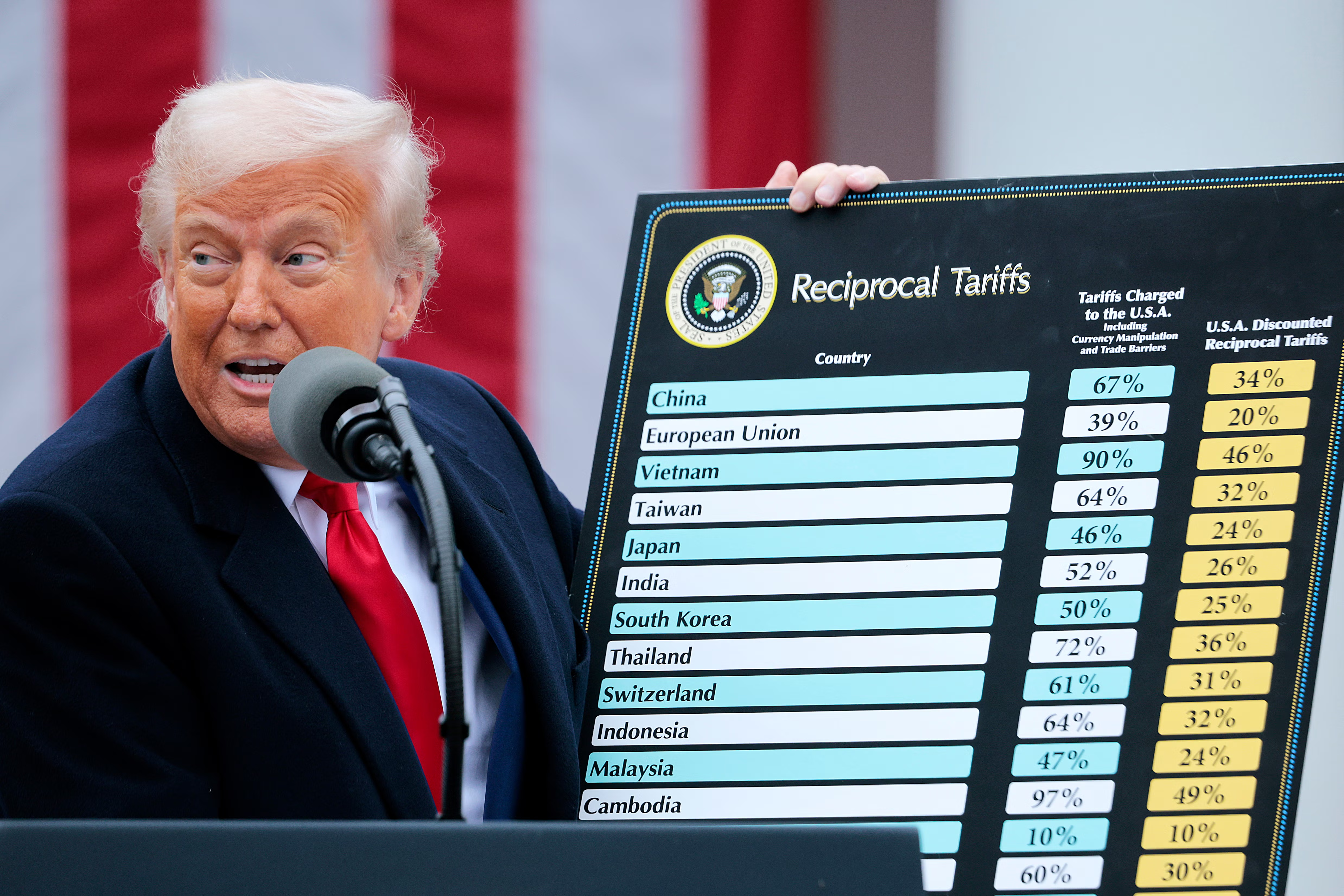
Friday’s decision will not impact all of Trump’s tariffs, just those brought under the 1970s law. That includes “reciprocal” tariffs on other countries and tariffs specifically imposed on Canada, China and Mexico to stop the flow of fentanyl.
Tariffs imposed on specific sectors, such as aluminum or steel, can remain in place.
Justices were asked to determine whether Trump was authorized to impose sweeping tariffs on nearly every one of the nation’s trading partners under the 1977 International Emergency Economic Powers Act, which permits the president to regulate trade in “unusual and extraordinary” circumstances when a national emergency is declared.
Trump invoked the act when he decided to impose a baseline 10 percent tariff on most countries in addition to heavier “reciprocal tariffs” on major trading partners.
On “Liberation Day” in April, the president argued the tariffs were a matter of national security because it was necessary to balance trade deficits.
The result: a global stock market crash and multiple lawsuits from small businesses that said the tariffs negatively impacted their ability to operate and were unfairly brought under the emergency act. Trump repeatedly walked back the tariffs and the markets rebounded.
Two lower courts, including the U.S. Court of International Trade, sided with the businesses that sued the administration, saying the president had overstepped his authority when declaring a national emergency.
Justices appeared skeptical of Trump’s argument during the Supreme Court’s oral arguments November 5.
Roberts, who has steered the court to expand the president’s executive authority, explicitly stated that tariffs, even when used for foreign affairs, are considered “taxes on Americans” — a power that belongs to Congress.
Justice Amy Coney Barrett questioned why some of the country’s closest allies, such as Spain and France, would need to be tariffed due to “threats to the defense.”
At the same time, justices also expressed caution, noting that a ruling against Trump could force the U.S. to return billions of dollars in tariff revenue, resulting in an economic recession.
For months, Trump had been urging the justice to uphold his sweeping tariffs, making grandiose statements, such as suggesting the case was “life or death,” claiming a negative decision posed the “biggest threat” to national security and warning of “economic disaster.”
White House officials and others familiar with Trump’s thinking have privately acknowledged that an adverse ruling from the justices was a strong possibility while simultaneously downplaying the significance of such a decision.
Both Commerce Secretary Howard Lutnick and White House trade adviser Peter Navarro have said the administration has been preparing a “plan B” to continue levying taxes on broad swaths of imports using more traditional authorities available to the president under existing trade law.
Alex Woodward and Andrew Feinberg contributed to this story.