Rachel Reeves is under mounting pressure to follow European countries and take action to protect consumers amid spiralling fuel prices, with campaigners accusing ministers of treating British drivers as a “cash cow for the Treasury”.
Oil prices – which have a significant effect on the cost of wholesale fuel – have soared in response to Iran’s stranglehold on tankers passing through the Strait of Hormuz, sparking rising pump prices and piling pressure on the government to abandon a planned increase in fuel duty set to take place in September.
The chancellor announced in her November 2025 budget that the fuel duty reduction – introduced by the Conservative government in March 2022 after the outbreak of the Ukraine war – would be extended until the end of August 2026, with rates then gradually returning to previous levels over the next five years.
But she is facing mounting calls to abandon the increase in fuel duty planned for September because of the rise in pump prices and instead follow European allies which have taken significant steps to keep prices down as the war continues.
Earlier this month, Greece announced a three-month cap on profit margins on fuel and certain supermarket products, while Hungary has capped petrol at 595 forints (€1.52) per litre diesel at 615 forints (€1.57).
From April, Germany – which is also considering a windfall tax on oil companies – will limit petrol stations to one price rise per day at a fixed time of 12pm. Companies found to be in breach of the rules could face fines of up to €100,000.
William Yarwood, media campaign manager at the TaxPayers’ Alliance told The Independent: “British drivers are being used as a cash cow for the Treasury at a time when they can least afford it.
“While our European neighbours are stepping in to shield their citizens from soaring pump prices, the British government is preparing to hike fuel duty for the first time in 15 years.
“The chancellor must extend the fuel duty freeze and commit to disapplying VAT from fuel duty entirely.”
Howard Cox, founder of the FairFuelUK campaign, also piled pressure on the government to intervene, saying: “Dozens of countries worldwide, like France, India, and Italy, are recognising the financial sense in supporting drivers as pump prices soar uncontrollably.”
He accused the government of remaining “determined to uphold the 5p increase in the Autumn Budget”, adding: “The chancellor and any sensible economist in this Treasury must promise to keep fuel duty frozen for the duration of this Parliament.
“But even more beneficial to the economy and small businesses, she must cut fuel duty now, and remove the immorally levied VAT on fuel, and ensure that pump pricing is fair, honest, and transparent through a PumpWatch regulatory price monitoring body with legislative teeth.”
Meanwhile, left wing Labour MP Clive Lewis – who has been a vocal critic of the government – warned that the planned fuel duty increases were “designed for a different moment, not a crisis where pump prices are surging because of a war”.
He told The Independent: “Proceeding with the escalator now would project an air of indifference towards drivers, farmers and small businesses who had no hand in creating this situation.”
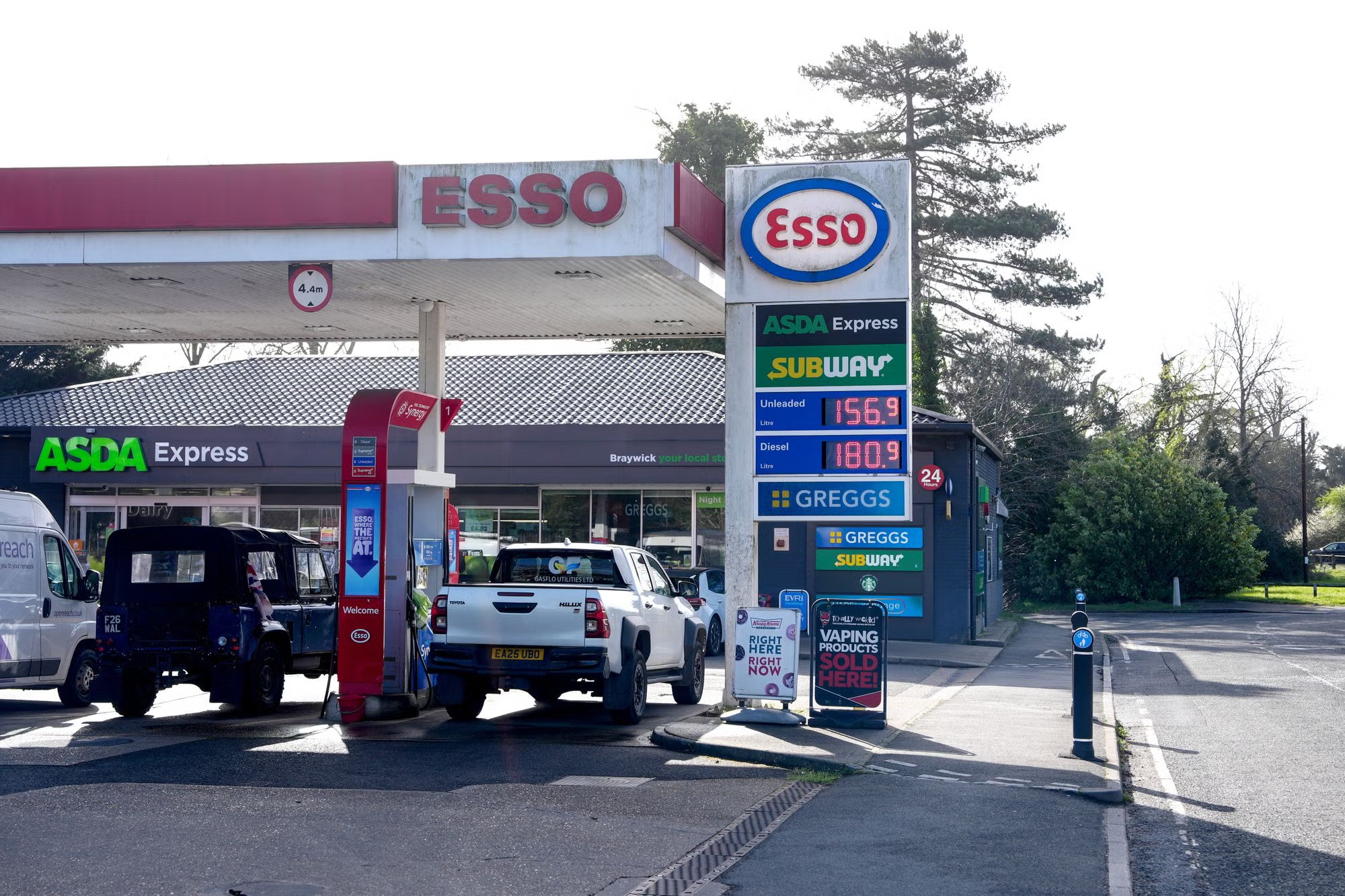
It comes as diesel prices hit their highest level since December 2022 on Monday, reaching 181.2p per litre – a 27 per cent rise since the start of the Middle East conflict began. Average petrol prices have reached 152.0p per litre, a rise of 14 per cent from 132.8p over the same period.
Meanwhile the price difference between diesel and petrol reached its highest level since at least 2003 in the UK on Sunday, leading Steve Gooding – director of the RAC Foundation – to warn that the “white van man is bleeding cash just to stay on the road”.
Latest data from the RAC showed the average price of a litre of diesel at UK forecourts rose to 179.9p on Sunday, 28.5p more than petrol – a disparity which arises because UK oil refineries are more geared towards producing petrol than diesel, meaning the country’s diesel supply is more reliant on imports.
Latest DVLA figures show there were 16.2 million diesel vehicles licensed in the UK as of the end of September last year. This included the vast majority of light goods vehicles, such as vans.
Mr Gooding argued that “diesel is the lifeblood of millions of small businesses”, adding: “Whether you drive or not, soaring diesel prices will take money out of your pocket, either at the pump or in the bills you pay for everything from calling out the plumber to getting a home delivery.”
Meanwhile, AA president Edmund King warned that the “extra hike in diesel prices disproportionally hits businesses, deliveries, the service industry and the self-employed”, warning that the industry “needs help now”.
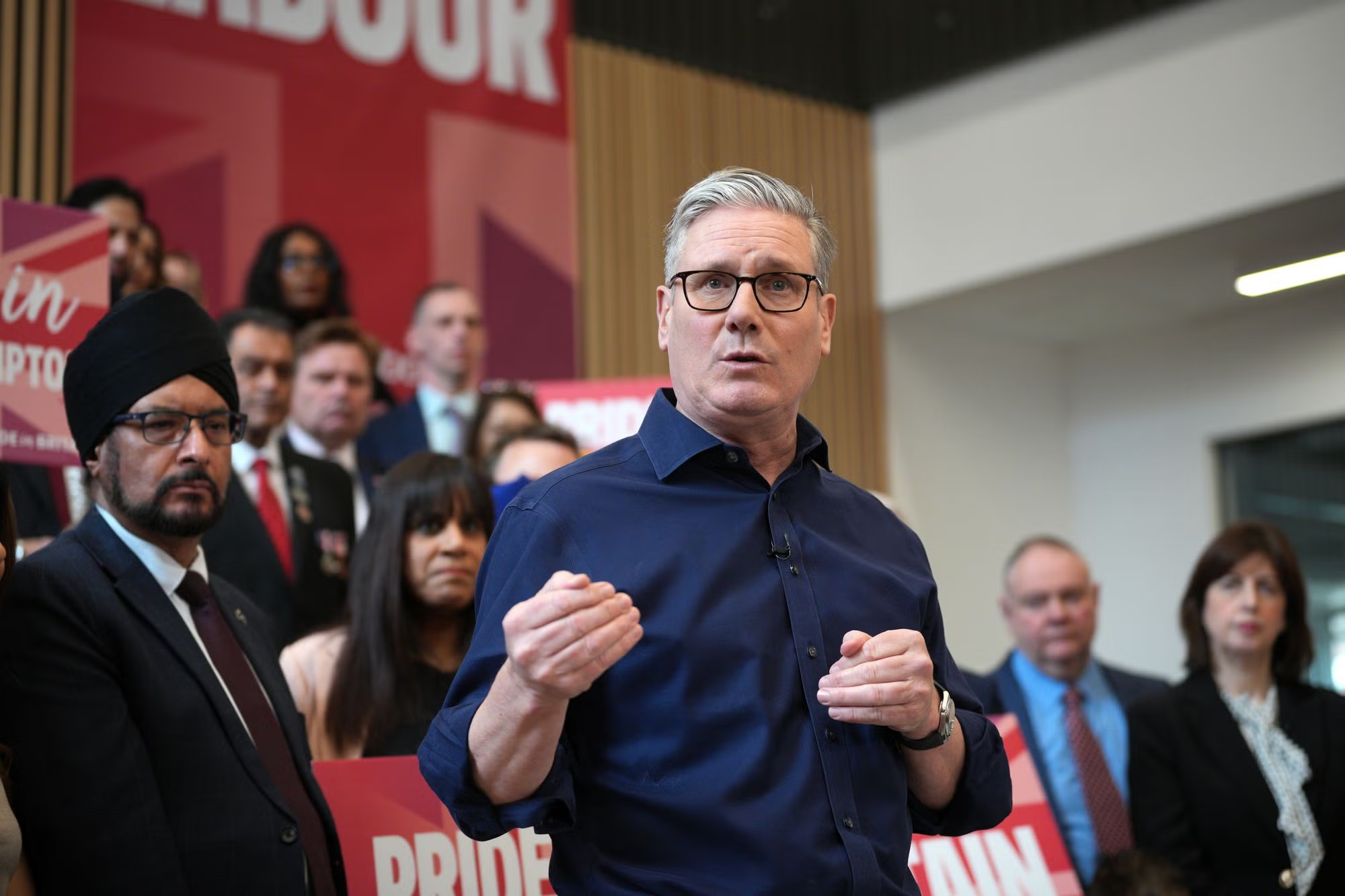
Sir Keir Starmer told business chiefs in a Downing Street meeting on Monday that his priority was ending the conflict and working on a “viable plan” to reopen the Strait of Hormuz.
Downing Street said the aim of the meeting – which involved representatives from energy firms Shell and BP, shipping giant Maersk, maritime insurance specialist Lloyd’s of London and banks HSBC and Goldman Sachs – was to discuss how the government and private sector can work together in responding to the conflict.
Sir Keir told bosses that it must be a “joint effort” to tackle the impact of the war, adding: “The government can’t do it on its own. You can’t do it on your own. We’re going to have to work together on this.”
The summit at No 10 is expected to be followed by a Cobra meeting on Tuesday, where senior ministers will discuss the ongoing economic hit caused by the war.
It comes as the International Monetary Fund (IMF), which advises on policy and gives financial aid to member countries, warned the UK had been particularly exposed to the economic impacts of the war.
It said this was because Britain’s reliance on gas-fired power, unlike countries such as France and Spain who were protected by their greater use of nuclear and renewable energy sources.
Meanwhile, Ms Reeves and energy secretary Ed Miliband joined a virtual meeting of G7 finance and energy ministers and central bank governors on Monday, where they considered ways to respond to the economic hit from the war.
The meeting came after Mr Trump said he could “take the oil in Iran” or consider seizing control of Kharg Island, the country’s primary oil export hub.