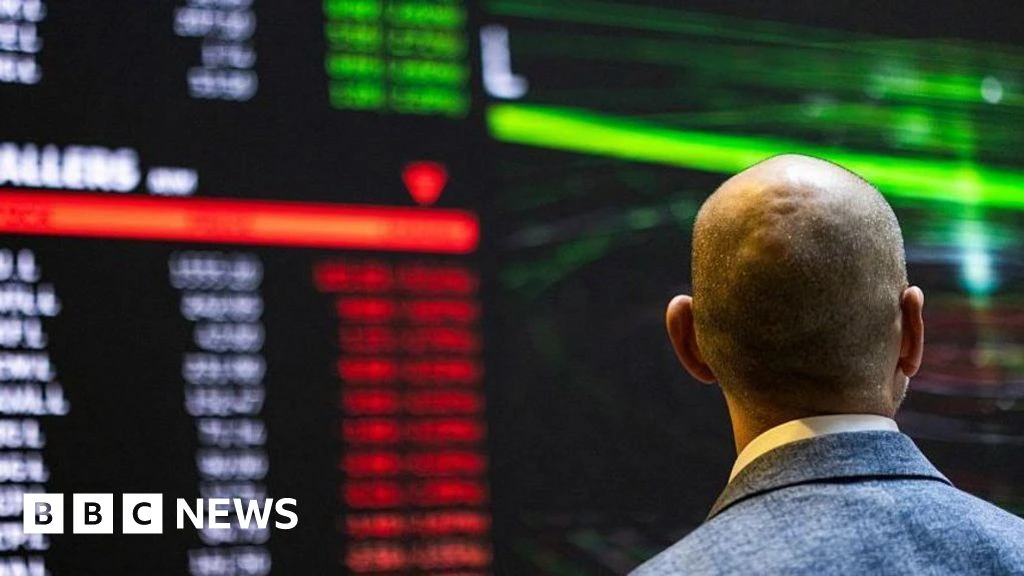
Long-term borrowing costs in the US rose again despite an announcement from the government that it would intervene to try to lower them.
Long-term borrowing costs in the US rose again despite an announcement from the government that it would intervene to try to lower them.
Earlier this week, the Treasury Department said it would buy back more debt in a bid to lower rates being charged by investors on global bond markets, which governments and major corporations rely on to borrow money.
Earlier this week, the Treasury Department said it would buy back more debt in a bid to lower rates being charged by investors on global bond markets, which governments and major corporations rely on to borrow money.
While rates - or yields as they are called - eased on borrowing over 30 years following the intervention, they have since risen again. Such moves can affect mortgage rates and car loans.
While rates - or yields as they are called - eased on borrowing over 30 years following the intervention, they have since risen again. Such moves can affect mortgage rates and car loans.
Economists said the surprise move by the US government had proved short-lived, with ongoing concerns over the level of borrowing as national debt passed $40tn.
Economists said the surprise move by the US government had proved short-lived, with ongoing concerns over the level of borrowing as national debt passed $40tn.
On Friday, the interest rate on 30-year bonds had risen to 5.26%.
On Friday, the interest rate on 30-year bonds had risen to 5.26%.
Governments and corporations sell bonds - essentially an IOU - to raise money for spending, and in return they pay interest. Interest rates on bonds are known as yields.
Governments and corporations sell bonds - essentially an IOU - to raise money for spending, and in return they pay interest. Interest rates on bonds are known as yields.
Bond investors typically demand higher returns - or yields - if inflation is high or they expect it to be elevated in the future.
Bond investors typically demand higher returns - or yields - if inflation is high or they expect it to be elevated in the future.
Yields had fallen sharply earlier this week to 5.18% from an almost two-decade high of 5.34% following the Treasury Department announcing its "support".
Yields had fallen sharply earlier this week to 5.18% from an almost two-decade high of 5.34% following the Treasury Department announcing its "support".
By stepping in to buy back government debt, Treasury Secretary Scott Bessent aimed to boost demand for bonds and lower borrowing rates.
By stepping in to buy back government debt, Treasury Secretary Scott Bessent aimed to boost demand for bonds and lower borrowing rates.
But the strategy has appeared to have only worked in the short-term.
But the strategy has appeared to have only worked in the short-term.
John Canavan, lead analyst at Oxford Economics said the response to the government's intervention was "unsurprisingly short-lived".
John Canavan, lead analyst at Oxford Economics said the response to the government's intervention was "unsurprisingly short-lived".
He said traders were focused on the "daunting" amounts of global borrowing from governments and corporations, as well as increases in oil prices.
He said traders were focused on the "daunting" amounts of global borrowing from governments and corporations, as well as increases in oil prices.
"As Bessent himself confirmed, the move is mainly a signalling mechanism, with the Treasury showing it is prepared to step in with yields near current levels," said economists at Capital Economics.
"As Bessent himself confirmed, the move is mainly a signalling mechanism, with the Treasury showing it is prepared to step in with yields near current levels," said economists at Capital Economics.
"It is not necessarily an effective one, however, as much of the initial fall in 30-year yields has now been reversed."
"It is not necessarily an effective one, however, as much of the initial fall in 30-year yields has now been reversed."
The BBC has contacted the Treasury Department for comment on the market reaction.
The BBC has contacted the Treasury Department for comment on the market reaction.
Bessent sought to blame the Biden administration for the current situation, telling US media on Thursday: "We did not get here in a day, we were left with a mess."
Bessent sought to blame the Biden administration for the current situation, telling US media on Thursday: "We did not get here in a day, we were left with a mess."
Global borrowing costs have spiked in recent months due to higher oil prices caused by the US-Iran war disrupting supplies and stoking fears of inflation.
Global borrowing costs have spiked in recent months due to higher oil prices caused by the US-Iran war disrupting supplies and stoking fears of inflation.
Large amounts of cash being borrowed by tech firms to develop Artificial Intelligence (AI), with the timeline and level of returns on investment uncertain, and tax revenues being outstripped by public spending have also contributed to higher yields.
Large amounts of cash being borrowed by tech firms to develop Artificial Intelligence (AI), with the timeline and level of returns on investment uncertain, and tax revenues being outstripped by public spending have also contributed to higher yields.
On Wednesday, figures revealed US national debt had more than doubled in a decade to reach a milestone $40tn (£29.4tn).
On Wednesday, figures revealed US national debt had more than doubled in a decade to reach a milestone $40tn (£29.4tn).
The rise reflects years of heavy spending under both the Trump and Biden administrations, along with higher interest payments that have added to the total. In 2016, the national debt stood at just under $20tn.
The rise reflects years of heavy spending under both the Trump and Biden administrations, along with higher interest payments that have added to the total. In 2016, the national debt stood at just under $20tn.
In response to volatility in the bond markets, the dollar weakened. The dollar the world's primary reserve currency, meaning it is held by central banks around the world in large quantities as part of their foreign exchange reserves.
In response to volatility in the bond markets, the dollar weakened. The dollar the world's primary reserve currency, meaning it is held by central banks around the world in large quantities as part of their foreign exchange reserves.
Central banks use US dollars in international transactions, to pay for international debt, or to support domestic exchange rates.
Central banks use US dollars in international transactions, to pay for international debt, or to support domestic exchange rates.
A fall in the dollar means US goods exports become cheaper, but imported goods may become more expensive due to the weaker currency. Americans going abroad also might notice their money does not go as far, while foreign tourists in the US might find their currency will buy them more.
A fall in the dollar means US goods exports become cheaper, but imported goods may become more expensive due to the weaker currency. Americans going abroad also might notice their money does not go as far, while foreign tourists in the US might find their currency will buy them more.
Gold climbed to a more than three-month high on Friday amid uncertainty in the global economy. Investors see gold once of the safest places to invest in.
Gold climbed to a more than three-month high on Friday amid uncertainty in the global economy. Investors see gold once of the safest places to invest in.