So here we stand, outside the EU in a place no one voted for. It’s time for a reality check. Ten years ago, the United Kingdom voted to leave the EU by a slender majority. That vote, however, was meaningless. Nobody knew what outside the EU would come to mean, and without such knowledge, there was never a legitimate choice.
Some drew the inference that the result was a vote to go anywhere outside the EU, but this ignored the distinct possibility that, on seeing what Brexit looked like, the nation might prefer to remain inside.
Keir Starmer saw the point. As Shadow Brexit Secretary, he argued that the public should have a “final say” on the terms of the deal once it had been negotiated. Yet, the truth is, we never even had a first say.
Our leaders spoke for us. By assuming there was a national consensus that our destination was immaterial – by purporting to know that the “will of the people” was to hand Parliament a blank canvas to do whatever it liked – they chose to set us on a course of no return to a place not of our choosing. Some Leave voters will disagree with this; others won’t – that’s the point. There was no “direction of travel” until the destination was known – by which time the choice was out of our hands.
Absurd as it is, we have spent the last decade bitterly arguing over a false binary. Still, we may not have to for much longer. The evident disconnect between Brexit the promise and Brexit the reality has made many of us keener to understand what actually happened.
A popular assumption after the referendum was that the people had voted for “Brexit at any cost” and that any attempt to stand in their way would amount to treason. But no one could truly be sure what the British people might want; only that what we did not want under any circumstances was to subjugate ourselves to the will of others. Perversely – and most lamentably for our nation – allowing the drivers of Brexit to take us wherever they liked amounted to just that.
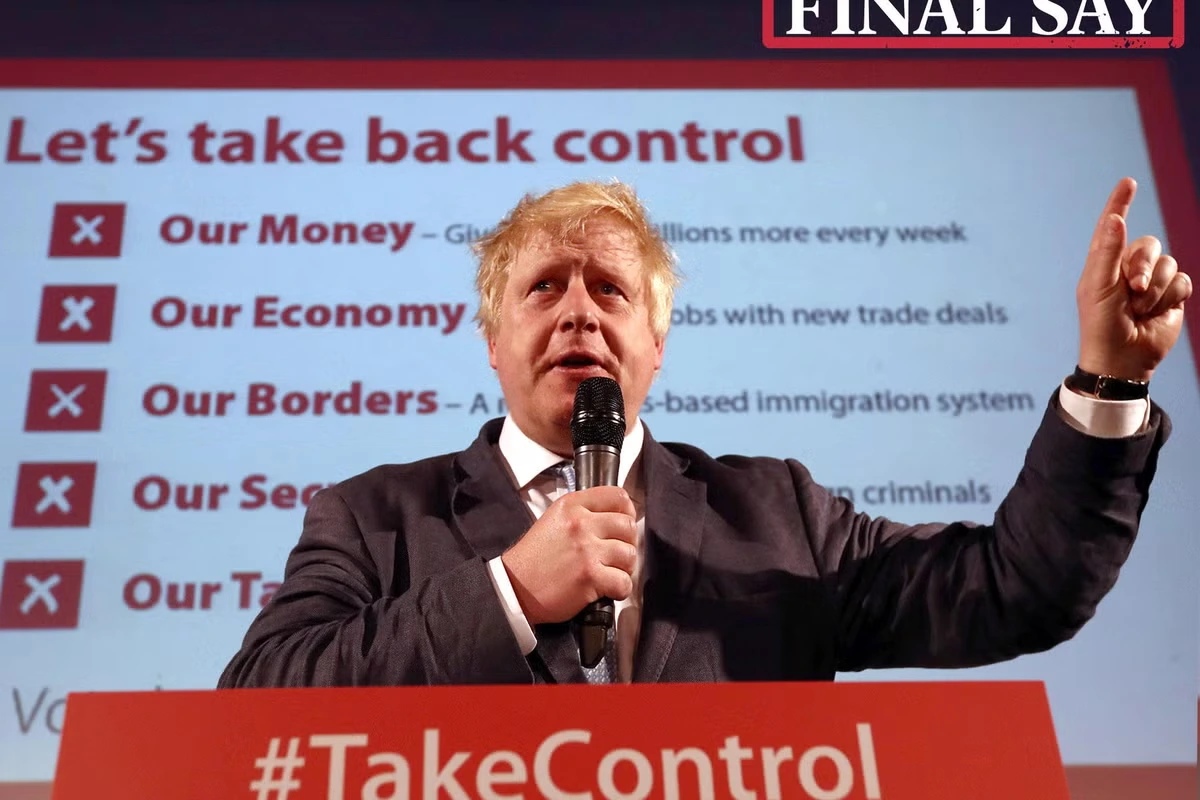
Despite appearances, the architects of Brexit and their successors were in control from the start. Yet rather than disabuse the public of its misconception, they doubled down on the lie and cemented their position in the driving seat. They fed us meaningless tautologies and slogans like “Leave means leave”, “Brexit means Brexit”, and “Get Brexit done”, all of which served to limit discussion on what leaving the EU might genuinely mean – and the possibility that, on beholding the destination, the British people might prefer to turn back. It was, on any analysis, a profoundly dishonest exercise.
But that’s the thing about Brexit: it was ever thus. Even if the referendum question had offered voters a genuine choice, that choice was vitiated by the unprecedented level of deception prevailing throughout. Only 11 days after the vote, Stephan Lewandowsky, a researcher on misinformation at Bristol University, wrote in the New Statesman: “Never before in history has so much deception been unmasked so quickly and with so little shame.”
One of the most pernicious and cruel things about subtle deceptions like Brexit is that unless you call out the deceivers and hold them to account, you enter cult-like unrealities from which it is extremely difficult to return. Often, part of the problem is psychological. People tend to be ashamed of having collaborated in their own exploitation. But many of those who voted Leave did so based on the false prospectus the masters of Brexit offered them. And no one chooses to be defrauded. If you buy a Rolex and it turns out to be fake, can we safely say you chose it?
Few would wish to rake over old coals. At the same time, to move forward as one nation means confronting some uncomfortable truths about the past. And top of the list is this: deception nullifies choice.
To assume choice where there’s overwhelming evidence of dishonesty risks confining the deceived to the will of the deceiver and the belief that they have chosen their own fate. And to many, this will sound alarmingly like what has happened in post-Brexit Britain, and indeed across the pond.
The legacy of the last 10 years is a world of prolific misinformation, where lies go unchecked and charlatans prevail. At a time when global cooperation and collaboration are desperately needed to tackle poverty, conflict and climate change, we simply cannot afford to play fast and loose with the truth. There is a way out of this place. And it starts with acknowledging the lies that led us here. Let’s hope our next prime minister agrees.
Tom Gaisford is a writer and a former barrister
Sign up to our free Europe: The Way Back newsletter here, or by using the form below