The Premier League season begins on 21 August - just 33 days after the World Cup final.
For some clubs, that leaves barely enough time to welcome players back from the mandatory three-week post-tournament break required under Fifa regulations, let alone integrate them into pre-season preparations.
Four Tottenham players were still involved on the final weekend of the tournament and may have little more than a week of training before the new campaign starts. Chelsea too were significantly affected.
And Manchester City and Arsenal have their own concerns after seeing more players than any other Premier League club reach the latter stages of the competition.
The World Cup may be over, but its impact on the Premier League is only just beginning.
Spurs feel the impact
Tottenham are among the clubs whose pre-season preparations have been most significantly impacted.
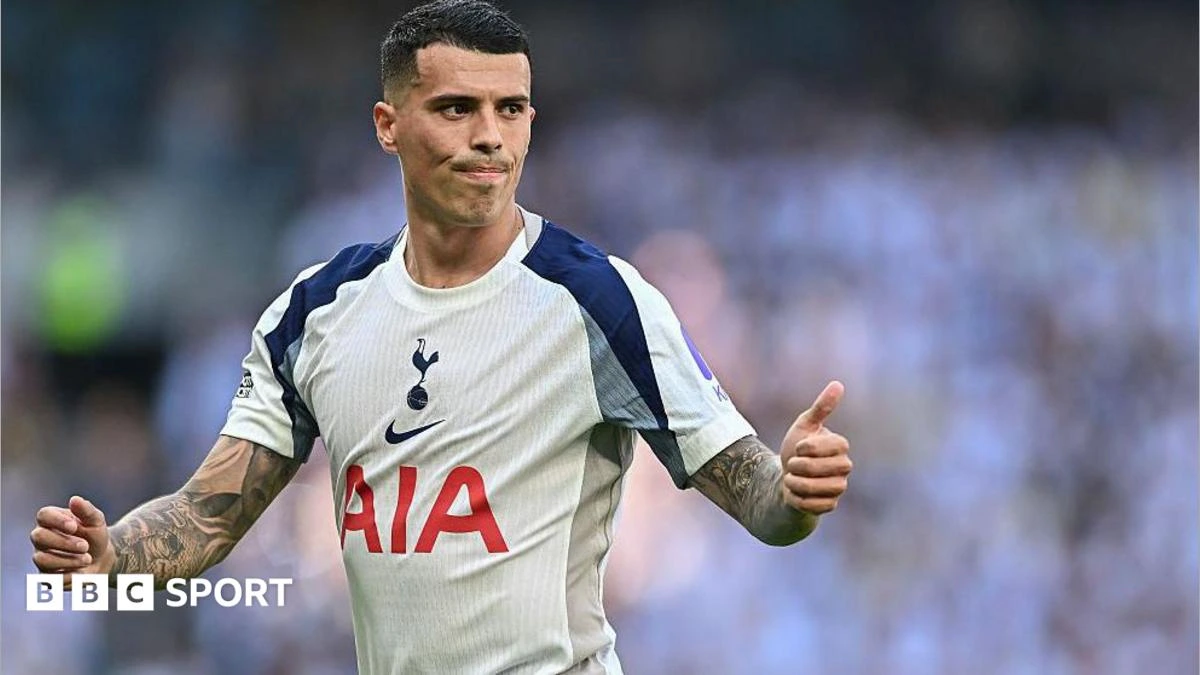
Cristian Romero and new signing Marcos Senesi reached the final with Argentina, while Pedro Porro helped Spain lift the trophy. Djed Spence remained with England until the third-place play-off on 18 July.
Assuming players take the minimum three weeks off under Fifa guidelines, the players who reached the final would not return until 9 August, while Spence's earliest return date would be 8 August.
That leaves them with around two weeks to reintegrate before their Premier League season begins at Brentford on 22 August.
However, Spurs confirmed that Senesi - who made two World Cup appearances after being a late call-up for Argentina - was at the club's training ground for the first time on Thursday for pre-season testing.
For managers, the challenge is not simply the absence itself. Players returning so late miss much of pre-season's tactical work, conditioning sessions and friendly matches, creating a difficult balancing act between preparation and recovery.
Arsenal and Man City carry heaviest burden
Manchester City and Arsenal, meanwhile, had the greatest concentration of players making deep runs into the competition.
City's World Cup contingent featured for several of the tournament's leading nations.
Rodri helped Spain win their second men's World Cup after playing 726 minutes, while Marc Guehi and Elliot Anderson helped England reach the final weekend.
Nico O'Reilly featured in England's semi-final run, while Erling Haaland and Jeremy Doku both reached the quarter-finals.
Arsenal's numbers were similarly striking.
Declan Rice and Bukayo Saka remained involved until England's 6-4 victory over France in the third-place play-off, while Martin Zubimendi and Mikel Merino reached the final with Spain.
William Saliba helped France reach the third-place play-off, although he was subsequently injured and did not feature again. Noni Madueke was part of England's run to the final weekend but did not play beyond the quarter-finals, while Martin Odegaard captained Norway to the quarter-finals.
The workload concerns are already being felt. City's Rodri recently had back surgery and is expected to miss a "short period" at the start of the season, while Saliba avoided surgery, but Arsenal have confirmed he will be sidelined for an "extended period" because of a back issue.
Even though neither setback can be attributed solely to the World Cup, both underline the physical demands being placed on players in an increasingly crowded football calendar.
Those clubs are likely to begin the campaign without having enjoyed a full pre-season with several key players.
Little time to recover
The World Cup's biggest workload belonged to Aston Villa goalkeeper Emiliano Martinez, who played all 810 minutes of Argentina's run to the final.
Liverpool midfielder Alexis Mac Allister ranked second among Premier League players with 749 minutes, while Spain midfielder Rodri was third on 726.
Several players effectively completed the equivalent of eight full matches during the tournament.
Goalkeepers naturally face different physical demands from outfield players, but the figures underline the extent of Premier League involvement throughout the competition.
With the players entitled to a minimum three-week break under Fifa regulations, for those involved in the final on 19 July - including Rodri, Porro, Zubimendi, Mac Allister, Enzo Fernandez, Emiliano Martinez and Lisandro Martinez - the earliest return date is 9 August.
Players who featured in England's third-place play-off will return a day earlier.
That leaves clubs with roughly 12 days to reintegrate some of their most important players before competitive football begins.
Football's calendar shows no sign of easing
The concerns extend beyond this summer's World Cup.
Many of football's leading players have now experienced three consecutive summers of major tournaments, following Euro 2024 and Copa America, then last year's expanded Club World Cup and now the World Cup.
One of those players is Rodri, who warned in 2024 that footballers were "close" to striking because of workload concerns.
Arsenal manager Mikel Arteta and Chelsea boss Enzo Maresca have also voiced concerns about the demands being placed on elite players and the growing number of matches in the calendar.
The growing injury list during the World Cup provided another reminder of those concerns.
Aston Villa midfielder Amadou Onana suffered a serious knee injury while representing Belgium, while Manchester United and Uruguay defensive midfielder Manuel Ugarte saw his tournament cut short by injury. Reece James also had his minutes carefully managed by England as he continued his recovery from a hamstring problem.
For clubs such as Tottenham, Arsenal, Manchester City and Chelsea, the challenge is now immediate.
The World Cup has concluded. The countdown to the Premier League season is under way.
But for some players, recovery comes first, and the race to be ready for opening weekend has only just begun.