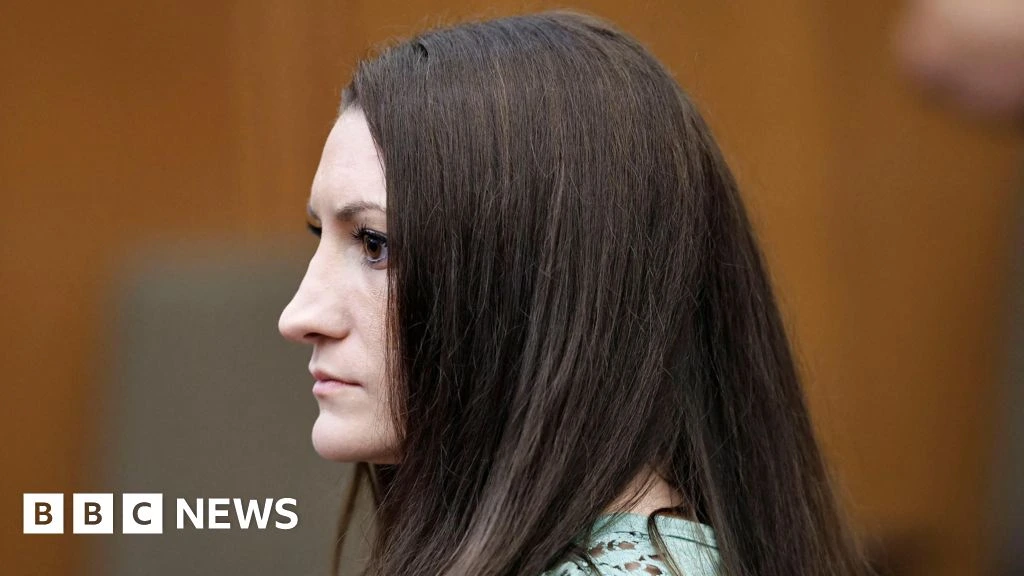
Lindsay Clancy's murder trial has gripped the American public for the last five weeks.
Lindsay Clancy's murder trial has gripped the American public for the last five weeks.
The 36-year-old former nurse killed her three small children in the basement of their family home in Massachusetts.
The 36-year-old former nurse killed her three small children in the basement of their family home in Massachusetts.
Charged with three counts of first-degree murder, she does not dispute killing her two sons and daughter.
Charged with three counts of first-degree murder, she does not dispute killing her two sons and daughter.
But her lawyer argues she was suffering from postpartum psychosis during the incident in January 2023.
But her lawyer argues she was suffering from postpartum psychosis during the incident in January 2023.
On Monday morning, a jury of nine women and three men will continue to deliberate whether she is criminally responsible for her actions.
On Monday morning, a jury of nine women and three men will continue to deliberate whether she is criminally responsible for her actions.
The prosecution argues Clancy made a calculated, intentional decision to kill them and knew right from wrong in that moment.
The prosecution argues Clancy made a calculated, intentional decision to kill them and knew right from wrong in that moment.
The defence, meanwhile, has said her mental illness prevented her from knowing what she was doing.
The defence, meanwhile, has said her mental illness prevented her from knowing what she was doing.
The jury is weighing several options:
The jury is weighing several options:
- not guilty
- not guilty by reason of insanity
- first-degree murder
- second-degree murder
- manslaughter
- not guilty
- not guilty by reason of insanity
- first-degree murder
- second-degree murder
- manslaughter
This hinges on the postpartum psychosis defence - her legal team argued that Clancy hallucinated a voice after giving birth to her youngest child that told her to kill the children.
This hinges on the postpartum psychosis defence - her legal team argued that Clancy hallucinated a voice after giving birth to her youngest child that told her to kill the children.
Expert witnesses told the court how severe this illness can be, and family members testified about Clancy's state of mind.
Expert witnesses told the court how severe this illness can be, and family members testified about Clancy's state of mind.
Under Massachusetts law, there is no burden on Clancy to prove her mental illness and that she lacked criminal responsibility.
Under Massachusetts law, there is no burden on Clancy to prove her mental illness and that she lacked criminal responsibility.
Rather, it is on the prosecution to prove beyond reasonable doubt that she was criminally responsible when she killed her children, criminal defence lawyer Elyse Hershon told the BBC.
Rather, it is on the prosecution to prove beyond reasonable doubt that she was criminally responsible when she killed her children, criminal defence lawyer Elyse Hershon told the BBC.
They can do this by either proving beyond reasonable doubt that she didn't suffer from a mental illness at the time or that, while she had a mental illness, she still controlled her actions and knew they were wrong.
They can do this by either proving beyond reasonable doubt that she didn't suffer from a mental illness at the time or that, while she had a mental illness, she still controlled her actions and knew they were wrong.
A not guilty verdict would mean Clancy went free but that is considered highly unlikely. Much more likely is a not guilty by reason of insanity, which would result in Clancy being detained at a hospital.
A not guilty verdict would mean Clancy went free but that is considered highly unlikely. Much more likely is a not guilty by reason of insanity, which would result in Clancy being detained at a hospital.
"The case really comes down to where she is going to serve the rest of her life; the defence thinks it should be a psychiatric facility, the prosecution thinks it should be in a state prison," Hershon said.
"The case really comes down to where she is going to serve the rest of her life; the defence thinks it should be a psychiatric facility, the prosecution thinks it should be in a state prison," Hershon said.
This is the most serious potential outcome for Clancy - being found guilty of first-degree murder, which is the intentional and premeditated killing of another person.
This is the most serious potential outcome for Clancy - being found guilty of first-degree murder, which is the intentional and premeditated killing of another person.
In the state of Massachusetts, this conviction carries a mandatory sentence of life in prison without the possibility of parole.
In the state of Massachusetts, this conviction carries a mandatory sentence of life in prison without the possibility of parole.
As Heather Cucolo, a New York Law School professor and expert in mental health law, put it to the BBC, Clancy would effectively need to be seen as "a monster in the jury's eyes" if they pick this outcome.
As Heather Cucolo, a New York Law School professor and expert in mental health law, put it to the BBC, Clancy would effectively need to be seen as "a monster in the jury's eyes" if they pick this outcome.
Jurors would have to find there was extreme atrocity or extreme cruelty or both to convict Clancy of this, and it would mean the prosecution had proven there were no mitigating factors.
Jurors would have to find there was extreme atrocity or extreme cruelty or both to convict Clancy of this, and it would mean the prosecution had proven there were no mitigating factors.
In this case, mental disease or defect - as the law describes it - could be a mitigating factor.
In this case, mental disease or defect - as the law describes it - could be a mitigating factor.
Prosecutor Jennifer Sprague said during closing arguments there was no dispute Clancy was suffering from mental illness but it was not so severe that she didn't know right from wrong.
Prosecutor Jennifer Sprague said during closing arguments there was no dispute Clancy was suffering from mental illness but it was not so severe that she didn't know right from wrong.
Expert witnesses for the prosecution cast doubt on whether Clancy actually heard the voice that she said ordered her to kill her children.
Expert witnesses for the prosecution cast doubt on whether Clancy actually heard the voice that she said ordered her to kill her children.
This is a catch-all for any murder that is not first-degree, under Massachusetts law.
This is a catch-all for any murder that is not first-degree, under Massachusetts law.
It applies to unlawful killings committed with malice or extreme recklessness, but without prior planning.
It applies to unlawful killings committed with malice or extreme recklessness, but without prior planning.
"For this verdict, the jurors may not be convinced that the actions leading up to the murder rose to the level of pre-planned [or] premeditated but that instead, Clancy consciously saw an opportunity to commit the killings at the specified time," Cucolo said.
"For this verdict, the jurors may not be convinced that the actions leading up to the murder rose to the level of pre-planned [or] premeditated but that instead, Clancy consciously saw an opportunity to commit the killings at the specified time," Cucolo said.
In the case of second-degree murder, Clancy would also face a life sentence - but with the possibility of parole.
In the case of second-degree murder, Clancy would also face a life sentence - but with the possibility of parole.
The jury received yet another option when the judge allowed them to find Clancy guilty of manslaughter - previously a point of contention between the defence and the prosecution.
The jury received yet another option when the judge allowed them to find Clancy guilty of manslaughter - previously a point of contention between the defence and the prosecution.
Manslaughter, which is defined as causing death by an unintentional, mistaken or neglectful act, carries a maximum sentence of 20 years in prison per count.
Manslaughter, which is defined as causing death by an unintentional, mistaken or neglectful act, carries a maximum sentence of 20 years in prison per count.
Intent is an important distinction between a verdict like manslaughter and the two murder verdicts, experts said.
Intent is an important distinction between a verdict like manslaughter and the two murder verdicts, experts said.
"This option allows the jury to accept that the murders were not planned or calculated but that instead Clancy made a split-second decision to act," Cucolo said.
"This option allows the jury to accept that the murders were not planned or calculated but that instead Clancy made a split-second decision to act," Cucolo said.
The prosecution is not obligated to demonstrate that she intended to cause the children's deaths for there to be a manslaughter conviction, she added.
The prosecution is not obligated to demonstrate that she intended to cause the children's deaths for there to be a manslaughter conviction, she added.