It has to be one of the most bizarre moments leading up to EU referendum.
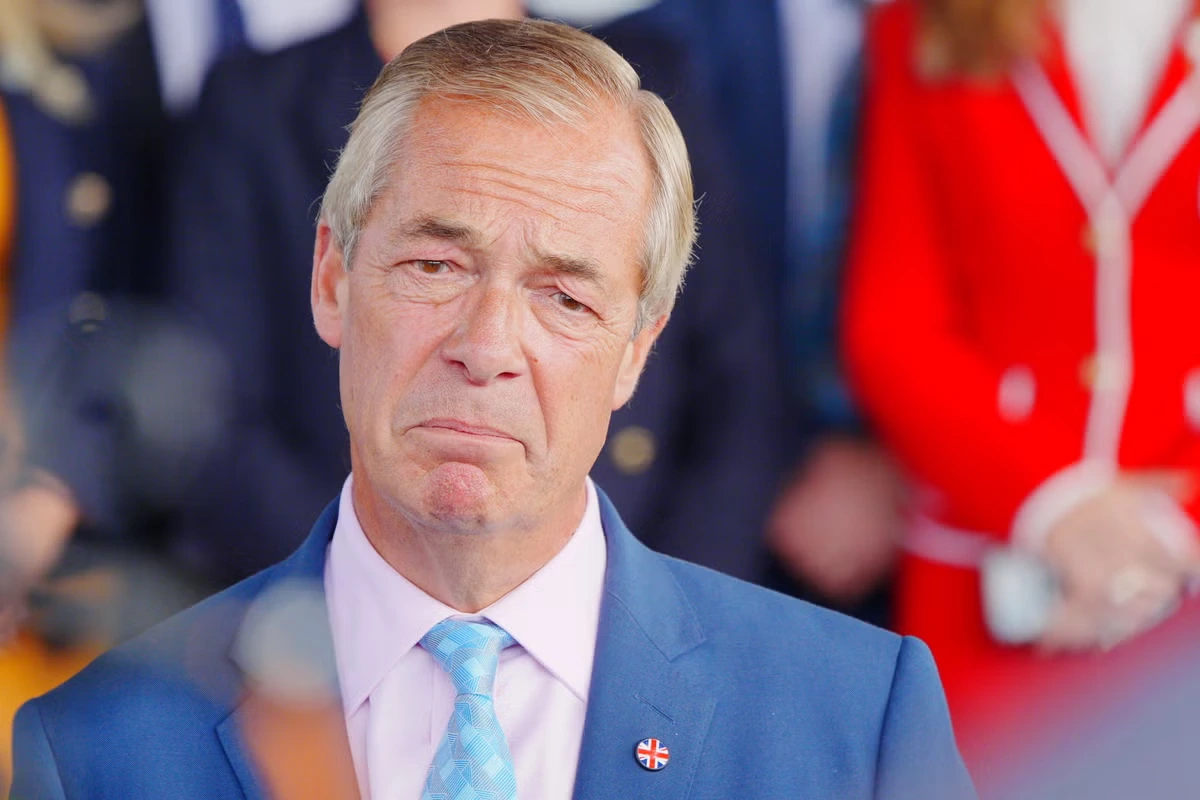
Sailing valiantly up the Thames, Brexit poster boy Nigel Farage grinned at the head of an armada of fishing boats on route to Westminster, loudly calling for the withdrawal from the EU.
But suddenly, under the shadow of Tower Bridge, a handful of vessels of dinghies launched a surprise “attack” to intercept the flotilla, with none other than Bob Geldof at the charge.
“You are no fisherman’s friend… you are a fraud,” yelled the founder of Band Aid at Mr Farage as Remain supporters waved “In” flags in the London breeze.
The outlandish scene was followed by a trade of colourful insults across the muddy waters before a reported exchange of hose fire at Mr Geldof’s vessel.
Back on dry land, Mr Farage blasted Mr Geldof for the “pretty disgraceful” spectacle and accused him of showing “absolute contempt” for fishermen and women supporting the Leave river protest under the Fishing For Leave banner.
The group endorsed a pledge that Britain would take back control of UK waters. And so did the vast majority of the country’s fishing community, with nine in 10 saying they intended to vote Brexit.
A few months later they got what they wanted at the referendum.
But today, a decade on from the vote to leave the EU, many in the fishing community say their industry was betrayed after promises Britain would regain control of its waters.
“We feel betrayed because we were convinced, promised, we were going to get these basic points with the failure to uphold a limit on foreign vessels fishing with 12 nautical miles from the UK coasts being the biggest let down," says fisherman Anthony Hoskin, at Newlyn Harbour in Cornwall.
Mr Hoskin is sat with Andy Wheeler, assistant to the chief executive of the Cornish Fish Producers Organisation (CFPO), in the co-operative’s modest offices overlooking the stone-walled harbour dating back to 1435. At its foot is a Victorian building that once served as a “fisherman’s rest” more than a century ago.
It’s a bright afternoon and several fishing boats – a mix of beam trawlers and crabbing boats – are slowly entering the blue-water harbour where workers are busy loading huge arctic lorries destined for places as far away as Portugal.
“The one thing you can rely on with our politicians is they are going to make a mess of it,” Mr Hoskin continued. “The idea for Brexit was good but the people we had, the people we always have, they all seemed to be very weak and didn’t have an understanding of our industry. We were ultimately betrayed.”
Since the 1970s, under the European Economic Community, the predecessor of the EU, European vessels were allowed to fish up to six nautical miles off Britain’s coast. As part of the Leave campaign, the exclusion zone was hoped by many to be pushed back to 12 nautical miles.
But the UK did not negotiate an exclusion of EU fishing fleets.
Instead, Boris Johnson agreed to an uplift in fishing quotas for UK vessels over five-year transition period - before last year, Sir Keir Starmer extended the arrangement allowing European vessels to operate in UK waters until 2038 last year.
At his desk, Mr Wheeler recalls Mr Farage visiting Newlyn, England’s biggest fishing port, ahead of the Brexit referendum. Other politicians took the same campaign route to the town some 300 miles from London in the months leading up to the vote.
“Fishing pulls on the heart strings of the nation and they [Leave campaigners] really tried to tap into it with promises over sovereignty,” says Mr Wheeler.
“But you harness in the fact fishing is such a low percentage of GDP (0.05 per cent), in all these promises, they were never going to come to fruition because of the required trade-offs in the Brexit negotiations. Fishing was going to come last in the priorities.”
One of Mr Wheeler’s jobs is to divide the dozens of quotas for fishing species among his group’s 150-or-so members. His job is to also warn foreign vessels away from shellfish pots laid down by UK boats, particularly in waters within 12 nautical miles of the coast.
Using WhatsApp and a live map of marine traffic, he messages a French vessel about a 16-mile sq area where pots had been anchored. The French crew, on this occasion, appears to oblige – but it’s not always the case.
Often in storms, when many smaller UK vessels are forced to harbour, French trawlers use the headland at the southern tip of Cornwall as a shelter to continue to fish day and night, leading to weekly conflict with UK-laid pots.
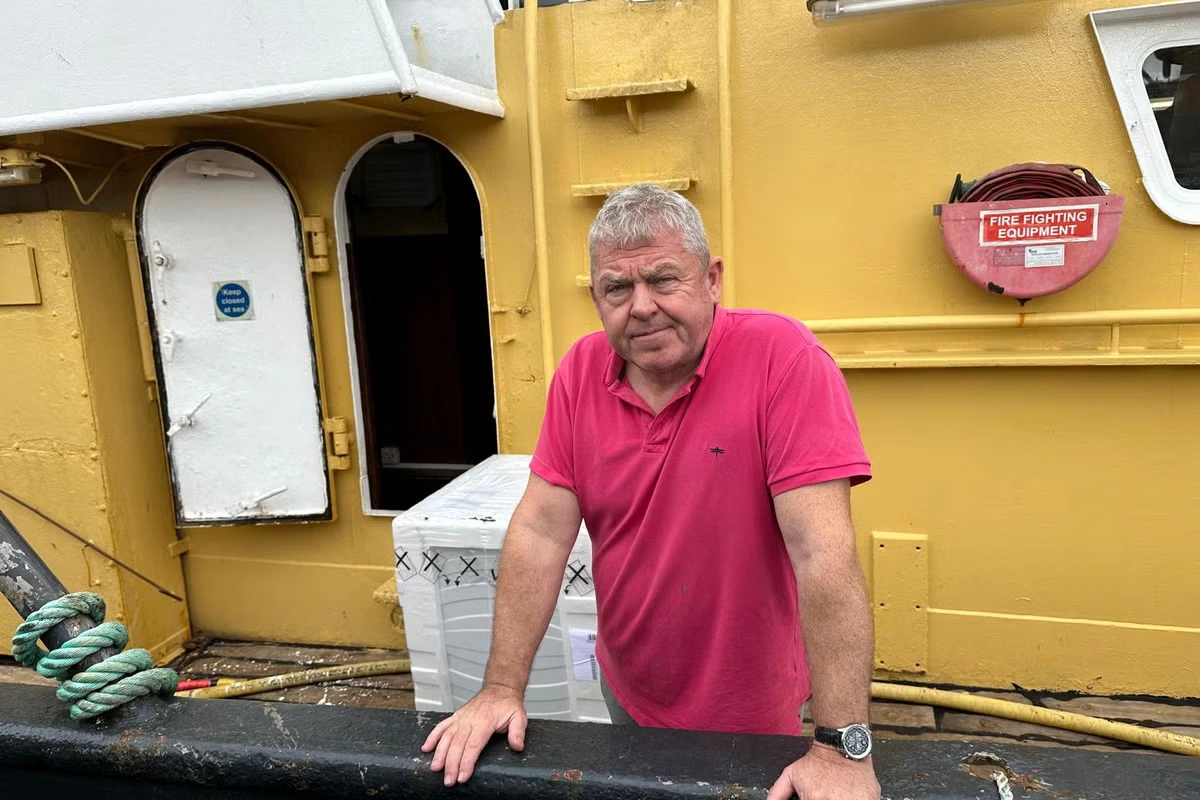
“It’s £100 a pot and thousands of pounds for new rope,” says fisherman Richard Carroll, who is down in the harbour standing feeding replacement rope through a machine for his pots after damage caused by trawlers in December.
Mr Carroll, who is skipper of the blue-painted, Winter of Ladram, says he spends £60,000 to £70,000 on new pots and ropes every year, and any attempt to reclaim a penny from a list of ships he reels off has resulted him “not receiving a penny”.
The 49-year-old says: “I’m fishing in UK fishing waters but my gear is being damaged by foreign vessels who ignore our messages. How is that fair? Imagine if we did the same in French waters, they’d be an outbreak of war.”
Mr Carroll, who works for a fishing company called Waterdance, also bemoaned Brexit for difficulties employing crew, with complications over paperwork meaning previously employees had to leave. He now has six Latvians onboard. “Good workers,” he says.
Further down the harbour is Josh Dornam, a 34-year-old fisherman, who has been forced to return from Holland over a rise in exporting costs post-Brexit. “I voted for Brexit because I thought it was going to help the fishing industry – but it was all based on lies,” he says.
Brexit voter Phil Mitchell, aged 55, is in charge of a beamer catching fish including lemon sole and monkfish. He says a failure to stop foreign vessels fishing in UK waters was the biggest let-down of the Brexit deal.
“When the weather gets bad they [French and Belgium vessels] can continue to fish, so when we come out we find the stock low.
“The idea [of Brexit] was you could control your waters and push the fellows [foreign vessels] out, which hasn’t happened. We’ve been far too weak, and the quotas have also been far too small, it’s disgusting.”
The failure to achieve promises was reflected by former environment minister George Eustice in a local BBC phone-in five years ago. Mr Eustice, who lost his Cornwall seat of Camborne and Redruth at the last general election, admitted: “We didn’t achieve as much as we hoped on fishing, I’m not going to pretend otherwise.”
An hour’s drive from Newlyn on the northern shore of the Cornwall coast, is the seaside resort of Newquay.
In a town that flourished as a fishing port in the Victorian period, the 1833-built harbour now has only around 15 fishing vessels, with almost as many fishing trip boats, charging around £25 for two hours at sea.
In the nearby Red Lion pub, where a battered cod and chips costs £15.95, framed pictures of the harbour show dozens of masted fishing vessels with railway tracks on the packed walls of the man-made cove.
But on the quiet main street (we visit on a Tuesday in March), there’s little evidence of the town’s fishing history. Asked where a locally-caught crab sandwich can be bought, the worker at Travelodge shrugs his shoulders. “Not here,” he says.
Outside, overlooking the picturesque harbour, a shellfisher shares the same frustrations as those in Newlyn.
“We were all going to be better off as a result of Brexit,” he says.
The man, who runs a vessel with his son, picking up shellfish from around 2,000 pots laid within 12 nautical miles of the north Cornwall coastline.
“We were told there will be no French and Belgium ships towing away our gear, and it’d make our lives easier,” he says. “I wasn’t going to be left unable to sleep knowing my thousands of pounds worth of rope and pots could be gone.
“We were even going have control of our quotas, no dictating from Brussels. But we were sold down the river, simple as that.”