In the aftermath of Russia’s attack on Ukraine in February 2022, Polish-Ukrainian solidarity emerged as one of the most heartwarming subplots of the Kremlin’s brutal war. Millions of Poles, remembering their country’s own tragic history with Russia, mobilised to help Ukrainian refugees with food, shelter and support as they crossed the border in huge numbers to flee the conflict.
Four years later, that outpouring of generosity and solidarity is a distant memory, as the two countries find themselves locked in a bitter dispute over history that has led to angry rhetoric, mutual mud-slinging and a threat from Poland to block Ukraine’s EU accession until it gets its historical house in order.
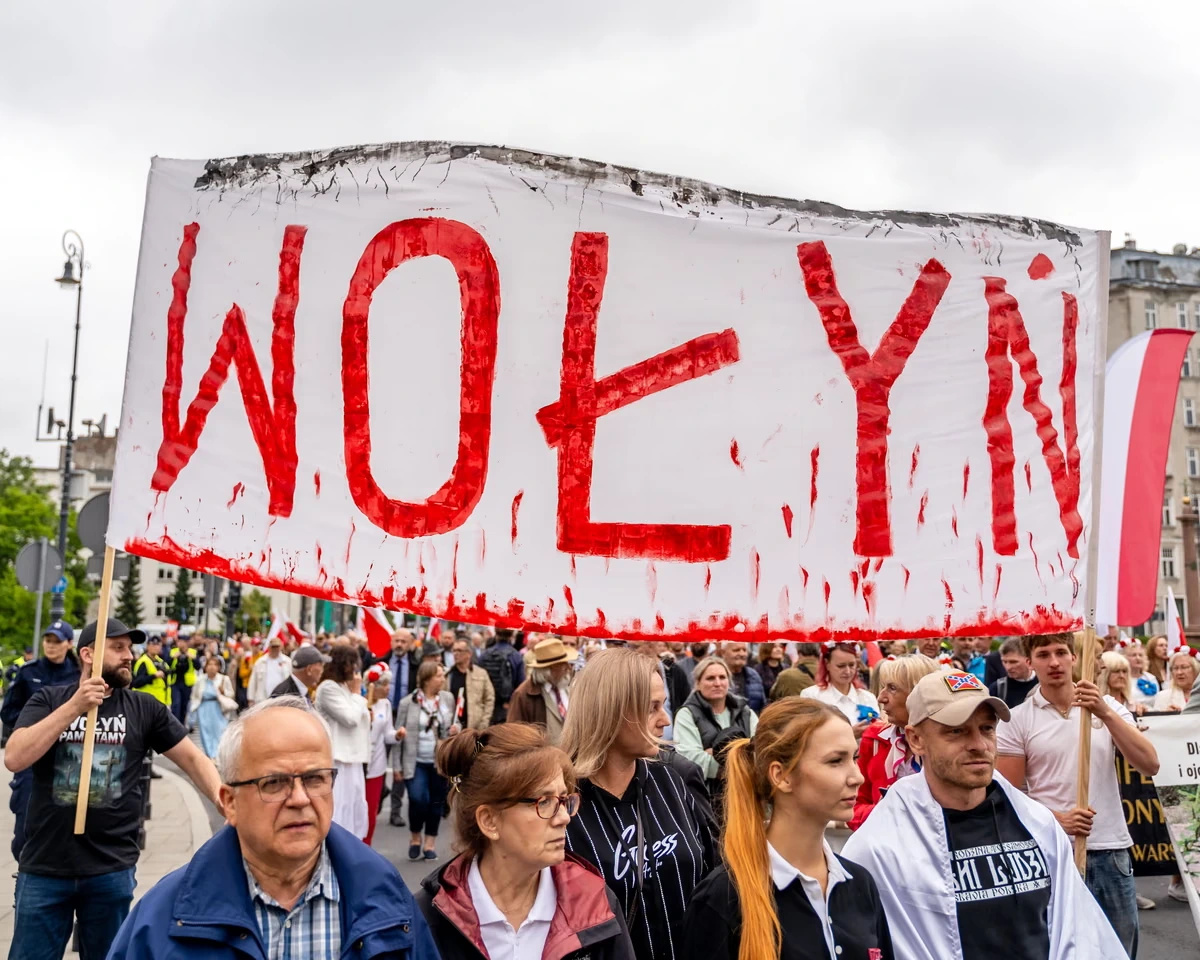
The dispute revolves around the Ukrainian Insurgent Army (UPA), one branch of which was responsible for the massacre of about 100,000 Poles in 1943 in Volyn, western Ukraine, then a part of Poland called Volhynia. The episode has long been a sticking point between Warsaw and Kyiv, but the spark for the latest conflict came when the Ukrainian president, Volodymyr Zelenskyy, decided to name a military unit after “heroes of the UPA” despite Polish protests.
In Ukraine, the UPA is mainly remembered for its fight against Soviet rule, while its involvement in the massacre of Poles and Jews is minimised, or portrayed as one episode in a catalogue of crimes by different forces during the bloody chaos of the second world war. Some Ukrainians also point to the historical context of discriminatory policies against their forebears by Polish authorities. However, there is little doubt the killings took place, and in Poland they have been called a genocide.
“Praising genocide or turning a blind eye is an invitation to commit further genocide,” said Poland’s nationalist president, Karol Nawrocki, in a speech marking the anniversary of the massacres on Saturday, close to the border with Ukraine.
In June, Nawrocki stripped Zelenskyy of a Polish state award due to the dispute. This led to a spate of Ukrainian officials returning their own Polish decorations, and an angry response from Ukraine’s political elite.
“No one will ever again dictate to Ukrainians which heroes to honour, which holidays to celebrate, or which history to study,” Kyrylo Budanov, Zelenskyy’s chief of staff, wrote on X, as the government announced it was moving forward with a “pantheon” of Ukrainian national heroes, likely to include UPA figures.
Zelenskyy is an unlikely nationalist figurehead. He won office in 2019 as an “inclusive” figure who could unite Ukrainians, and he grew up in a Russian-speaking Jewish family from Ukraine’s south-eastern industrial belt, far removed from the nationalist heritage of western Ukraine. “Suddenly, a guy who knows perfectly well how damaging honouring the UPA is has started playing with this nationalism,” said Bartosz Cichocki, Poland’s ambassador to Ukraine from 2019 until 2023.
Some suggest Zelenskyy has judged there will be clear domestic benefits from the move, at a time when society is consolidated in the fight against Russia and eager for national heroes. “He’s gaining domestic legitimacy but he’s losing something much bigger … I think they’ve been surprised by how strong our reaction has been,” Cichocki added.
In Poland, Nawrocki has eagerly latched on to the scandal. As a historian, he has focused on Polish suffering and heroism in past roles, and last year he beat a liberal candidate to the presidency with anti-Ukrainian sentiment as part of his platform. Stripping Zelenskyy of the highest civilian honour bestowed by the Polish state was a surprising move, not least because the same award was given to – and never revoked from – the Italian dictator Benito Mussolini and the avowedly pro-Russian former German chancellor Gerhard Schröder.
Yet it is clear that there is political capital in taking a hard line on Ukraine, and a recent poll commissioned by the Polish news outlet Onet suggested the scandal has boosted Nawrocki’s popularity, raising his trust ratings to an all-time high of 55%, up more than 8% from just a month previously.
Yaroslav Hrytsak, a Ukrainian historian, said: “Poland has a memory warrior in power, who uses memory as an instrument for partisan fights in Poland.” Referring to Nawrocki and Zelenskyy, he added: “On the one side we have a president who cares too much about history and on the other side a president who cares too little about history.”
Standing in stark political opposition to Nawrocki is Poland’s coalition government, led by Donald Tusk. Some of its members have tried to strike a more conciliatory tone on Ukraine, but have also been infuriated by the UPA announcement. With parliamentary elections due next year, they are acutely aware of the ramifications of seeming soft on Ukraine.
Last weekend, Tusk announced the creation of a “wall of memory”, to be inscribed with the names of every known victim of the massacre, and suggested Ukraine had no place in the EU until it confronts its own history. “Reconciliation in Europe after the second world war was possible because of truth and the ability to speak honestly about the past,” said Tusk. “Those who want to join this community have to be ready for that truth.”
Such open breakdown in Polish-Ukrainian relations may be new, but discontent had been simmering on both sides for some time. Unity had prevailed because Ukraine knew it could not afford to alienate a key ally, while Poland understood that Ukraine’s fighting forces stood between it and an expansionist Russia. But incidents such as a blockade of Ukrainian trucks by Polish lorry drivers in late 2023 hinted at a more complicated relationship beneath the surface.
For many Poles, there is resentment towards the more than 1 million Ukrainians who now live in Poland, stoked by nationalist politicians who ignore the fact that Ukrainians are net contributors to the Polish economy.
For Ukrainians, there is a feeling that Poles look down on them and do not appreciate the sacrifices they are making to protect the rest of Europe from Russia. Many express anger at the humiliating treatment they receive at Polish border crossings – one of the only ways to leave Ukraine given the lack of flights into the country since 2022. Even after four years of war, there are often minimal facilities, aggressive border guards and long queues in the open air, where elderly people and young children are forced to wait for hours in heat, rain or snow.
“Every time I am entering Poland I feel my whole body shaking with rage at the way they look at us, the way they treat us,” said Olha, a graphic designer from Kyiv who did not want her surname published.
More widely, Jewish groups have also raised concerns over the years about Ukraine’s veneration of certain UPA figures whose followers were complicit in the Holocaust. In 2010, the US historian Timothy Snyder criticised the former Ukrainian president Viktor Yushchenko for honouring Stepan Bandera, leader of one wing of the UPA. Snyder described Bandera’s political goal as “a one-party fascist dictatorship without national minorities”, yet streets in cities across Ukraine have been named after Bandera, and his quotes can be found on the walls of trendy Kyiv cafes.
This is not evidence, as Kremlin propaganda has long suggested, that Ukrainian society is consumed by fascism. The broad acceptance of the UPA is part of a bigger process of national consolidation in Ukraine, which has seen many people embrace an array of Ukrainian figures from the past as the country comes together against the Russian threat.
Hrytsak said: “Previously, Ukraine was very divided about the UPA, and approximately half of Ukrainians thought they were bandits or collaborators. Since the beginning of the war, there was an immediate consensus that they are freedom fighters.”
Citing “ignorance and lack of sensitivity” in Ukraine over the more controversial legacies of the UPA, he added that many Ukrainians now see the nationalist movement solely through the lens of its fight against Soviet power, and were surprised and affronted at the strong Polish reaction.
Karolina Romanowska, the head of the Polish-Ukrainian Reconciliation Association, whose grandfather was a survivor of Volhynia, made a film about the massacre in 2023, and has travelled to Ukraine on numerous occasions, sometimes organising workshops in the places where it happened. “Often, people were completely shocked by what they were hearing,” she said. “It was the first time they had ever heard about things that had happened in the places they lived.” She said the recent Ukrainian rhetoric had left her “sad and disappointed”.
Efforts to gather historians from the two countries to come to a common understanding now appear doomed, with politicians taking the lead in discussions and conciliatory voices going unheard. Over the weekend, at a ceremony in Volyn for the victims of the massacre, the top Polish diplomat in Ukraine also drew attention to “Ukrainian victims of Polish violence”, which drew fury in Poland and calls for him to resign.
With an election in Poland next year, and possibly one in Ukraine soon if the military situation allows, many suggest there is little hope for de-escalation. Zelenskyy and Nawrocki spoke for an hour in an attempt to defuse the tension on the sidelines of the Nato summit in Turkey last week, but did not reach any agreement.
Cichocki said the relationship was likely to recover to some extent – given that most Poles appreciate that Warsaw and Kyiv face a common enemy in Russia – but that in future it may lack warmth and genuine commitment. “It will be limited to mutual interest, where we will see that both Poles and Ukrainians benefit, he said. “There will be no more romance, no more naivety, and Poland will become very strict on Ukraine’s EU integration.”
Hrytsak said any reckoning will take time, and blocking Ukraine’s path towards European integration would be counterproductive: “All national reconciliation that occurred in Europe happened after wars, not during them. Ukraine has to win the war and or at least survive, then we can start dealing with these complicated issues.”
He added that, given the long and complex history between the two countries, it was “kind of a miracle” that they successfully managed the relationship for so long after the fall of communism. Many predicted then that a new conflict was inevitable, but a different path was taken. Now, the hard-won goodwill is evaporating rapidly. “The miracle has been shattered,” he said. ”Where it goes from here could be very dangerous.”
Additional reporting by Jakub Krupa