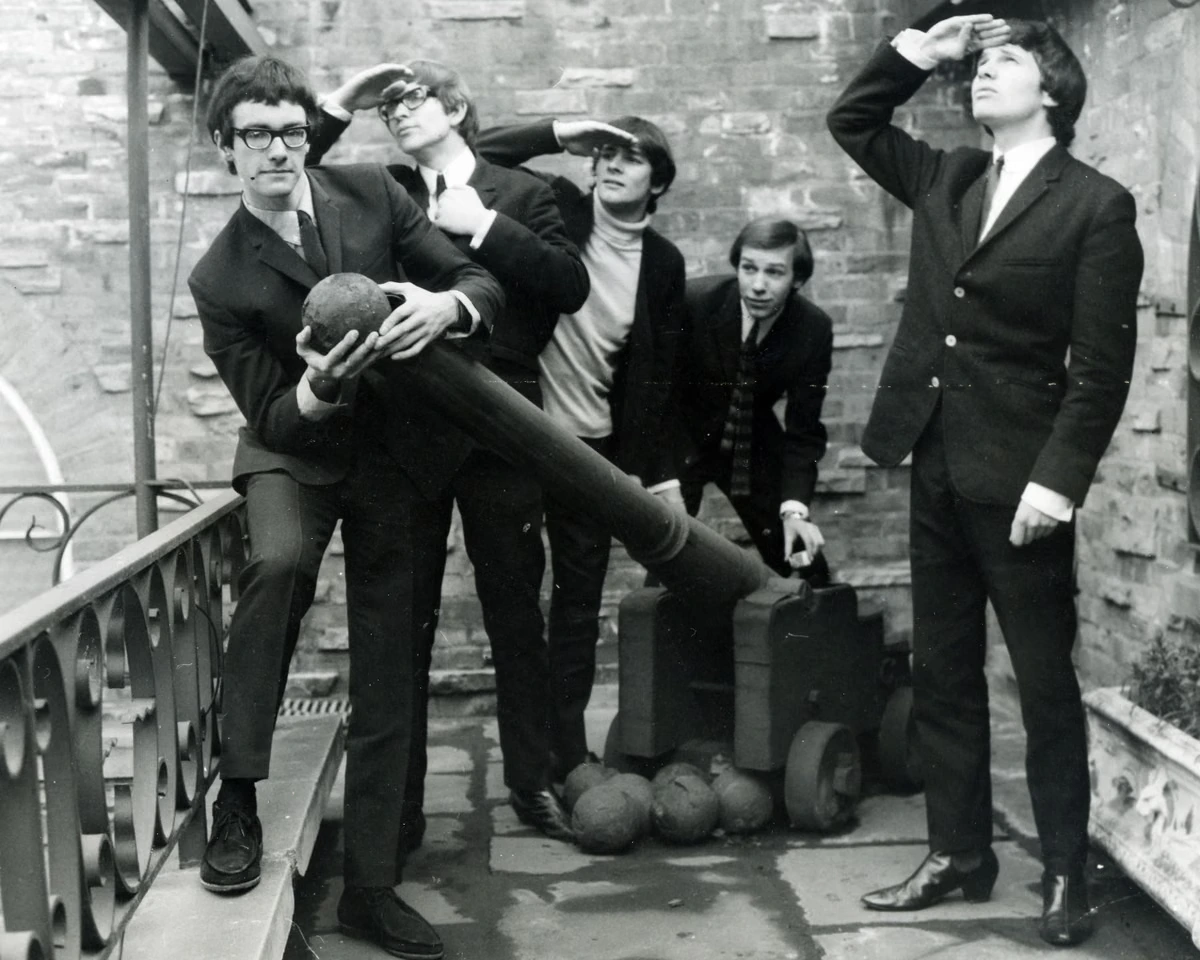
Rod Argent, writer, Hammond L100 organ and backing vocals
Our first single, She’s Not There, was one of the first songs I wrote, when I was 18. It remained our only hit in the UK by the time we recorded our second album, Odessey and Oracle, in 1967 – this was only three years later but it felt like a lifetime. We’d recently signed to CBS and had been given £1,000, which even then was not a huge amount of money. We recorded pretty quickly in a few sessions spread over six months, producing ourselves for the first time.
Time of the Season was the last song I wrote for the album. I was sharing a flat with our bass player Chris White, and we were going to each other’s rooms and playing the different things we had. I said: “I think I’ve just written a song that could be a hit.”
The lyrics reflected the mood of the time. In 1967 there were pictures of war on TV, and people were seeing what a devastating thing it was and saying: “I’m not going to be part of this.” The “Who’s your daddy?” line was, in a way, going back to Gershwin’s Summertime, one of the first songs we performed together, but “Is he rich like me?” had kind of a double meaning: “rich” in the sense of understanding how to live.
We recorded at EMI Recording Studios, later known as Abbey Road. The Beatles were in before us making Sgt Pepper’s Lonely Hearts Club Band – we had the benefit of some of the same recording engineers, in particular Geoff Emerick. He found this special way of marrying the bass and the tom-tom sound. I suggested the clap before the beat and a vocal sound after, which became the exhalation.
We soon used up our £1,000, but because of the tight timeframe we were working to, there was a spontaneity and freshness that was very valuable. It’s a method I try to preserve. It’s just much more fun.
Colin Blunstone, lead and backing vocals
I was learning Time of the Season while we recorded it. Standing where the vocal mic had been set up, I was looking at this big red recording light with a clock underneath it while I tried to get it right. The studio was very strict about sessions finishing on time, and there were these guys with long brown coats moving equipment about. On one occasion, we were standing around a piano working out harmonies and they wheeled it out in the middle of a take.
Rod always has an overview of his songs in his head – he can hear the drum track, what the bass should be playing and what the lead vocal should be doing. He’s extremely good at phrasing, so he was in the control room saying: “No, this phrase should be on the beat but the next phrase should be pushed …” Meanwhile, all the time I’m watching the big hand creeping towards five o’clock.
Things got a little bit heated. I was saying, “If you’re so bloody good, you come in here and sing it,” and he said, “You’re the bloody lead singer, you stand in there until you get it right!” The language was probably richer than that. It makes me smile now to think I was breaking off from saying the most terrible things to Rod to sing these angelic lines: “It’s the time of the season for loving …”
Rod likes to think I disliked Time of the Season, but I just thought there were more commercial songs on the album. Care of Cell 44, to me, sounded like the epitome of a hit single, but obviously I was wrong – it was released ahead of Odessey and Oracle and wasn’t successful. By the time the album came out in Terry Quirk’s misspelled sleeve, the band had split.
The following year, Al Kooper left the American band Blood, Sweat & Tears and became a staff producer at CBS. He’d just visited London where he bought about 80 albums that weren’t available in the US, and later said Odessey and Oracle was the one that really stood out. On his first day at CBS he went to see the label’s president, Clive Davis, and said: “Whatever it costs, we have to get this album.” And Davis said: “We already have it. We were going to pass on it – it’s not commercial.”
Al fought for it, and CBS released two singles that disappeared without trace. I think Time of the Season was only put out as a favour to Al, but one DJ in Boise, Idaho, would not stop playing it, and that was where our luck turned. It gradually picked up huge radio interest.
By then, it was well over a year since we’d broken up and we were all doing other things, but we soon heard that a couple of other bands had started touring the US as the Zombies – one included two members of ZZ Top. The manager of one of these bands claimed they were the original members with a new singer, because Colin Blunstone had been killed in a car crash. It turned out my death was reported in Rolling Stone.
The original Zombies didn’t play together again until 1997, when a box set was launched at the Jazz Cafe in London. I was singing with my solo band, but the other guys came up on stage and let it be known they wanted to play – we hadn’t planned it or rehearsed. We did She’s Not There and Time of the Season and it sounded really good. I thought: “You know what? There really was something special about that band.”
Can you say a song’s got legs? Time of the Season wasn’t a success in the UK charts, but people know it. It’s often used in films set in the 1960s but also appears in commercials, where it sounds really current. I’ve never quite worked out how it can be both of its time and timeless.