‘Silencio!” Two dozen tank-topped and T-shirted figures fall quiet, and look expectantly at movement director Nuno Silva. “If you’ve got a cloak, accio it now …” With that summoning charm cast, broomsticks are stowed, wands holstered, suitcases grabbed.
The Harry Potter and the Cursed Child rehearsal room – a creaky church hall whose Victorian wall clock gives a serendipitously Hogwarts flavour – is a near-permanent bustle of activity. A sound technician quickly re-sets cues on her laptop, a costume designer helps an actor into a suspiciously long pair of gloves. Associate director Nicola Samer is quietly running notes with a couple of the leads while the rest of the company preps for the next scene.
There’s a film-set vibe, every moment put to urgent use. On 20 September, the final curtain came down on the original two-part production of Cursed Child, the decade-long West End phenomenon. In under three weeks, a new one-part version must be ready to take its place. Some of this cast have performed the two-parter for years; many others, including the two young leads, have only just joined them. This is their only full week together in the rehearsal room.
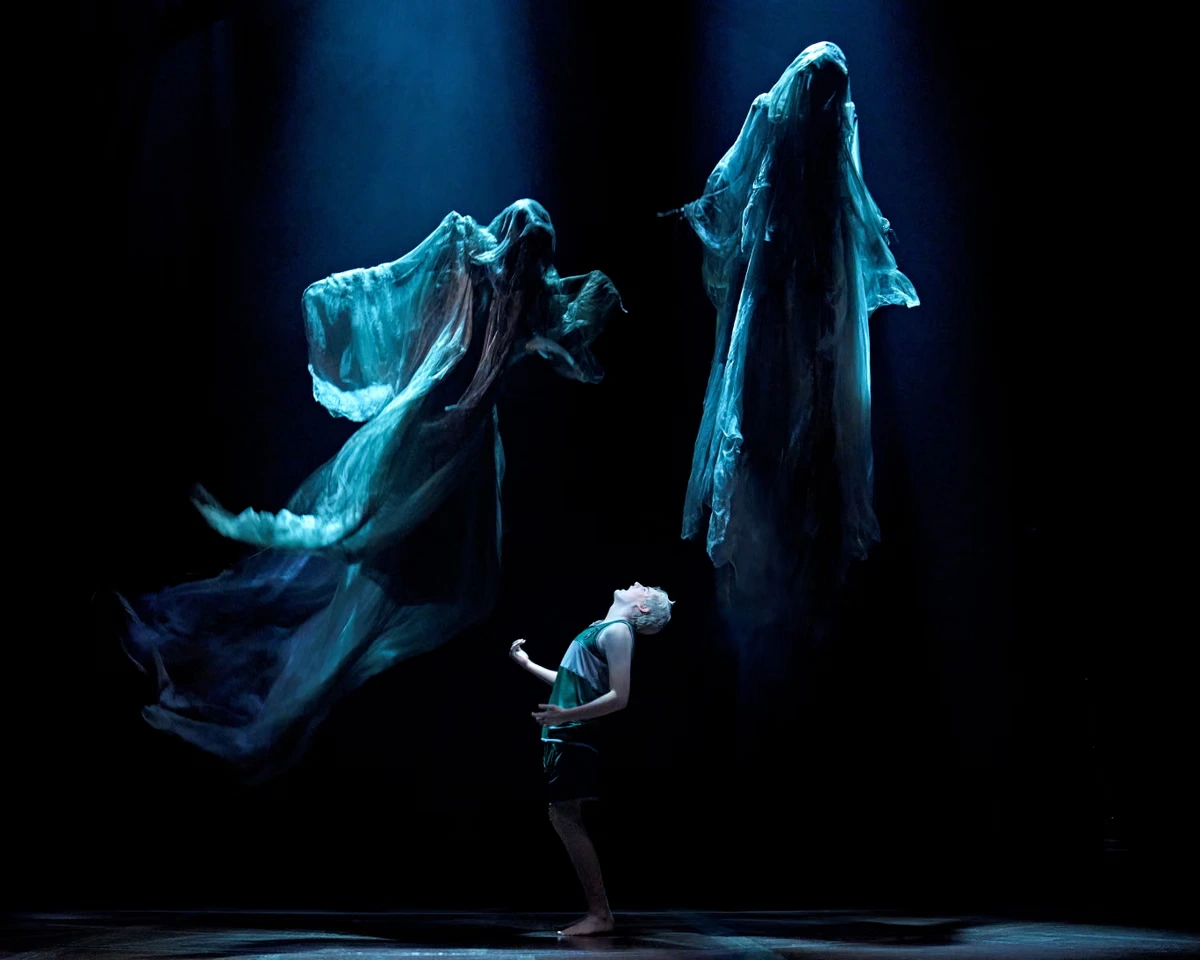
It’s appropriate that the scenes must be learned at pace. The two shows’ combined six-hour running time is becoming three: producer Sonia Friedman compares it to swapping a Bentley for a Ferrari. As the company work out their choreographed positions using the cabalistic pattern of tape marking the floor, it’s clear that the play is compromising none of its signature theatricality.
The demands on the company are intense, performers constantly collaborating with stage management to move set-pieces on, off and around the stage. “It’s a very physical show,” says Silva. “It’s the Hogwarts Express – it doesn’t stop at Croydon.” The annual casting process is a long and rigorous one precisely because actors need to know how much is expected of them when they get the role. Even so, says Samer, the move to a one-parter is a big shift. “It’s going to require a lot of endurance.”
Jonathan Bulleid, who teaches the cast the actual magic they’ll perform, is relishing the opportunity to try out new tricks. He has worked across seven cast changes already on this production, and until now his job has been “repetition, not creativity” – ensuring everyone reproduces the illusions designed by Jamie Harrison to a gold standard. “But with the one-parter there are new bits coming in that we get to play with for the first time … and everything is happening at speed. So it’s even more mind-blowing than it was originally.”
There are new emotional beats, too. David Ricardo-Pearce, who has played Harry for the past three years, is asking if he can play a certain scene a little less combatively than he has before. Learning a new script while still performing the old one has, he admits, been “quite confusing” on occasion. “But it’s also exciting because you have to rethink every single scene, and reinvestigate how you’re going to play the character.”
Emotions have, of course, always run high when it comes to JK Rowling’s wizarding universe. It is testament to writer Jack Thorne and director John Tiffany that Cursed Child so quickly became canon among the fans. Some are upset with the upcoming change – but then, even Tiffany has admitted that he and Thorne had to be “dragged kicking and screaming” to rework a script they had spent so much time perfecting.
“That was the reflex reaction,” he says now. The two-part production transferred to Broadway in 2018, and the producers were soon considering a shorter version that could work elsewhere. Tiffany says he felt “very protective” of Thorne, who had won both a Tony and an Olivier award for the original script, until the pair spoke to their friend Vicky Featherstone, artistic director of the Royal Court, about the prospect. “She was, like, get over yourselves and just do it. It’ll make it cheaper and more accessible for audiences. And that’s the thing that I’m most proud of, that some people will come that couldn’t afford to see it before.”
For Thorne, maintaining the complexity and depth of the original was vital. “John and the producers were very, very clear that if we didn’t, we don’t do this. And hearing that was actually very freeing – you’re not writing with an axe over your head.” That said, entire sequences, and a number of cherished characters, were lost in the process. “Even though I was tempted to say, ‘Just act faster’, ultimately that doesn’t work,” says Tiffany. “Every word has to earn its place. It becomes more poetic.”
The resultant story focuses less on Harry Potter himself, and more tightly on the adventure of his son, and his son’s best friend. It reopened on Broadway after Covid at three-and-a-half hours: a three-hour version has since replaced it. “That one actually works better,” says Tiffany. “Otherwise kids get too restless, they need a wee. I need a wee.” The production has played in San Francisco, Melbourne, Toronto and Hamburg, and is still running in five cities including Amsterdam and Tokyo. More than 14 million people have seen Cursed Child worldwide.
London, however, is still considered the flagship – not least because the workings of the Palace Theatre allow for stage effects (from shooting flames to a hydraulic water tank) that can’t easily be included elsewhere. The final performances of the two-part production were, inevitably, a sad goodbye. Now, just a few days later, a new raft of actors are practising their cloak-swooshing and luggage-levitating, in the manner of true Hogwarts students. “We have people in here who went to drama school in order to be in this show,” says Samer, shaking her head. “It’s sobering that we’ve been open long enough for people to go through training!”
Audiences have also changed considerably over the course of the 10-year run, and the creatives are well aware that a younger generation of digital natives come to entertainment with different expectations and attention spans. “This version is much more cinematic,” says Silva. “So I think for a new audience that is used to phones and iPads, this is for them.”
Friedman and her fellow producer Colin Callender have both spoken of their pride that Cursed Child has become an “entry point” to the performing arts for many thousands of people (the London production has been seen by more than 300,000 first-time theatregoers since 2016). “It’s part of my responsibility to ensure that theatre has future generations,” says Friedman. “And we know that people who have seen Harry Potter have then gone on to see other plays – not musicals, but Tom Stoppard, or Jez Butterworth.”
She is unapologetic about the move to a one-part show. “The cost of living has gone up 30-40% since the pandemic. The only way we could continue to run it in a two-parter would be by charging an amount in tickets that was unaffordable and inaccessible.” Friedman points out that other two-part plays – such as the RSC’s Nicholas Nickleby or Stephen Daldry’s production of The Inheritance – have never run for more than a few months. Cursed Child’s record 10th year will probably never be neared, let alone broken.
The one-parter, of course, is already a proven success. In Tokyo, audience members show up in home-crafted costumes and headdresses. On Broadway, there are passionate ovations each night as Tom Felton – who played Draco Malfoy in the films – makes his entrance. Felton’s run as the grown-up Draco comes to an end in the New Year, when Rupert Grint will step on stage in the character of Ron Weasley once more. Might the London show one day have actors from the films play their grown-up versions on Shaftesbury Avenue? “If they wanted to, I would love it,” says Tiffany. “Tom first had his eye on London – but Broadway is Broadway, the wages are bigger, and it’s very, very attractive.”
In the final few moments of rehearsal, a pair of giant staircases are wheeled to the middle of the floor. Hogwarts’ moving staircases – a memorable feature from both the books and the films – play a pivotal role in Steven Hoggett’s original choreography, and remain one of Thorne’s favourite elements. “Halfway through the play there’s a scene we call the staircase ballet, and originally there was quite a lot of dialogue there. One day John came and sat down beside me and went, I think the images speak better than the words, don’t they? And he was totally right. The fact that my favourite bit of the play is wordless, I always find quite amusing. Even if we did a five-minute version of Harry Potter, that would still be there.”