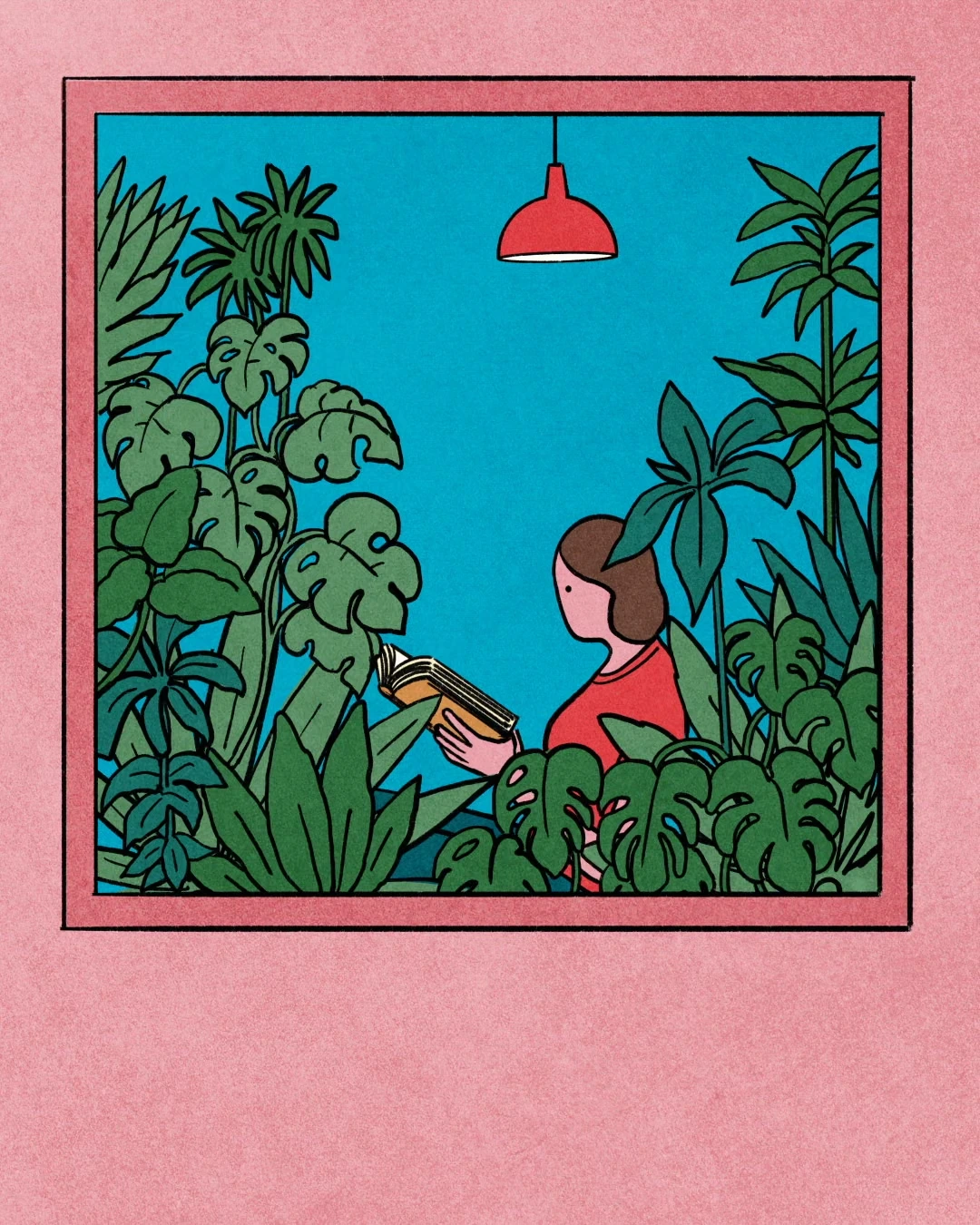
Life starts all over again when it gets crisp in the fall,” wrote F Scott Fitzgerald in The Great Gatsby, and after the beach reads of summer, now feels like the time to settle down to more ambitious projects. Not slim works like Gatsby, but the bigger beasts you have been circling for some time. A book to wrap yourself up in as autumn becomes winter.
The year I spent reading The Lord of the Rings when I was eight made me want to be a writer. The novel’s scope and the sheer amount of time I lugged it around with me combined, so that whatever I was doing, part of me was always thinking about it. This is what long books, in particular, can do.
Years after I left Middle-earth, the three weeks occupied by my first reading of 2666 (the longest book I’ve read multiple times) became an ongoing logistical challenge: how could I dispense with parenting, my office job and sleep as quickly as possible, so that I could immerse myself again in that torrent of words?
Hopefully some of the choices below will exert a similar pull on you. I’ve set the minimum page count at 600 – long enough that you’ll probably spend at least a week with them, quite possibly several. Books originally or usually published as separate volumes don’t qualify, so no Lord of the Rings, In Search of Lost Time, Septology or The Man Without Qualities. And, in the way of such lists, your own personal favourite is probably, scandalously, absent. But here are 20 novels that will define your life for a chunk of time, and might just change it for ever.
2666 by Roberto Bolaño (2004)
Knowing he was dying, Bolaño planned to publish the five-part novel 2666 in separate volumes, which he thought would be more financially rewarding for his family. His executors went against his wishes, the monumental 900-page book becoming a sensation first in Spanish then in Natasha Wimmer’s English translation. The novel brings the fictional Mexican border city of Santa Teresa, and its horrific wave of femicides, to large-scale and unforgettable life: it is a monstrous, irresistible vortex in which cops, serial killers, academics and a mysterious German novelist all find ends of one kind or another.
Middlemarch by George Eliot (1871-2)
Voted No 1 in the Guardian’s 100 best novels of all time poll earlier this year, Middlemarch is one of those “everything” books that, to quote Adam Mars-Jones on Ulysses, “swallowed me whole” when I read it. Eliot began a novel about a provincial doctor, abandoned it to write something quick about a character called Dorothea Brooke, and ended up combining the two into an utterly singular and unforgettable work. Perhaps its true brilliance lies in its being both a deeply enjoyable account of the varied fortunes of its large cast of characters, and a profound philosophical exploration of the nature of reality.
Dhalgren by Samuel R Delany (1975)
The story of a young man – “Kid” – becoming a poet and having a breakdown in a semi-ruined American city called Bellona, the million-selling Dhalgren is one of the stranger and more opaque science-fiction novels – and definitely the most modernist – to have found a mass audience. A circular text, it moves between plot and plotlessness, variant versions of itself, and repetitious bursts of seemingly pointless sex and violence. One to surrender to rather than conquer, the book’s draw is its extraordinary all-enveloping weirdness.
Villette by Charlotte Brontë (1853)
Written after the deaths of her siblings Emily, Anne and Patrick, Villette is the weirdest, bleakest, most puzzling of Charlotte Brontë’s novels, and my favourite by some distance. Lucy Snowe finds not only work as a schoolteacher in Villette (a fictionalised Brussels, where Brontë had taught in her 20s), but also ghosts, mental derangement and unrequited love. It features one of the great ambiguous endings in literature, what Brontë referred to as “a little puzzle”, supplied when her father objected to her original ending in which she summarily dispatched Lucy’s lover in a shipwreck.
Darkmans by Nicola Barker (2007)
An epic set in the “geographical plughole” that is Ashford, Kent, Darkmans encompasses the Channel tunnel, drug dealing, salad phobias, samurai swords, the spectre of history, and the much less metaphorical spectre of John Scogin, Edward IV’s court jester. Barker’s antic novel, which was shortlisted for the Booker prize, runs to more than 800 pages of twitchy invention, relentless as – but much funnier than – a burst water main.
It by Stephen King (1986)
By my count, King has written 17 novels that would qualify for this list, three of them longer than 1,000 pages. It isn’t just one of his longest novels, but arguably his best. Terrifying from the off, when Georgie Denbrough chases after his paper boat in an autumn storm and encounters Pennywise the clown, it also memorably evokes childhood friendship and, in the town of Derry, plunges into the dark side of American history: crime, racial and sexual bigotry, economic downturn and industrial pollution.
The Magic Mountain by Thomas Mann (1924)
Mann began this novel in 1913, intending a comic counterpart to his tragic novella Death in Venice. He completed it more than a decade later, by which time his political outlook had entirely changed, the first world war had reshaped Europe, and the book had become a philosophical meditation on time, European civilisation and the conflict between liberal humanism and rightwing reaction. Set in a tuberculosis sanatorium, it’s also one of the great books about the terror and seduction of illness.
A Brief History of Seven Killings by Marlon James (2014)
“The problem with a book,” notes one of the 75 characters in A Brief History of Seven Killings, “is that you never know what it’s planning to do to you until you’re too far into it.” What James’s Booker-prize-winning novel is planning to do is completely take over your life until you’re done with it, or it’s done with you. The attempted assassination of Bob Marley is the focal point, but the book’s braided streams of consciousness carry us from Kingston’s ghettoes to CIA plots to America’s crack epidemic.
Lies and Sorcery by Elsa Morante (1948)
When Natalia Ginzburg, then an editor at the Italian publishing house Einaudi, received the manuscript of this debut novel, she read it in a day. For decades available in English only in a bowdlerised edition, 200 pages shy of its original length, the book was restored in a new translation by Jenny McPhee in 2023. This was thanks largely to repeated praise from Elena Ferrante, who said that this portrait of the artist as a young woman showed her “what literature can be”.
Jonathan Strange & Mr Norrell by Susanna Clarke (2004)
The world of Clarke’s richly imagined debut is a familiar one: the Regency England we encounter in Jane Austen novels. But in this version of it, magic, which is real but long fallen into disuse, is making a comeback. The conflict between the two magicians of the title – one conservative, the other willing to engage with powerful and treacherous forces – is involving, but the real pleasure of this book lies in the texture of its world; some of the most enchanting and playful moments lie in its footnotes.
The Luminaries by Eleanor Catton (2013)
Aged 28, Catton became the youngest writer ever to win the Booker prize, and The Luminaries – all 832 pages of it – the longest book to be so honoured. A tale of theft, murder, ghosts and desire in a New Zealand goldrush town, the book is an ever-shifting puzzle, an ingenious astrological mechanism that constantly repositions its characters and events in relation to one another. As Robert Macfarlane, chair of the Booker judges, said: it’s “as intricately structured as an orrery”.
Underworld by Don DeLillo (1997)
In the decade from 1982, DeLillo went on an incredible run: The Names, White Noise, Libra, Mao II. Six years of near-silence followed, broken by this 800-page epic about lives lived in the shadow of nuclear annihilation during the second half of the 20th century. Incredibly, by utilising the same elements that had made his work so distinctive – a fragmented narrative, the depiction of daily life saturated by mass media, and an atmosphere of what he refers to in an earlier novel as “accumulating dread” – he produced a sweeping, social epic of the kind few thought he had either the particular skills or the desire to write.
The Loneliness of Sonia and Sunny by Kiran Desai (2025)
It gives you an idea of the scale of Desai’s novel that the lovers at its heart should meet only on page 233, just over a third of the way through the book. The Loneliness of Sonia and Sunny took 20 years to write, and at one point, Desai claims, ran to 5,000 pages. Which makes the published version (688), which bounces between 1990s India and the American diaspora, and between social and magical realism, an exercise in restraint.
The Brothers Karamazov by Fyodor Dostoevsky (1879-80)Vast in scope and ambition, Dostoevsky’s final novel (he died three months after its publication) unfolds over just a few days. Dmitri, Ivan and Alyosha’s occupations divide along dutiful, professional and religious lines (soldier, journalist, monk), but all of them – plus their bastard half-brother, the servant Smerdyakov – are scarred by the monstrousness of their conniving father. It’s grim, funny, savage, and possesses irresistible momentum. Other than Shakespeare, said Virginia Woolf, “there is no more exciting reading”.
A Table for Fortune by William T Vollmann (2026)
Hearing about Vollmann’s new novel, which is 3,096 pages long and costs £150, was actually the inspiration for this piece. The first two sections span the cold war, 9/11 and the “war on terror” from the point of view of a CIA analyst. The second half follows his homeless, mentally unwell son across the US. Vollmann’s longtime publisher quailed at the length of the manuscript and returned it with edits. The next time they saw it, it was 400 pages longer. He now has a new publisher. Is it worth it? I’ll tell you in about a year.
Lonesome Dove by Larry McMurtry (1985)
For mysterious reasons, numerous people have recommended this 1985 novel to me in recent years. Mysterious, that is, until I began this utterly addictive story of two friends, retired Texas Rangers, attempting the first cattle drive from the Rio Grande all the way to Montana. The journey encompasses locusts, bandits, torrential rain, kidnappings and stampedes. Punctuating these episodic adventures are haunting images of American crimes: the starving remnants of Native American tribes, pyramids of buffalo bones, and the environmental destruction wrought by the cattle industry.
A Glastonbury Romance by John Cowper Powys (1932)In very simplified terms, Powys’s chaotically structured but singular 1,200-page novel is about a conflict between two residents of the Somerset town of Glastonbury. The industrialist Philip Crow wants to exploit the land and electrify the county (even the caves of Wookey Hole), while ex-Methodist minister John Geard’s ambition is to restore Glastonbury’s status as a pilgrimage site. Powys inhabits not just the consciousnesses of his living characters but also corpses and at one point a tree. Margaret Drabble compared his achievement to Tolkein’s. Although his country is “less visited”, she wrote, “it is as compelling, and it has more air”.
Ducks, Newburyport by Lucy Ellmann (2019)
It didn’t win the Booker, but at 1,030 pages
it remains the longest novel ever shortlisted for the prize. The book consists of a single sentence unfurling from the mind of an Ohio homemaker, interrupted occasionally by an account of a mountain lioness raising her cubs. The book’s momentum is maintained by repeated use of the phrase “the fact that”, hurtling from the domestic (washing dishes) to the political (Syria, Trump) to the relatable (“the fact that I have not read all the books I want to read, not even half”).
War and Peace by Leo Tolstoy (1869)
For a long time War and Peace represented to me the stereotypical challenging long novel: to be endured more than enjoyed. When I finally read it I was surprised not only by how incredibly fun it is, but also by its many, many short chapters: 365 of them, which makes it easy to read in snatches. Yes, those snatches will go on for months, but you’ll live for them. Another surprising observation, for which Yiyun Li gets the credit: the drawing room encounters are like military campaigns and battles, while the parts about war are full of pettiness and scheming.
Miss MacIntosh, My Darling by Marguerite Young (1965)
There is undoubtedly an intellectually macho aspect to reading long novels with forbidding reputations. Working eight-hour days, American novelist Marguerite Young took 18 years to write Miss MacIntosh, My Darling, and on its publication in 1965 one reviewer complained that “her principle of composition is never to use one word if fifteen thousand will do instead”. I’m not going to say this one is easy, but with sustained attention Young’s visionary prose exerts a powerfully hypnotic effect. Even so it will probably remain, as the New York Times noted in her obituary, “one of the most widely unread books ever acclaimed”. How’s that for a challenge?
The Rouse by China Miéville (2026)
The winner of this year’s Goldsmiths prize, Miéville’s 1,200-page novel was two decades in the making. Over that time, he has said, “it became the defining work of my life”. It braids an evocatively described English childhood of the 1970s and 80s with the story of an occult cold war military programme to weaponise the dead, the testing ground for which lies in Britain’s dwindling colonial territories. The Rouse is a weird, glitchy, gloomy and frightening book, purposefully baffling at times, but thrilling, too.