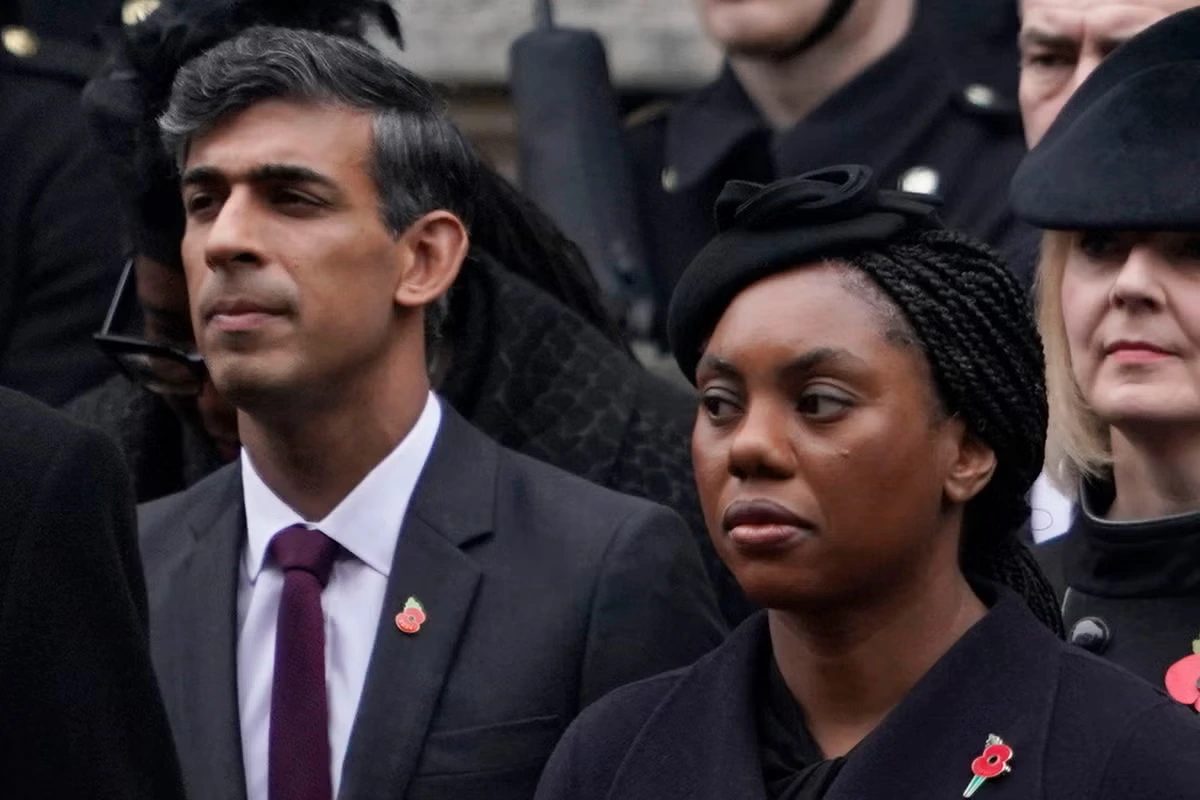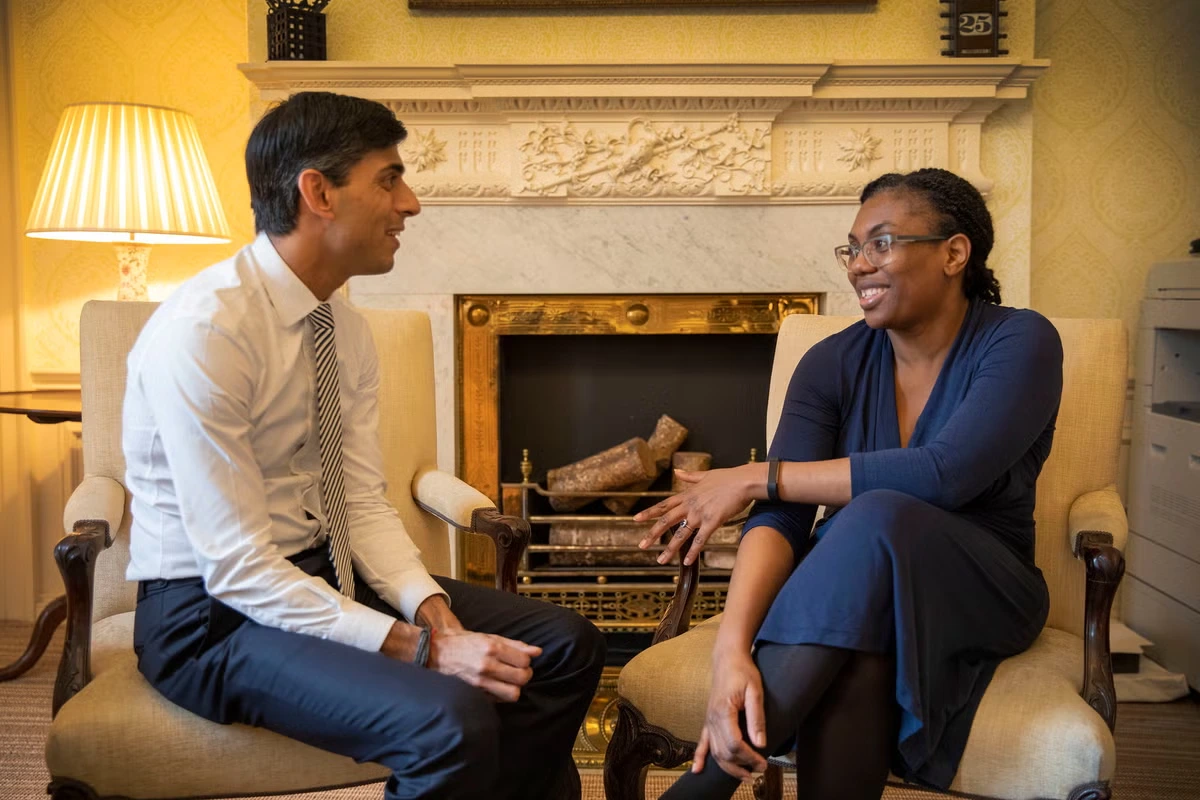
The relationship between Kemi Badenoch and Rishi Sunak was amicable if awkward from the outset of his premiership in October 2022: No 10 was never quite sure where her loyalties lay.
“It all kicked off in the autumn of 2023 (ahead of the Tories election defeat in July 2024). No 10 had started seeing her as a potential leader at that time,” said one of Badenoch’s aides.
The moment of maximum jeopardy (for Sunak) arrived when the “New Conservatives” (a group of Tory MPs from ‘Red Wall’ former Labour seats) privately gathered 40 signatures for an amendment (to new immigration laws) to sink the legislation and government.
Badenoch had offered tacit support to the plotters. Why would she, as a serving cabinet minister, open herself up to such danger? “Kemi did not respect Rishi. She thought he was rude to her,” said a plotter.
Badenoch had been talking to (ex home secretary, now Reform MP) Suella Braverman and (ex immigration minister, now Reform MP) Robert Jenrick and others in the days leading up to the Commons vote, all attempting to convince her to resign and join their rebellion.
Braverman had lost her mantle as “champion of the right”, to be replaced, with Michael Gove’s advocacy, by Badenoch. “Gove had realised he’d never be prime minister himself: helping Kemi get there was the next best thing,” explained a No 10 aide.
One of Badenoch’s advisers told the plotters: “If you get 40 signatures on the amendments, we can talk.” Badenoch’s resignation at this moment could have destroyed Sunak’s premiership.
She had enormous self-belief in her ability to do the job, but she recognised that jumping now was a major risk, especially when some MPs told her that “she wasn’t well known enough with the public” to become PM just months before an election.
Risks were weighed against gains: “She was actively looking at bringing Sunak down, constructing imaginary cabinets and offering jobs,” said one insider.
Badenoch, who has always strongly denied being disloyal to Sunak or conspiring against him, supposedly told others involved in the plots that: “If you get the numbers, I will go to Rishi and argue for your amendments, and if he does not compromise, I will give him an ultimatum and resign.”
Some were more bullish, insisting she had promised she would “take him out”.
“I can see how people in No 10 would hear people going round talking to MPs and think they were canvassing support for her, but she wasn’t going to challenge Rishi,” said one.
Badenoch duly met with Sunak: “You should look at leaving the ECHR and harden the bill,” she insisted.
“No, I’m not willing to leave it at this stage…” Sunak riposted.
“Sunak somehow managed to convince her to stay,” said one aware of the conversation. Badenoch kept her powder dry. For now.
After the Rwanda vote rebellion, Sunak told his advisers: “These rebels are just attention seekers. They want an excuse to defect following a public sacking. They probably want me to tell them to f**k off so they can pontificate, but I have a country to run. I’m not going to rise to the bait.”
The plotters searched around desperately, and alighted on the idea of a resignation by a high-profile minister with enough supporters to tip the no-confidence in Sunak letters (to Sir Graham Brady, chair of the backbench Tory 1922 committee) over the threshold.
The plotters, including Simon Clarke (a cabinet minister in Boris Johnson’s administration), Jenrick (and others), had identified targets hovering in the departure lounge: the closest to the gate was Badenoch. “We had the numbers and Kemi was willing to go,” said one.
Ever since Jenrick’s resignation, Badenoch and her team had been mulling a challenge, phoning up several cabinet ministers on the evening of his resignation to see “if anyone was interested in changing the captain”.
One of her aides told the plotters that “60 (Conservative MP) signatures” on an amendment (to toughen up immigration laws) would be enough support to make her jump.
But Badenoch remained fearful: unsure if the plotters’ strength would translate into leadership votes – while keen to avoid the image of wielding the knife.
The book states that it was vital for Badenoch that any plotting by her supporters, including Michael Gove, on her behalf ‘had to be deniable.’
It quotes an ‘insider’ saying: “She didn’t say to them that she didn’t want to be leader, though she worried Penny Mordaunt might snatch it from her. Equally though she she didn’t stop Gove or others as she definitely wanted it.”
Instead of risking damaging her own prospects as a future Tory leader, she needed a “third party” to test the water.
Jenrick recalled: “He (Simon Clarke) had thrown in his lot with Kemi, working to persuade people to put in enough letters that would prompt a leadership election and running a whipping operation to get people to back her.”
Badenoch says she had no interest whatsoever in standing against Sunak in January 2024, even if she had had sufficient support.
“Kemi was not well behaved – her team were agitating,” said a cabinet minister close to the action. “A menace, she orchestrated trouble in the cabinet and her people constantly briefed everything,” said a future member of her frontbench.
Former Tory MP Danny Kruger (now a Reform MP) said Badenoch “definitely wanted it but she was concerned about being a fag-end prime minister”.
Relations between Badenoch and Sunak were “amicable if awkward” from the moment he became prime minister when she was business secretary.
She was cross at being sidelined by No 10 due to her minimised department.
She turned up demonstrably angry and late at a Tory MPs “away day” hosted by Sunak (early in 2023) to rally the troops – as she had for his first cabinet meeting.
She cornered Rishi in the front hall while MPs milled around. “Why are your Downing Street team blocking me from doing my trade deal?” she demanded.
“She was noisily haranguing him,” said one observer. Craig Williams (Tory MP and Downing Street aide to Sunak) stepped in to suggest they continued the conversation off-line.
Badenoch was placated and stayed on for dinner, but warning shots had been fired.
The price of all their unrest… as Sunak foresaw, was to depress the party’s voting support as the electorate was sick of Tory infighting.
Extracted from ‘Sunak at 10: The Last Conservative Prime Minister?’ by Anthony Seldon and Tom Egerton. Atlantic Books, 27 August, Hardback, £25