The morning has thinned out into low, wispy cloud. Beneath it, Shakhtar Donetsk’s players are going through their paces. It is a light session for those who did not start against Veres Rivne the previous day; that means Arda Turan observes from the side, watching with the director of football, Darijo Srna. A stray ball zips towards them and Srna, after juggling it up, bends it into the goal with a familiar right-footed arc. “Modric!” exclaims Turan. But the two men are football legends in their own right and, as they continue to joke before Srna dashes away to take another phone call, the thought occurs that this happy scene could be played out almost anywhere else. Nearby, just beyond the team’s accommodation, a lake shimmers under the emerging sun.
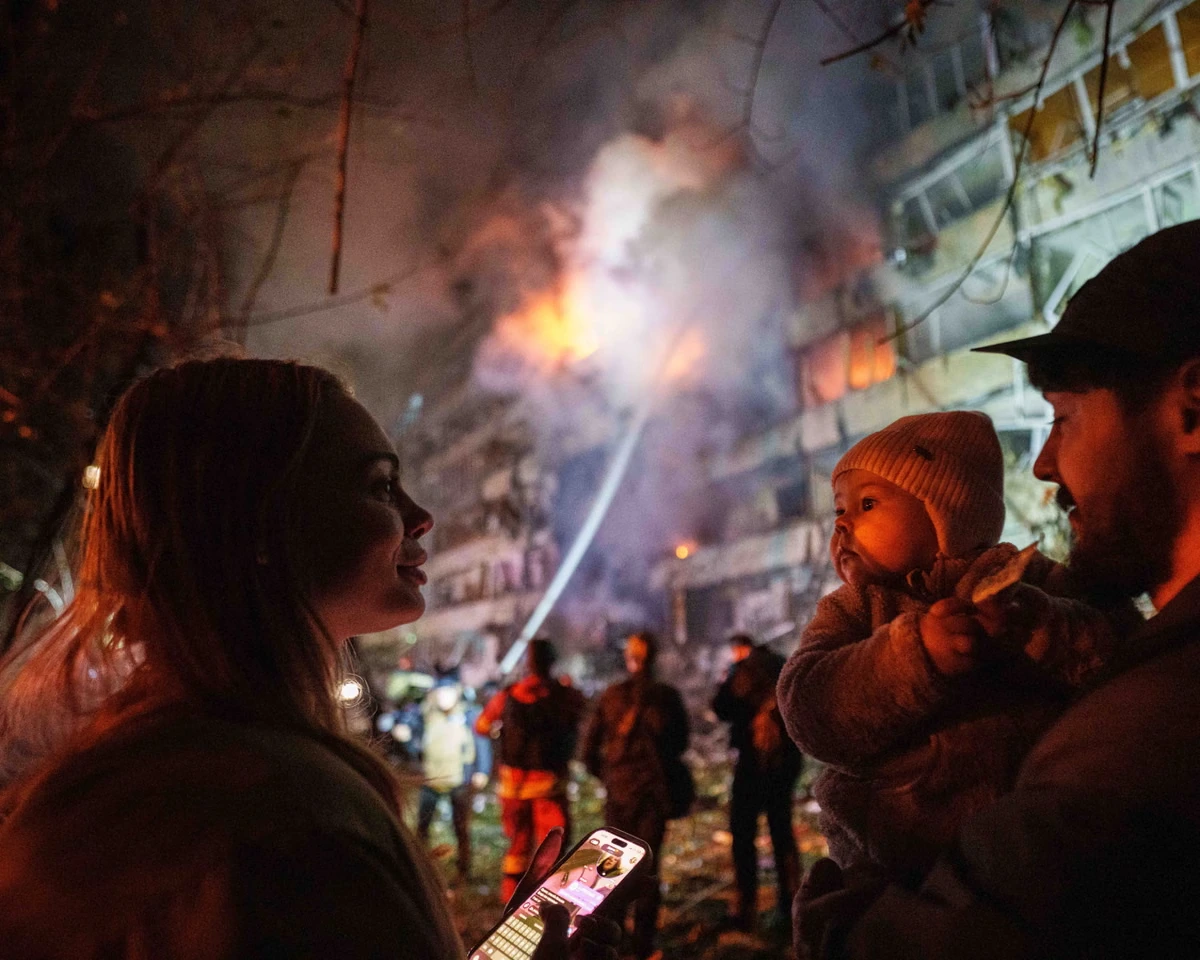
It masks the fact that, around dawn, air raid sirens disrupted the peace for everyone in view. Even here, in Shakhtar’s bucolic spa hotel base 15 minutes outside Lviv, nobody is safe from the threat of Russian rockets and drones. In Rivne, three hours’ drive to the north-east, another alarm had sent the players and staff down to the stadium’s shelter. The second half was delayed by 20 minutes and that, no matter the corner of the country or the vividness of the autumn colours, is a weekly reality.
So is a travel schedule any other Champions League club would recoil at. Shakhtar are about to hit the road yet again, because there remains no chance of playing European games in Ukraine. This season they will host matches in England for the first time, Stamford Bridge the winner in a beauty contest of three venues in the capital. If the border crossing into Poland is unforgiving, the journey could take anything up to 18 hours. The Guardian has been invited to join their trip to London for Wednesday’s game “at home” to AEK Athens.
“It has good feelings for me and inshallah it will for our players too,” a beaming Turan says, a few hours before making a journey that starts via a convoy of people carriers. He has wrought a transformation at Shakhtar since his appointment as head coach in May 2025 and has been reminding anyone who will listen of his semi-final goal against Chelsea in 2014, when an Atlético Madrid side at the peak of their powers produced a classic away performance. Alisson, one of Shakhtar’s forwards, was unaware of Arda’s heroics and has been made to learn quickly. But there is always a serious point. “It’s an iconic stadium but it’s not our home,” Turan says. “If you don’t have a home stadium at this level it’s very difficult, ask any other club. But we have a dream and inside we have great power.”
They will need all of it for the trip. Shakhtar have become used to packing up, regrouping and taking their roadshow to locations in Poland, Germany and Slovakia for their “home” matches on the continent. But it does not become easier and, with parts of Ukraine under intensified attack from Russia, there is no immediate prospect of a happy ending.
“In the first year playing games away we felt more enthusiastic,” says Vitaliy Khlivnyuk, Shakhtar’s director of sports management. “And we continue, but with each year it becomes harder and harder for everyone. It’s like if you didn’t sleep for one day, you can recover. You didn’t sleep for two, you already feel worse. The third, it’s something else. It accumulates. Physically you can get over it but mentally it’s really tough.”
Khlivnyuk half-jokes that his office has become a “panic room” for the endless last-minute hitches and logistical challenges of running a club in wartime. Today’s quandary is a case in point: Shakhtar need new residency permits for their foreign players and staff, but the application system has been taken offline by Russian bombs in Kyiv. According to the rules, there is little time for a workaround.
Kyiv, where Shakhtar were based more regularly until three years ago, is an increasingly dangerous place. “Now it has the kind of atmosphere where the birds don’t sing,” says Khlivnyuk, drawing an unhappy parallel with the early days of the invasion of Donetsk in 2014. Domestic matches are still played in Kyiv but the entire league may soon need relocating to the country’s west.
At lunch one of Shakhtar’s bus drivers, Oleksandr, readies himself for the task ahead. He has long since lost count of the miles accrued during two and a half years on the payroll, but remembers travelling 930 miles to Slovenia for a Conference League game last season. On one trip, Shakhtar were held up at the border for eight hours. He has set today’s departure time for 1pm. Three of the squad play-fight by the dessert buffet and then, realising time is tight, hurry downstairs to collect their belongings.
The players and coaching staff travel in a group of smaller vehicles, four or five to each. Shakhtar introduced that extra concession to comfort a year ago, receiving a favourable response. Other club employees follow on a larger coach, the vehicles winding through low‑slung villages and past glinting domed churches. Crumbling Soviet signs are reminders of a complex past; a couple of modest cemeteries bring the present starkly into view.
Passengers’ names are taken before arrival at the Krakovets border crossing, which is reached in just under two hours. Many of the players leap out to stretch their legs. Kauã Elias, among the brightest talents in Shakhtar’s modern crop of exciting Brazilians, has been playing Fifa video games with a carload of his compatriots. “Before I came here I didn’t know about this travel situation, but it’s just something we have to do,” he says. “It’s normal now. My friends always want to know how it is for me playing in a country with a war, but this bus travel is the only real difference. Having so many other Brazilians for company helps a lot.”
In Lviv they all meet once a week to cook churrasco; Marlon Gomes has the best knack for it, according to Elias. The prospect of Stamford Bridge is plenty to chew on. Wednesday’s match is, at least in part, the culmination of a lifelong ambition. “Since I was a kid I dreamed of playing there for Chelsea,” Elias says. “So going there with Shakhtar is a dream in the same way. We’re very happy to play in London this year.”
Border formalities on the Ukrainian and Polish sides take an hour and a quarter. It rarely gets smoother on this particular crossing. On one occasion, an overenthusiastic young immigration official demanded that all of Shakhtar’s vehicles were emptied and their contents searched one by one. The buses begin coursing through the corn fields of south-east Poland; 10 minutes later a vast snake of lorries, led by a police escort, passes in the opposite direction. All of life, and life support, must take the slow road to enter Ukraine now.
Shakhtar arrive at Rzeszow airport four hours after leaving Lviv. There are shirts to sign with a handful of fans who have caught wind of their presence. As usual, late administrative dramas have materialised too. One player has discovered that his electronic travel authorisation to enter the UK did not work; the system had seemingly misread the name on his passport. A rushed reapplication later, and his safe passage is ensured with half an hour to spare before boarding.
Turan makes a video call while waiting for the flight; one of his assistants is watching Chelsea play Bournemouth and another is clipping up action from the 3-0 win at Veres. “There’s time to do it all on these trips,” Turan says. He is working through episodes of Mobland when downtime is called for.
This magnetic, emotional figure has thrown himself into Shakhtar. “I feel 100% part of this family and this story,” Turan says. “Sometimes when I see children smiling at us I can tell they have home, and if I feel I’ve helped that then it’s the greatest thing for me. It’s something more important than football. I want to raise the voice of the people here. We live in war but we will never accept it and I will always continue bringing it up. Football is sometimes everything in life, but sometimes it’s nothing.”
London, or at least Gatwick airport, is only two and a half hours away when Shakhtar’s chartered plane departs. Srna sits across the aisle from Turan in row one. “We now have nine games in 29 days, three of them in the Champions League, and have to travel home too,” he says. “It’s a very difficult thing to understand if you don’t experience it with us.”
Shakhtar hope at least 25,000 fans will attend the AEK game, perhaps the lowest-profile home match of a quartet that will conclude with Real Madrid’s visit in January. The club’s connections with London extend beyond football: Metinvest, its sister company, provided 5,000 tonnes of steel that built the Shard, the capital’s tallest building. On the pitch, they will wear shirts highlighting the “Invest in Ukraine” campaign driven by their owner and sponsor SCM.
There is hope of progress to the playoff round after a useful draw at PSV Eindhoven on the opening matchday. “If you come along and support Shakhtar, you’re supporting Ukraine,” Srna says. “This team need support and need emotion, because we are living under sirens and bombs. We’re here to show the world that we are alive, strong, united and will fight to the end.”
At the back of the plane, Shakhtar’s Ukrainian contingent are playing cards. “On some of these long trips I feel like a squished lemon by the end of the day,” says the midfielder Dmytro Kryskiv, turning away from the pack. “But there are others that are easier and this feels like one of them, travelling to Stamford Bridge for the Champions League.”
Kriskiv thinks there is “something special connecting the team”, driven by the mercurial Turan. They disembark after a nine-hour expedition and, within 90 more minutes, will be settled into their west London hotel. For modern-day Shakhtar it gets no easier than this. On Thursday they must make the return journey before preparing for Saturday’s league game with Kolos Kovalivka.
“But we have to continue to play,” Khlivnyuk concludes. “Many of our citizens are struggling more than us. When you know that a win or draw can be a spot of light in this darkness, you will always do it.”