"Democracy is the worst form of government except for all those other forms that have been tried." So said Winston Churchill in the House of Commons in 1947.
"Democracy is the worst form of government except for all those other forms that have been tried." So said Winston Churchill in the House of Commons in 1947.
His aphorism came to mind as Israel's election results filtered through on Tuesday night - exit polls blending with ballots that were cast to dash or fulfil people's hopes and fears.
His aphorism came to mind as Israel's election results filtered through on Tuesday night - exit polls blending with ballots that were cast to dash or fulfil people's hopes and fears.
This election has, in some ways, been a celebration of democracy. Voters turning out in record numbers, Jews and Arabs alike. Many spent thousands to fly in from abroad to cast their ballot.
This election has, in some ways, been a celebration of democracy. Voters turning out in record numbers, Jews and Arabs alike. Many spent thousands to fly in from abroad to cast their ballot.
At polling stations across the country, we saw the passion of campaigners, as they used every minute to try to change that last mind and win that last vote.
At polling stations across the country, we saw the passion of campaigners, as they used every minute to try to change that last mind and win that last vote.
President Isaac Herzog said the election was a "badge of honour" for Israeli society. "It is remarkable to see how deep the desire for democracy is in Israel," he exclaimed.
President Isaac Herzog said the election was a "badge of honour" for Israeli society. "It is remarkable to see how deep the desire for democracy is in Israel," he exclaimed.
Yet this election left the most established democracy in the Middle East without a clear path to a new government. It produced an inconclusive result where neither opposing bloc will have a majority in parliament.
Yet this election left the most established democracy in the Middle East without a clear path to a new government. It produced an inconclusive result where neither opposing bloc will have a majority in parliament.
Some might say this was business as usual.
Some might say this was business as usual.
Israel has never had a one-party government. Its fragmented, proportional representation system is almost designed to govern by coalition.
Israel has never had a one-party government. Its fragmented, proportional representation system is almost designed to govern by coalition.
Yet many commentators warned this election had revealed the fundamental and perhaps growing divisions that scar this nation. This was not a plebiscite in which an electorate united around a single cause.
Yet many commentators warned this election had revealed the fundamental and perhaps growing divisions that scar this nation. This was not a plebiscite in which an electorate united around a single cause.
Some of these fissures are not new. There were divisions over judicial reforms that led to mass demonstrations in the early years of this government.
Some of these fissures are not new. There were divisions over judicial reforms that led to mass demonstrations in the early years of this government.
judicial reforms that led to mass demonstrationsThere were also divisions over how to respond to the deadly 7 October 2023 attacks - whether to save hostages or destroy Hamas. The casualties suffered by Israeli reservists in the fighting in Gaza that followed deepened tensions over the exemption of ultra-Orthodox young men from military service.
There were also divisions over how to respond to the deadly 7 October 2023 attacks - whether to save hostages or destroy Hamas. The casualties suffered by Israeli reservists in the fighting in Gaza that followed deepened tensions over the exemption of ultra-Orthodox young men from military service.
the exemption of ultra-Orthodox young men from military serviceBut has this election put in even sharper contrast the deep fault-lines that lie within Israeli society?
But has this election put in even sharper contrast the deep fault-lines that lie within Israeli society?
There are the tensions between the religious and the secular, divides not just of faith but of society.
There are the tensions between the religious and the secular, divides not just of faith but of society.
Should Israel's government subsidise religious study? Should some parents sacrifice their sons and daughters to defend Israel when others do not? The ultra-Orthodox now make up almost 15% of the population. Their world-view is poles apart from that of denizens of high-tech, modern neighbourhoods of Tel Aviv.
Should Israel's government subsidise religious study? Should some parents sacrifice their sons and daughters to defend Israel when others do not? The ultra-Orthodox now make up almost 15% of the population. Their world-view is poles apart from that of denizens of high-tech, modern neighbourhoods of Tel Aviv.
There are divisions over fundamental politics.
There are divisions over fundamental politics.
Benjamin Netanyahu's Likud party suffered significant losses, but is still on track to be the largest in the Knesset. All this for a prime minister accused of corruption, which he denies; a leader also accused of failing to protect Israel before 7 October, something he will not allow to be investigated.
Benjamin Netanyahu's Likud party suffered significant losses, but is still on track to be the largest in the Knesset. All this for a prime minister accused of corruption, which he denies; a leader also accused of failing to protect Israel before 7 October, something he will not allow to be investigated.
something he will not allow to be investigatedSome 10% of voters backed the Jewish supremacist far-right: politicians like Finance Minister Bezalel Smotrich, who even as results were being announced was promising to establish Jewish settlements in Gaza.
Some 10% of voters backed the Jewish supremacist far-right: politicians like Finance Minister Bezalel Smotrich, who even as results were being announced was promising to establish Jewish settlements in Gaza.
The Arab parties, which represent about a fifth of Israeli citizens, made huge gains, winning some 15% of the vote, potentially giving them seats numbering in the high teens.
The Arab parties, which represent about a fifth of Israeli citizens, made huge gains, winning some 15% of the vote, potentially giving them seats numbering in the high teens.
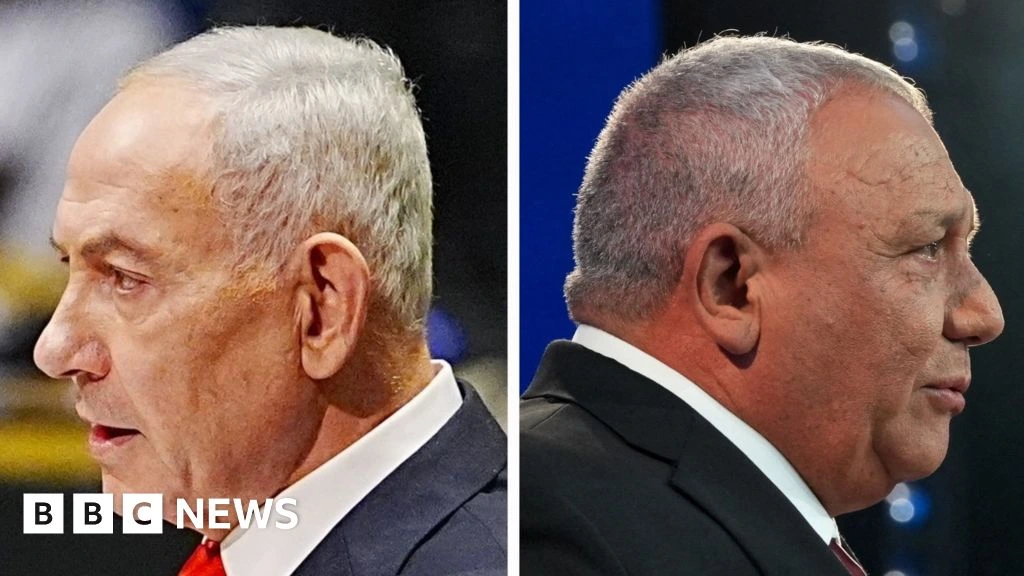
And then there was the opposition bloc, a mix of centre, left and right led by Gadi Eisenkot who fell short of winning the change they wanted - change that many believed was existential for the future of this country.
And then there was the opposition bloc, a mix of centre, left and right led by Gadi Eisenkot who fell short of winning the change they wanted - change that many believed was existential for the future of this country.
How these vastly diverging views coalesce into some form of government is now the unenviable task facing Israel's body politic - the choices and compromises they may have to make could involve fundamental decisions about the country's future.
How these vastly diverging views coalesce into some form of government is now the unenviable task facing Israel's body politic - the choices and compromises they may have to make could involve fundamental decisions about the country's future.
now the unenviable task facing Israel's body politic -Would Netanyahu be ready to abandon his religious allies and form a coalition with right-wingers from the opposition bloc? Would they be ready to swallow their hostility towards the prime minister and sit in his government?
Would Netanyahu be ready to abandon his religious allies and form a coalition with right-wingers from the opposition bloc? Would they be ready to swallow their hostility towards the prime minister and sit in his government?
Is the opposition bloc ready to abandon much of its campaign promises and co-operate with Arab parties to force Netanyahu out of office? Are the Arab parties ready to risk joining a government that could fall within months?
Is the opposition bloc ready to abandon much of its campaign promises and co-operate with Arab parties to force Netanyahu out of office? Are the Arab parties ready to risk joining a government that could fall within months?
Yair Golan, the left-wing Democrat leader, urged the opposition bloc to form a partnership with Arab parties. "We must no longer accept Netanyahu's racist division between Jewish votes and Arab votes," he said.
Yair Golan, the left-wing Democrat leader, urged the opposition bloc to form a partnership with Arab parties. "We must no longer accept Netanyahu's racist division between Jewish votes and Arab votes," he said.
But are the people of Israel ready for such a reality?
But are the people of Israel ready for such a reality?
Amit Segal, an Israeli commentator sympathetic towards Netanyahu, said the high turnout among Arab Israeli voters "reminded Jews on both sides that, after years of division, they may have to learn to sit together after all".
Amit Segal, an Israeli commentator sympathetic towards Netanyahu, said the high turnout among Arab Israeli voters "reminded Jews on both sides that, after years of division, they may have to learn to sit together after all".
The risk is that this election, instead of putting Israel on a new path, has instead raised further doubts about what it is that unites its citizens. What are the common factors that bind this complex, varied collection of peoples into one polity?
The risk is that this election, instead of putting Israel on a new path, has instead raised further doubts about what it is that unites its citizens. What are the common factors that bind this complex, varied collection of peoples into one polity?
Autocratic governments, which are growing in number, have long criticised democracies for producing weak and temporary governments, often fragile coalitions that struggle to hold together, let alone deliver what the people wanted.
Autocratic governments, which are growing in number, have long criticised democracies for producing weak and temporary governments, often fragile coalitions that struggle to hold together, let alone deliver what the people wanted.
Israel may now struggle for months to form a government. It might even fail and have to hold another election.
Israel may now struggle for months to form a government. It might even fail and have to hold another election.
President Herzog acknowledged this risk head on as he prepared to open coalition negotiations: "We must do everything we can, certainly after yesterday, to avoid another round of elections."
President Herzog acknowledged this risk head on as he prepared to open coalition negotiations: "We must do everything we can, certainly after yesterday, to avoid another round of elections."
For years, Israel has focused on defending itself against its external enemies. But must it also now be ready to defend itself from perils within, if the divisions writ large by this election become unmanageable?
For years, Israel has focused on defending itself against its external enemies. But must it also now be ready to defend itself from perils within, if the divisions writ large by this election become unmanageable?
In another speech, Churchill once said democracy was not just "insurance against dangers from abroad". It was also, he added, "insurance against dangers scarcely less grave and much more near and constant which threaten us here at home".
In another speech, Churchill once said democracy was not just "insurance against dangers from abroad". It was also, he added, "insurance against dangers scarcely less grave and much more near and constant which threaten us here at home".
Can Israel's democracy live up to this challenge?
Can Israel's democracy live up to this challenge?