A few months ago, in the now-distant pre-Burnham era, Reform UK was riding high on a projected national vote share of some 26 per cent.
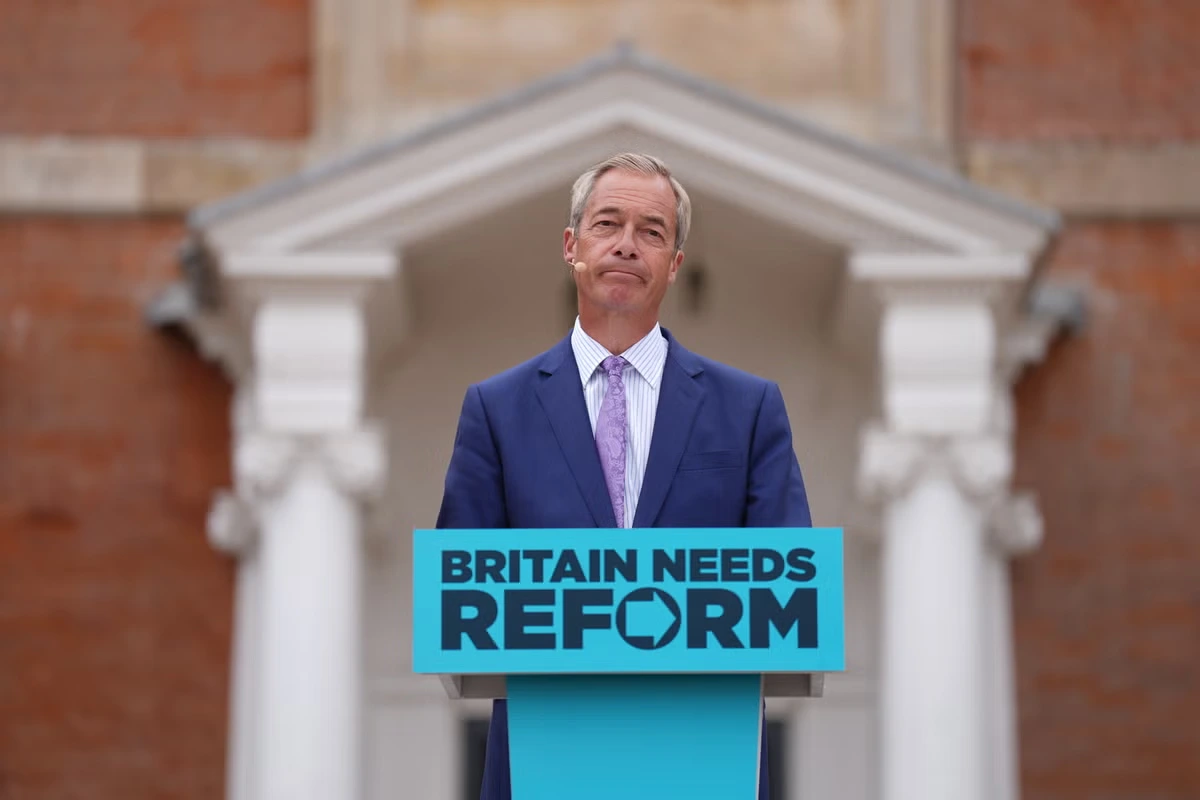
Now, it feels much more like the party and its leader, Nigel Farage, have lost momentum and don’t seem able to shake off the multiple problems that have attached themselves to Reform. They may have peaked far too soon.
Reform has slipped behind in opinion polls, as have the Greens, while Labour has gained ground. The Conservatives are also showing slight signs of life. But at 20 per cent plus, Reform UK is still very much in contention and mostly within a margin of error of being tied or ahead of Labour, and still more popular than the Tories.
Farage’s personal popularity rating has hit record lows: a net approval of around minus 32 points. That compares to minus 24 for Zach Polanski, who has problems of his own, a breakeven for Kemi Badenoch and a honeymooning Andy Burnham on plus 19 per cent (way better than Keir Starmer achieved in a long time). On the other hand, while Farage is an obviously polarising figure, he retains a Trump-like devotion among core supporters, many of whom date back to his days in Ukip and the Brexit Party. For them, he can do no wrong.
External factors include the partial Labour recovery under Burnham, especially in the North West, and his offer of some hope for “change”, however that’s interpreted. The news agenda of recent days has also been generally less favourable for Reform: irregular migration is trending downwards.
But other factors that have set Reform back are much more their own fault – on strategy, tactics, policy and personalities.
Reform’s slide in the polls is further evidence that it cannot win an overall majority in the House of Commons and form the next government. Therefore it must decide what, if any, relationship it has with other parties of the right: the Conservatives, and Rupert Lowe’s breakaway Restore Britain. Will it cooperate with them and “unite the right”, as advocated by its own Robert Jenrick and the Tories’ Jacob Rees-Mogg? Or does Reform want to crush the Tories, as Zia Yusuf and Arron Banks demand? These dilemmas will become more pressing as the general election approaches, and when a Con/Reform marginal comes up in a by-election. For the far right, Reform is viewed as insufficiently ethnonationalist and militant; but for the centre-right, its hardline policies such as “remigration” cause alarm.
These have been poor. Despite successes in local council elections this year and last, Reform hasn’t managed to win a Westminster by-election since Runcorn and Helsby in June last year – and that was by a mere six votes. The losses to Plaid Cymru in Caerphilly (Welsh Senedd) last October, and to the Greens in Gorton and Denton in February this year, were particular setbacks. Reform was also frustrated in Scotland and, to a lesser extent, Wales.
Poor candidate selection, lack of “vetting” and the willingness of voters to coalesce behind a best-placed “stop Reform” candidate have pushed Farage’s party back. Reform isn’t short of money or members, but it does lack talented politicians. It cannot reach beyond its “base”; indeed it alienates people so much they vote tactically. The stridency and wish to provoke “pure, cold rage” turns many off. It’s also fair to point out that neither its parliamentarians nor its councillors have inspired confidence in its ability to one day run the country.
To some extent. As with Ukip and the Brexit Party, it feeds off carefully cultivated grievances and can do well out of that, particularly when the two main parties are both struggling. But blaming immigration and Europe for everything is an obvious weakness.
These seem to have dented the appeal of Farage and Reform. They are many and varied but most involve money, odd personalities and the leader himself. Although not fully understood, they give voters a bad impression and Farage’s attempts to blame an establishment conspiracy are absurd. He is rapidly losing the right-wing media, which dominates the scene, through his own misjudged actions. The unnecessary Clacton by-election, in which Count Binface is now his principal opponent, looks to be a gamble that won’t pay off.
He has to be, because it’s his party – literally so until recently, because he had majority ownership of its shares. It is still a one-man band, despite the emergence of Jenrick and Yusuf. Farage makes all the big decisions, picks people for particular jobs, accepts or rejects defectors, falls out with internal rivals, raises money, sets policy and direction, builds the membership and is easily the dominant personality with the highest public recognition. He is “Mr Brexit”, although that isn’t such a vibrant attraction any more.
When he took over as leader in the run-up to the 2024 election, he immediately boosted support. Over his three decades in public life, he has evolved into a strong communicator, and he has known many booms and busts in his political career. He may yet come back from all this stronger and become PM. On the other hand, he still faces various investigations by the parliamentary commissioner for standards and a second by-election in Clacton. More people may be realising Farage and Reform aren’t the answer to Britain’s economic problems, and indeed may have created some of them.
At some point Farage might decide that his own interests, those of the party and of the country would be better served by fresh leadership – as he has done before with his previous vehicles. But it will be his decision; he can’t be forced out.