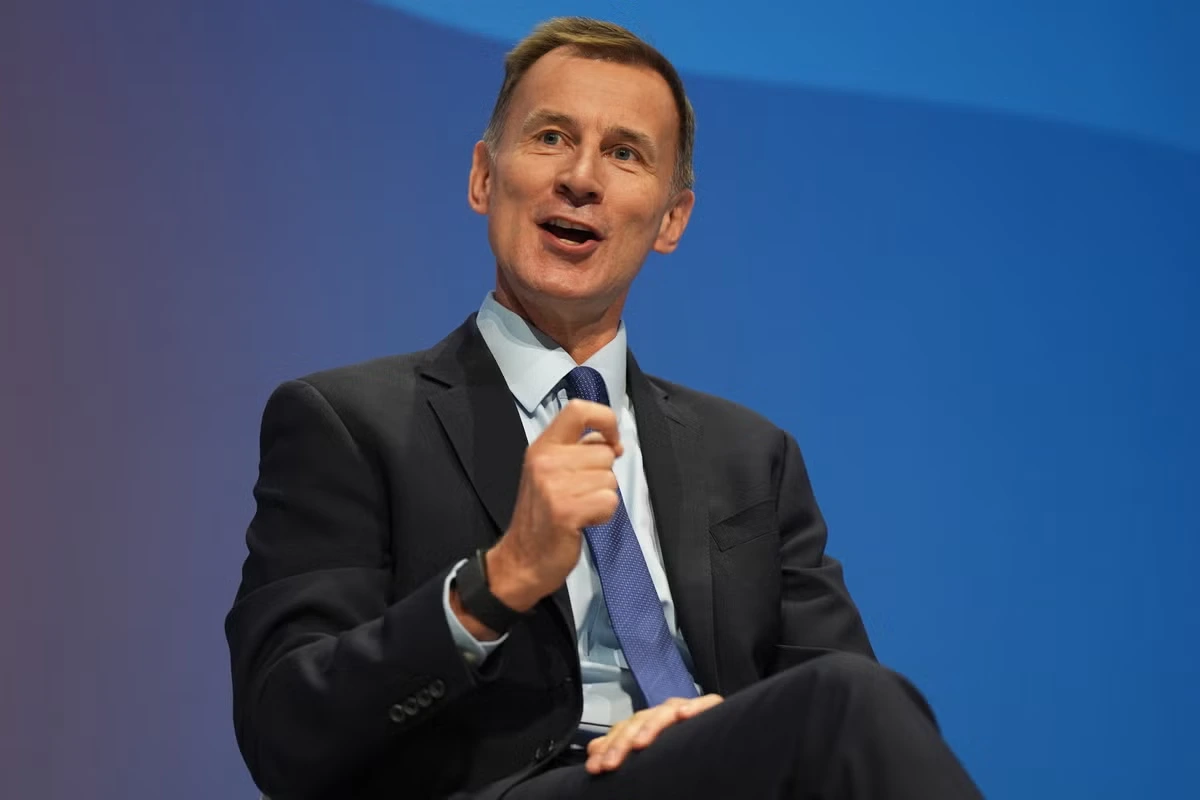
John Healey cannot allow fears of a repeat of Liz Truss's disastrous mini-Budget to stop him from taking the bold economic action Britain needs when he unveils his economic plan in just a few weeks’ time, former chancellor Sir Jeremy Hunt has said.
Sir Jeremy, who was appointed chancellor to mitigate the damage in the wake of Ms Truss’s economic policies, told The Independent her time in office has been “looming large” in every chancellor’s mind since 2022.
But he said that Mr Burnham and his chancellor should not fall into the trap of simply “doing things that get through the moment”, warning that tinkering around the edges would be a “missed opportunity” for Britain, as he urged the government to take bold action.
It comes after the latest KPMG economic outlook warned that soaring borrowing costs because of the Iran war and weaker growth have wiped nearly £12 billion off the government’s fiscal headroom, down from £23.6 billion at the time of the spring forecast.
Meanwhile, economists have cautioned against pursuing “simple solutions” to raising money at next month’s Budget following calls by a Labour donor to increase capital gains tax.
Sir Jeremy said the prime minister has "made quite a good start”, having seen a "small but significant poll bounce” – but the former chancellor warned that "no one has any idea about Andy Burnham or John Healey's economic policy at all.”
“On every big issue, they basically bounce on the head of a needle, and I think it's a real mistake… It's a real mistake to underestimate the chance you have to be bold in a first Budget”, he said.
Speaking to The Independent ahead of Mr Healey’s first Budget in October, Sir Jeremy said: "He certainly knows that he can't do anything that spooks the markets. The mini-Budget is looming large in every chancellor's mind since 2022. So that is a given.
“The temptation will be to just try and do things that get through the moment - [for example] a small increase in defence funding, a few cuts, a few small tax rises.
“And I personally think that's a real mistake because the first Budget of a new chancellor and a new prime minister is a chance that you really have to set the narrative.”
He added: “If they were, for example, to say that from the next Parliament we will replace the [pensions] triple lock with an inflation lock, the markets would look at it and say, 'Wow, they are serious'. The country would look at it and say, 'Okay, they're they're not pretending that we haven't got big challenges’.
“There would be some controversy, but it's the kind of argument you can win this moment. So I think it's an opportunity for boldness.
“This is the moment when you can actually make and win argument for difficult choices. This will be the moment, for example, to increase defence spending to 3 per cent of GDP by 2030. It will be a moment to make the case for saying to public sector workers ‘we can't afford above inflation increases in pay, unless they're naturally productivity improvements’.
“And I fear that we're going to get to the other side of [the Budget] and there'll be a budget that we've kind of muddled through. And I just think that would be a missed opportunity.”
Mr Healey is facing growing pressure to raise taxes or cut spending at next month’s Budget, as soaring borrowing costs because of the Iran war and weaker growth has wiped nearly billions off the government's fiscal headroom.
The latest KPMG economic outlook said rising borrowing costs on the UK’s debt after the Middle East conflict has already cut about £9 billion off the headroom, with sluggish growth and expected downgrades from the Office for Budget Responsibility (OBR) likely to to reduce it by about another £2 billion.
These factors will combine to leave Mr Healey with “limited room for manoeuvre” at his October 28 inaugural Budget, KPMG said.
Mr Burnham has also faced pressure to cut the welfare bill to fund an increase in defence spending, but he has so far rejected making "crude cuts" to welfare, arguing that national security "can't come at the expense of social security",
However, Sir Jeremy argued that now is a “really good moment” for Mr Burnham to “win that argument” on the welfare bill, insisting there is “no one on the political spectrum, left or right” who doesn’t understand that the system is “totally unsustainable”.
“It's morally completely indefensible for the individuals concerned to park them on benefits rather than help them have a better life”, he said.
“This is a really good moment to win that argument. Andy Burnham could win that argument with the Labour Party because Labour absolutely love him. But at the moment I don't see any any efforts to do that, which I think is a real shame.”
Clean energy tycoon Dale Vince, who has previously donated millions to Labour, has reportedly urged ministers to bring capital gains tax in line with income tax in order to raise money at the Budget.
He has also suggested ending interest payments from the Bank of England to commercial banks on their reserves, and using the proceeds of both measures to fund an increase in the personal tax allowance from £12,570 to £15,570.
But Institute for Fiscal Studies (IFS) director Helen Miller suggested a much wider tax reform would be needed to be sure of raising enough cash, telling the Press Association: “We shouldn’t just think that there’s a simple solution where you put the rate up and all this money arrives at the Treasury.”
Wider reforms could involve changes to stop taxing inflationary gains, she said, and looking “very seriously at what happens when people leave the country”, along with incentives for entrepreneurs and start-ups.
Meanwhile, Sir Jeremy said he does not believe a CGT increase would “pass the smell test of being a fair tax increase”.
"I'm very much in favour of increasing the personal allowance, the Conservatives increased it from £5,500 to £12,500. So I'm totally supportive of it. But you know, when house prices are 40 to 50 per cent higher in the southeast than they are in Manchester, what you are doing is something fundamentally unprogressive.
"You're saying that people should have to pay more tax based not on whether they can afford it, but where they live. And I think people will be absolutely furious if they think they're being punished because they live in the southeast. I don't think it would pass the smell test of being a fair tax increase."
The Treasury has been contacted for comment.