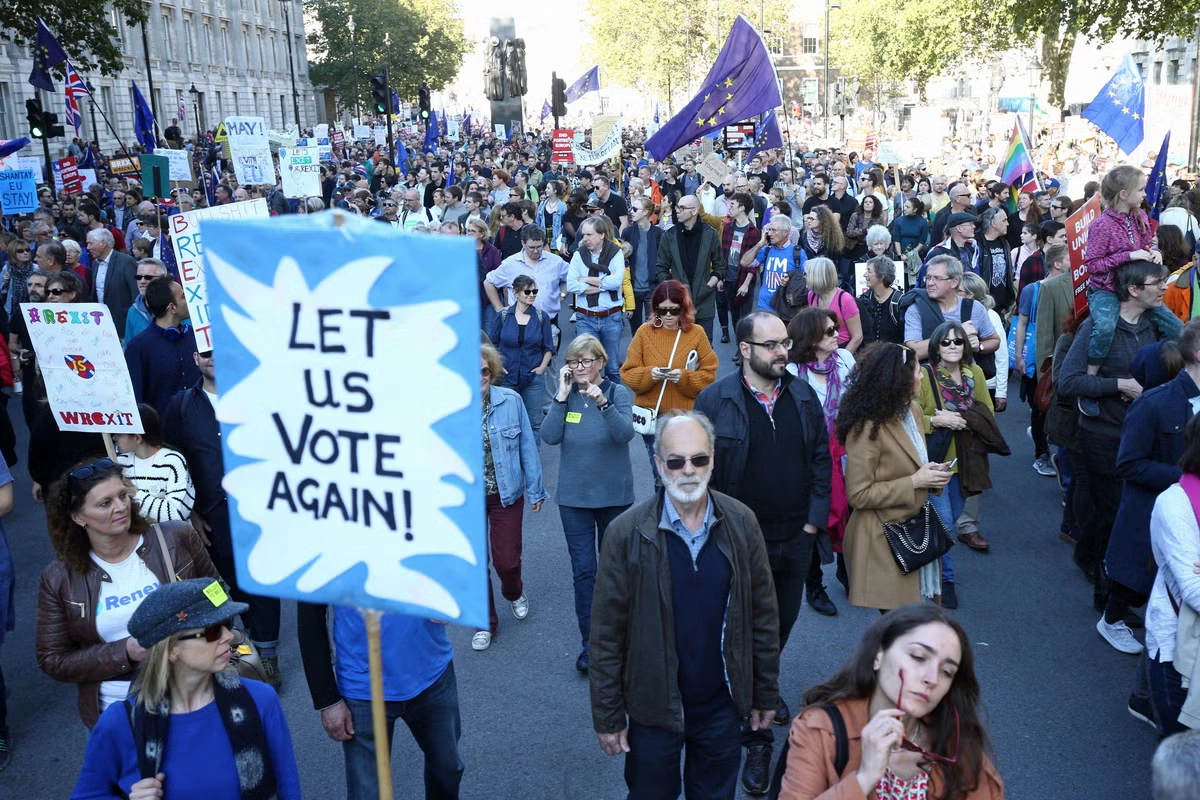
Nearly half of the British public want a second Brexit referendum, including a fifth of Reform voters, according to a major new poll conducted 10 years on from Britain’s decision to leave the European Union.
The study by Ipsos, King’s College London and think tank UK in a Changing Europe found much of the public was open to rapprochement with the EU, with almost half backing a closer relationship and 60 per cent wanting more cooperation on defence.
The research also suggested attitudes over the past 10 years have changed towards both the EU and the referendum itself.
The number of people who say Brexit is going worse than they had predicted has almost doubled in the past five years, from 27 per cent in 2021 to 48 per cent today – more than those saying it was going as well as or better than expected.
While two-thirds of the public in 2016 though David Cameron was right to call the referendum, that figure has now fallen to 43 per cent, while the number saying it was the wrong decision has risen from 24 per cent to 38 per cent.
Similarly, there is more backing for a second referendum, with 48 per cent now saying they would support one, against 27 per cent who would oppose it.
Even a fifth of Reform UK voters and a quarter of those who voted Leave in 2016 would back a second vote, the study found.
Proposing a new referendum on EU membership would also increase the number of people willing to consider voting Labour at the next election from 31 per cent to 45 per cent, while just 27 per cent said an offer to maintain the status quo would encourage them to vote for the party.
But attitudes towards the EU remain “complex”, said Ipsos research director Keiran Pedley.
He said: “On face value there is openness to greater alignment and rule-taking to facilitate a stronger trading relationship but arguments about sovereignty – especially when it comes to immigration – remain persuasive.”
While 53 per cent of the public said they would support a return to freedom of movement in exchange for access to the EU single market, framing the question in terms of sovereignty found people prioritised control of immigration over relations with the bloc.
Some 52 per cent said they preferred total border control and a more limited relationship with the EU, against 38 per cent saying the opposite thing.
Professor Anand Menon, director of the UK in a Changing Europe think tank, said the research showed there was “no easy option when it comes to the EU relationship”, with each possibility presenting “clear trade-offs”.
But despite the shift in attitudes towards the EU, Professor Bobby Duffy of King’s College London said opinions were moving “glacially slowly”, adding: “At this rate, it’ll be many more years before we get to a clearcut demand for change.”
The debate over Britain’s EU membership has been reignited after former health secretary Wes Streeting said the country should rejoin as part of his pitch to lead the Labour Party.
Mr Streeting – who is expected to launch a leadership challenge against Sir Keir Starmer after quitting the government – last month said Britain’s 2016 decision to leave the European Union was “a catastrophic mistake” and argued that the UK should seek to rejoin.
“We need a new special relationship with the EU, because Britain’s future lies with Europe, and one day – one day – back in the European Union,” he said.
It comes after The Independent revealed that the bloccould fast-track Britain’s return if it decided to rejoin, dispelling suggestions the UK would be pushed to the back of the queue if it tried to reverse Brexit.
Sandro Gozi, the chair of the European delegation to the EU-UK Parliamentary Assembly, said that the European Union would see a request to rejoin from the UK as a “major victory for the European project”, insisting that there would be a way to fast-track it.
Brussels sources confirmed the UK’s potential re-accession could take place much more quickly than it would for other candidate countries, due to its significant pre-existing alignment with the bloc.
The study polled 2,245 adults across Great Britain between May 15 and 20 this year.