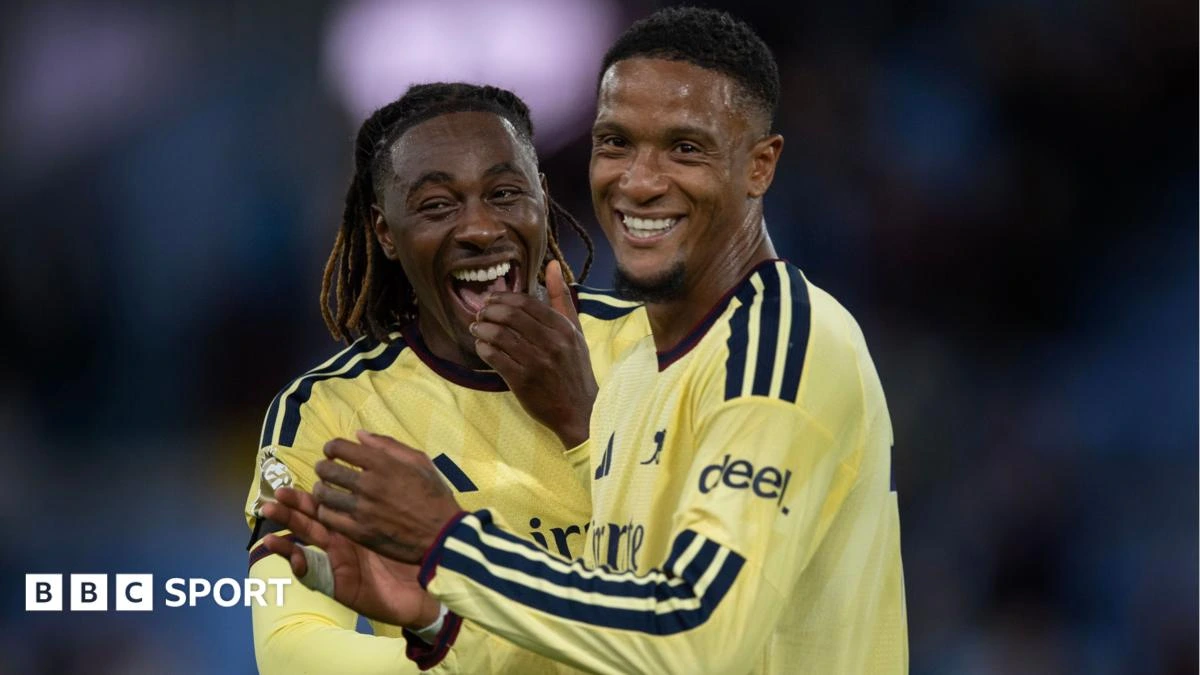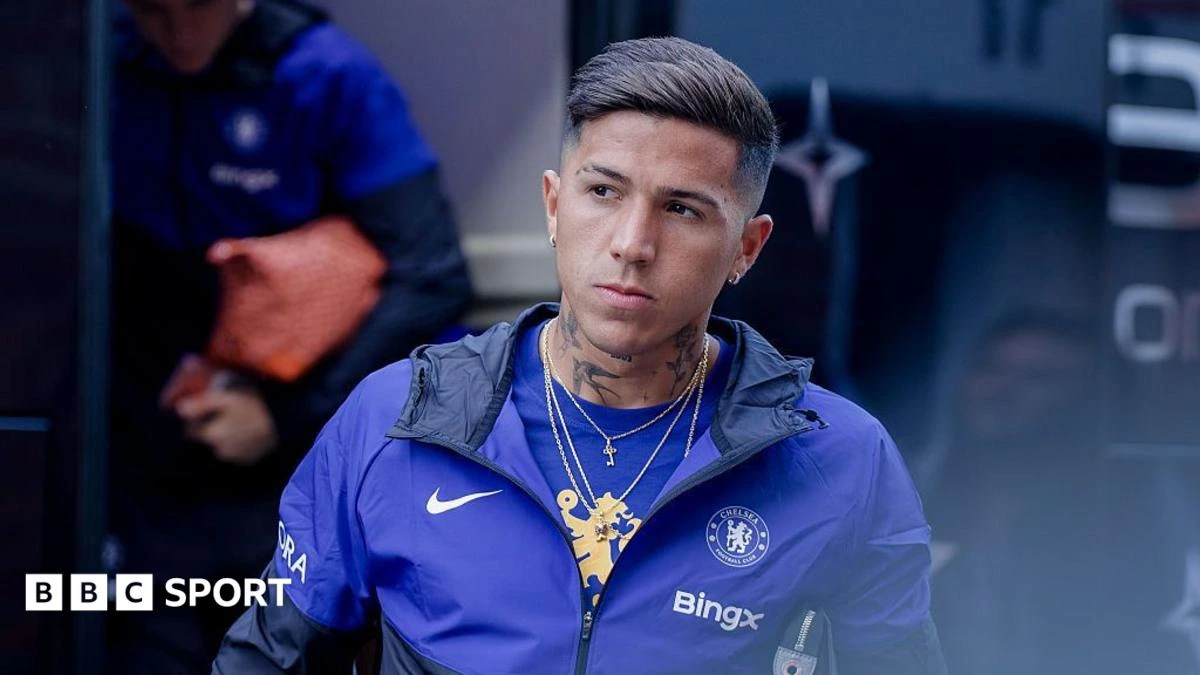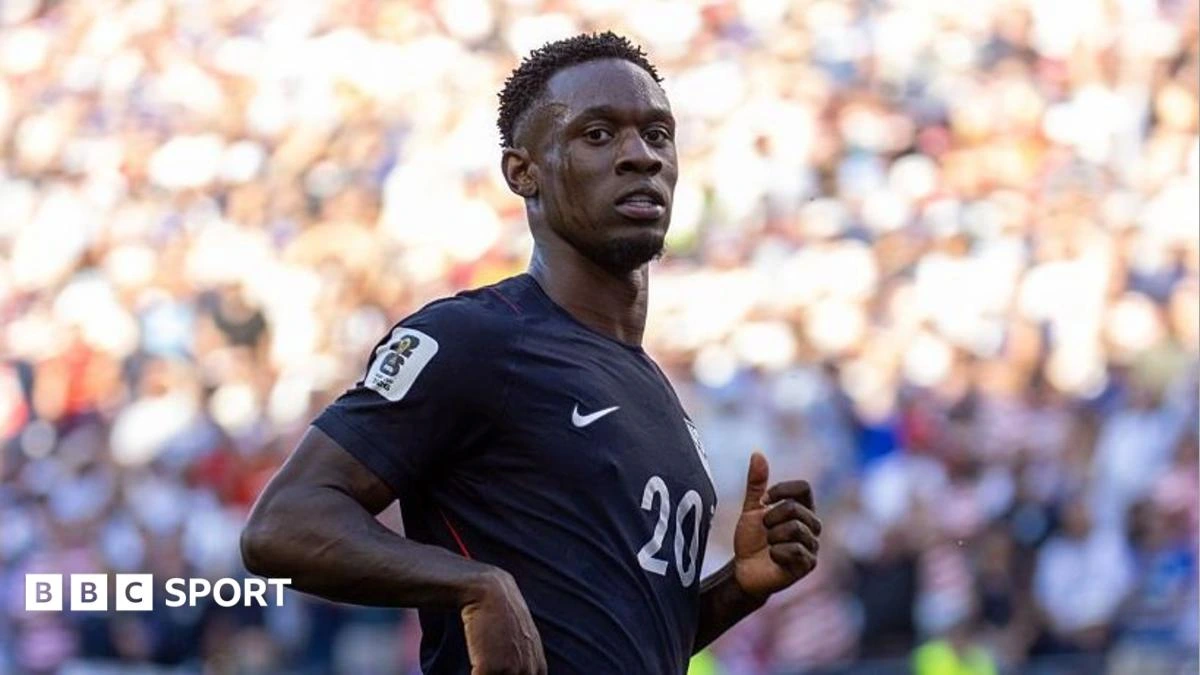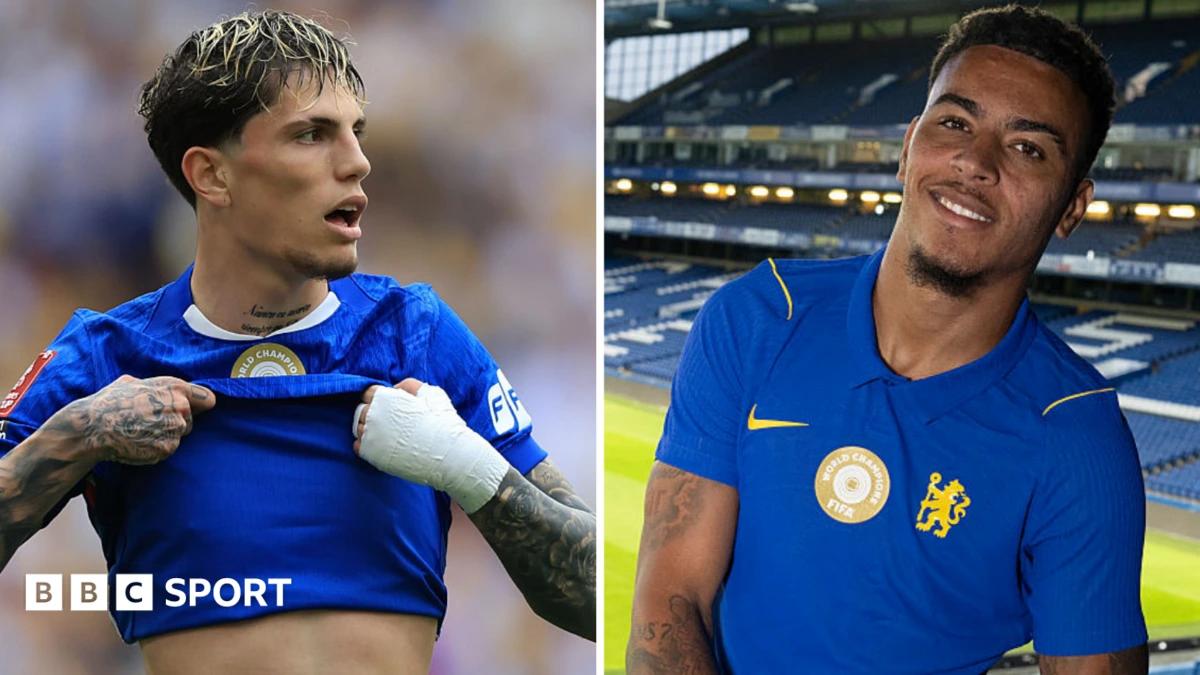
Just hours after Chelsea made Morgan Rogers the most expensive British footballer in history by spending £117m to sign him from Aston Villa, they are in talks to loan Alejandro Garnacho to the Villans.
But how can Chelsea afford to sign Rogers? And why did Villa pursue a loan with a conditional obligation to buy rather than buying Garnacho outright?
Here are the key questions answered...
How can Chelsea afford Rogers?
It is no secret that Chelsea are close to the limit of their spending under Uefa's financial rules.
The club were fined £2.6m for breaching the regulations, though £1.7m of that can be written off if they continue to reduce expenditure and/or increase revenue by next summer.
But Chelsea's financial position has actually improved since last summer, when they were handed a £26.7m fine and placed under a four-year settlement agreement with Uefa.
They sold about £300m worth of players - a Premier League record - last season and are expected to generate a similar figure again this time around.
The Blues have already raised more than £120m through player sales and spent between £164m and £210m, depending whether pre-contract signings such as Geovany Quenda, Emmanuel Emegha and Valentin Barco are included alongside deals for Rogers and Marco Palestra since Xabi Alonso became manager.
Chelsea see the stockpiling of players as an investment they can cash in on when needed. Transfermarkt puts their squad value at £1.3bn - behind only Manchester City in the Premier League and the fourth-highest in Europe.
More broadly, Chelsea continue to carry significant debts. Their most recent accounts - for 2024-25 - showed a Premier League record loss of £262m within the club's companies, with losses of £701m at parent-company level.
That has contributed to liabilities of more than £1bn across the parent company.
However, sources close to the ownership group say the investment model, which makes use of third-party loan providers, is highly structured, common among elite sports organisations and focused on long-term sustainability. They also project a big increase in revenue in their next set of accounts to a club record £700m.
Maguire said: "So, 85% is their PSR compliance with the Premier League but that does give them a slight advantage. If you look at the small print of the Premier League's SCR rules, you can spend up to 115% of revenue on your player costs because that takes you up to what we refer to as the red zone.
"Provided you're in the red zone and don't go beyond it, you still end up effectively paying a tax on additional costs, rather than having a points deduction.
"Chelsea would have looked at the rules and established it. I'm sure they are looking to sell more players."
How can Chelsea sign Rogers, Stones and others with a huge squad? Who could they move on?
After signing Rogers, Chelsea are not finished in the transfer market.
The club have explored a number of defensive options, including holding talks over Crystal Palace centre-back Maxence Lacroix and showing interest in former Manchester City defender John Stones and Como's Jacobo Ramon.
They are also in talks with Rayo Vallecano over a move for full-back Pep Chavarria, who is expected to cost between £25m and £40m.
That is on the back of pre-agreeing four signings since the start of 2025, completing deals for Palestra and Rogers and having a £64m bid for Bournemouth's Alex Scott rejected.
Before any further arrivals, and with Dastan Satpaev due to join from FC Kairat in August, Chelsea have 38 senior players on their books.
The solution is likely to be further sales. Sources indicate Benoit Badiashile, Axel Disasi, Trevoh Chalobah and Marc Guiu are among the players available for transfer, while Mamadou Sarr is expected to leave on loan elsewhere in the Premier League.
Most of the remaining squad could also be available at the right price, though a small group of players are considered untouchable. That includes Moises Caicedo, Estevao Willian, Cole Palmer, Joao Pedro and Levi Colwill, as well as some of the club's most highly rated young prospects, including Josh Acheampong.
Chelsea have also failed to qualify for European competition.
Analysis of successful seasons without Europe - including Leicester City's title-winning campaign in 2015-16, Chelsea's Premier League triumph under Antonio Conte a year later, and more recent Champions League qualification campaigns by Newcastle United in 2024-25 and Manchester United last season - shows only 13 or 14 players typically exceed 1,500 minutes across all competitions.
It underlines the scale of the task facing Chelsea, with Fifa having also moved to outlaw so-called "bomb squads" this summer.
Is Garnacho part of the Rogers deal?
The key point here is whether the transfers can be defined as a 'swap deal'.
One of the clauses in Uefa's transfer regulations defining "player exchange transactions" is that such deals must be concluded within 45 days of each other.
Clubs can still transfer players between themselves in that 45-day period, but those deals would have to be perceived as not connected to not be seen as part of a swap.
Indeed Tottenham and Brighton moved centre-backs Jan Paul van Hecke and Luka Vuskovic between them in separate deals earlier this summer, though both clubs are some distance away from the threshold to be under Uefa scrutiny.
Chelsea and Villa, however, are among those that need to trade most effectively in order to comply with Uefa's squad cost ratio regulations and their 2025 settlement agreements.
In the case of these specific transfers, Rogers' £117m move will provide Villa with a significant accounting profit - potentially £80m-£90m after Middlesbrough's sell-on clause, agents' fees and the remaining book value of his 2024 signing are deducted.
But if Chelsea were to sell Garnacho to Villa as part of the same transaction, Uefa would treat it as a swap deal. Even if Garnacho left on deadline day - September 1 - fewer than 45 days would have passed, making it harder to argue they are not connected.
So here is where loans come in - and bear with us as it gets a little complicated.
In the case of Garnacho, a loan with an obligation to buy could still be regarded as part of a swap deal because the 'purchase' has been agreed within 45 days of Rogers' transfer.
A loan with an option to buy is not a swap deal. However, a conditional obligation to buy based on appearances, goals or triggers such as European qualification could be interpreted either way, depending on how likely it is that Garnacho ultimately completes a permanent move.
In such cases, it is up to regulators and clubs to make their respective arguments over how the arrangement should be classified.
"Uefa are one step ahead of the curve here to prevent such convenient player swaps or what are deemed player swaps, where both clubs end up booking a profit and complying with the Uefa rules," said football finance expert Kieran Maguire.
"The Premier League rules are much more lax, so that's why I think it's important to to determine whether or not this is deemed to be a sale. Because if so, it has implications for Villa's SCR compliance with Uefa."
How do Villa benefit from this deal?
Put simply, Villa have control - and it could reduce the cost for them this season.
By signing Garnacho on loan they do not have a longer-term commitment to a winger who has flattered to deceive at Stamford Bridge and has not enhanced his reputation.
The loan market is important to Villa.
Any obligation in a contract needs to be met to trigger a permanent deal, and Villa have used these deals with success in the past, including signing Marcus Rashford on loan from Manchester United before deciding against a permanent deal.
"If it is linked to the number of matches he starts then, to a certain extent, Villa are in control under those circumstances," Maguire added.
"The rules are the rules. Some people say: 'Well, that's a loophole.' Some people will say: 'Well, it's they're as written and you have to treat them accordingly.'"
How do Harvey Elliot, Will Osula and Jacob Ramsey relate to the Garnacho deal?
Liverpool's Harvey Elliott joined Villa on loan last summer, with an obligation to buy if the midfielder made 10 Premier League appearances.
By October, Villa boss Unai Emery had decided he did not want to commit £35m on Elliott, who was left in limbo - ending the season with just nine appearances in all competitions.
There was a feeling from some in the game that Villa's treatment of Elliott - changing their minds about signing him - could easily put others off joining on a similar arrangement, and potentially lose a year of their career.
In Osula's case, Villa were close to a deal last summer but could not finalise it because of Uefa's rules.
They sold midfielder Jacob Ramsey to the Magpies for £40m to help comply with the Premier League and Uefa's financial regulations but then could not move for Osula as Uefa would have viewed it as a swap deal.
Related topics
Chelsea sign £117m Rogers - what will he bring?
Why Chelsea have signed so many Man City academy graduates