To say Graham Parker enjoyed a swift rise to fame is an understatement. He played his first live show with his most famous backing band, the Rumour, in October 1975, at the Newlands Tavern, a pub in Nunhead, south-east London. By the start of the following year, he had a record deal and was in the studio recording his debut album, Howlin’ Wind. The buzz around him was such that the sessions were interrupted by the arrival of a succession of stars – Thin Lizzy’s Phil Lynott among them – intrigued to hear what the fuss was about: a petrol pump attendant from Surrey who sang like Van Morrison and had written a set of smart, sharp, literate songs in between filling up cars.
The record arrived in April 1976 to vast critical excitement, a lot of it occasioned by the album’s closing track, the reggae-influenced, attitude-laden Don’t Ask Me Questions. After Howlin’ Wind came out, followed in October by Heat Treatment, things ratcheted up another notch. Parker turned up in Australia to discover the media waiting for him and a press conference arranged in the airport: they had taken the amount of music press coverage Parker was receiving to mean he was “as big as Bruce Springsteen, which was insane”. Low down on a festival bill topped by Bob Dylan, he found himself backstage collared by the headline act, eager to tell Parker how much he loved his work. There also exists a photo of Parker in Los Angeles, with, of all people, Michael Jackson, but their meeting was apparently less successful. “I said to him: ‘Michael, great to meet you, I did a version of [Jackson 5 hit] I Want You Back recently.’ And he just sort of said: ‘Ooh.’ So that,” he laughs, “was the full extent of my conversation with Michael Jackson.”
In truth, Parker seemed an unlikely candidate for a saviour of rock. He was short and wiry, a former hippy who had taken himself off to Morocco in his teens and served time in a band called Terry Burbot’s Magic Mud: “My idea,” he sighs, “a burbot being a fish that I knew had become extinct in England because Angling Times offered £100 to anyone who could prove they’d caught one.” On returning, he went back home to Deepcut in Surrey, shorn of his “arse-length” hair, writing songs influenced not by prevalent trends (“I thought progressive rock needed to be destroyed thoroughly”), but the music he’d loved in his youth: Motown, soul, ska, “pop hits on the radio”.
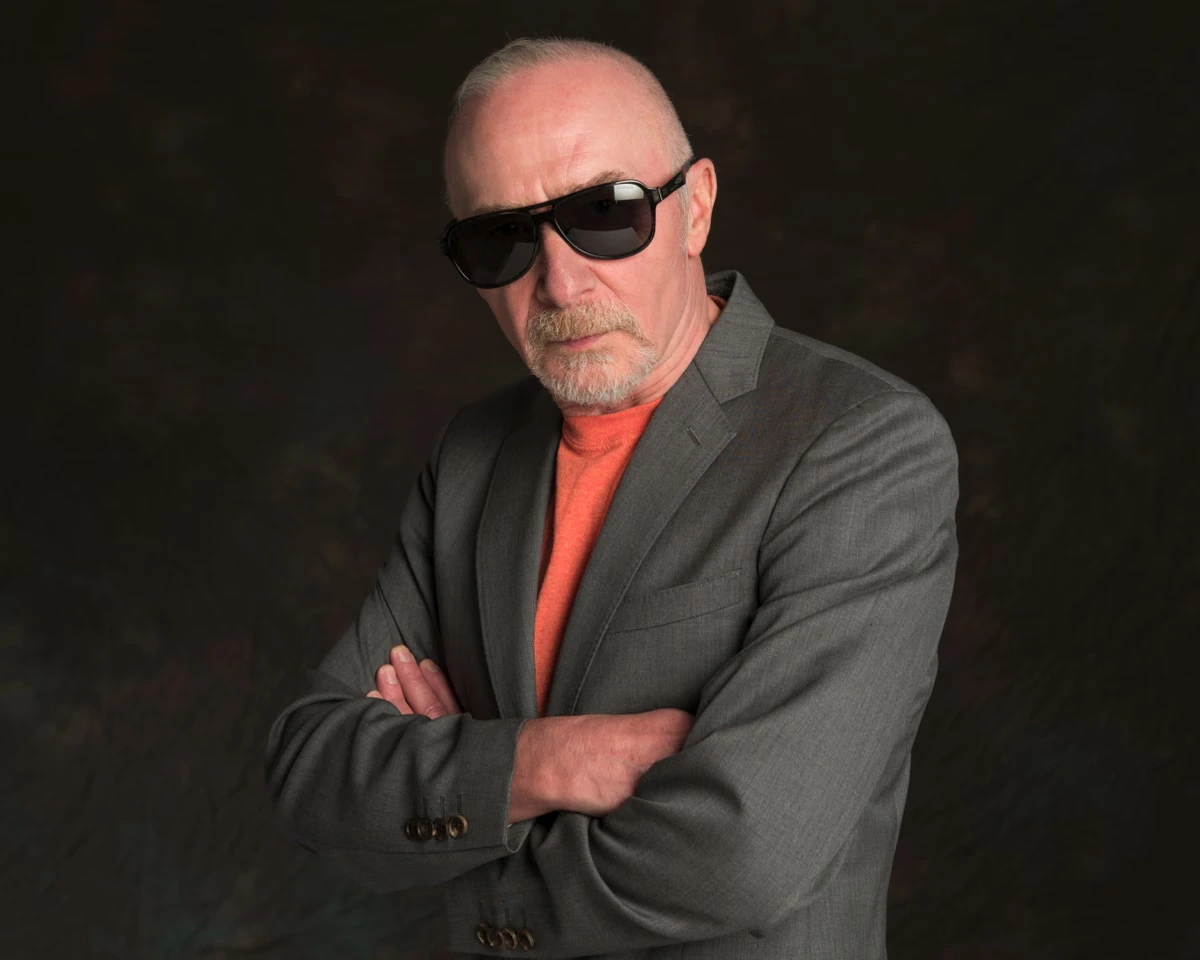
On today’s video call from his home in upstate New York, ahead of a UK tour, Parker’s eyes are shielded by tinted sunglasses. Decades ago, dark glasses were his permanent look, which helped give Parker the air of a man who was almost disproportionately angry, or at least a lot angrier than his songs suggested he was. On Howlin’ Wind, he spat out the lyrics of Lady Doctor as if they were a ferocious broadside against the establishment, rather than about fancying a female GP. “Correct,” he nods. “If you went to see a band in the suburbs back then, the audience sat cross-legged, so I thought, we’ve got to do the opposite, get people up and dancing instead of sitting. So I just went out and yelled.”
The thing was, Parker didn’t seem to think his sudden rise to fame was at all unlikely. He may have looked a little incredulous in the photo of himself backstage with Dylan, but that was the exception. “Oh no, I was brimming with confidence,” he says, smiling. “I’d infused myself with this rather melodramatic idea that I was the kiddy, you know: I’m going to be the one who shows people something that can be done – attitude, great lyrics that say something, a tight band. I got an instant record deal, I was getting all this attention and none of these people who’d been slogging around the pubs for years were. I remember one of the early gigs we did, the great Ian Dury and his minder, Fred ‘Spider’ Rowe, standing in front of the stage wearing sunglasses, trying to put the mockers on me. I thought: I’m having a great effect here. This is good! I can’t help being this good, you know!” He suddenly looks a bit concerned at revealing his youthful cockiness. “I hope,” he says quietly, “you can write this up with some humour in it. I do know I was being an idiot.”
Of course, Parker never quite became the huge star everyone seemed to think he would be in 1976. Instead, he carved out a fascinating 50-year career as a critically lauded, cult singer-songwriter whose work has ranged wildly. He recorded an album of obscure Lennon and McCartney songs with Kate Pierson of the B-52s; published novels and short stories; and maintained a pretty startling level of quality control over the course of 47 albums, despite his belief that “you should press the reset button” with every new release. His most recent, 2023’s Last Chance to Learn the Twist, was a delight, a live-sounding collection of songs that range in style from soul to prewar pop.
His career has also regularly involved Parker doing the exact opposite of what one might have expected under the circumstances. In the late 70s, dissatisfied with his then record label, Mercury, he terminated their relationship by releasing Mercury Poisoning, a spectacularly withering song that, among other accusations, suggested the label “couldn’t sell kebabs to the Greeks” (“a bit literal,” he concedes today). His commercial stock rising in the 80s US, thanks to 1979’s superb Squeezing Out Sparks album, he signed a deal with Atlantic Records, whose chair Ahmet Ertegun suggested he make his next album sound “like Phil Collins”. Parker proceeded to make the deliberately rough-hewn The Mona Lisa’s Sister: a wonderful collection of songs utterly out of step with mainstream 80s rock trends, that, one can’t help but notice, has aged rather better than most mainstream 80s rock.
In 2012, he unexpectedly found himself in Hollywood at the behest of Judd Apatow, a long-term fan: a golden opportunity that might nevertheless have given another artist pause, given that Parker was required to play himself in This Is 40, one of a plethora of underperforming artists who Paul Rudd’s record label honcho character has put his faith in. “He’s signing all these losers from the 70s and 80s. He’s got Haircut 100, and Frank Black without the Pixies, and me,” Parker says, chuckling. “When Judd told me, I said: I can do this, I could destroy his record company instantly, mate. I’m in.”
Hollywood was another entirely unexpected state of affairs. “For me, small timer, quite happy with his little career – playing grungy little solo gigs, doing records my way with no one interfering – to suddenly become this actor, pop singer thing, I didn’t see that coming. I ended up sitting in a dressing room with John Lithgow and Paul Rudd and Megan Fox, thinking, I should call a cab, I don’t belong here. But I sank into it pretty good. Being flown to Hollywood to do talks, first class, put up in these amazing hotels … I’m suddenly somebody, for five minutes. But it was a long five minutes, because the film went on and on in America, it was shown for months.”
Parker does, indeed, seem perfectly contented with his little career, grungy solo gigs and all: that’s exactly what he’s doing in the UK this month. For all his vaulting ambition in his early 20s, he is not sure that he was really cut out for fame. “The little bit of stardom I had, when everyone’s after you, everyone’s trying to grab you, that crept in and it was quite unpleasant really. Record labels start giving you too much money for music that I knew wasn’t for everybody and probably wasn’t going to burst out in platinum sales. I ended up telling my manager, tell them to pay me half what they’re offering. Which is weird, I know, but I think I did the best thing.”
Indeed, he is a vociferous advocate for keeping things small-scale. “I can pull a crowd, I can do it without the costs of a band, and it taught me to sing – I realised I don’t have to go out and grab the audience by the lapels, I can talk to them.” Although he has caveats. His mordantly funny 2001 song I’ll Never Play Jacksonville Again details the true story of a gig at which Parker ended up playing to “two couples, two barmen who looked like Ted Nugent, and a guy who looked a bit gormless and kept staring at one of the women’s legs until her boyfriend head-butted him. Five people in the audience and there’s a fight! How fucking often does that happen, man? I thought, this is the end.”
He says he’s been true to the song’s title and never played Jacksonville again. “But only because nobody’s offered me a gig there. If the money’s good enough and there’s two other gigs nearby, maybe I’ll do it. And I’ll do that song. It’ll be fun.”