Fifteen centuries ago, the Byzantine archbishop Theophilus of Adana did first-hand business with the devil for his own superficial betterment. Today, we just blindly tick a little box marked “accept terms and conditions” or let high-street snake oil merchants inject poison into our faces. The Faustian pact has become as depressingly banal as it is endemic and destructive – and unlike Theophilus, we can’t rely on the Virgin Mary to save us now. In the midst of headlines about AI destroying humanity, the idea of listening to music submerged in precisely this shade of doom might sound like, well, hell. If anyone can thread that poisoned needle, it’s Fontaines DC.
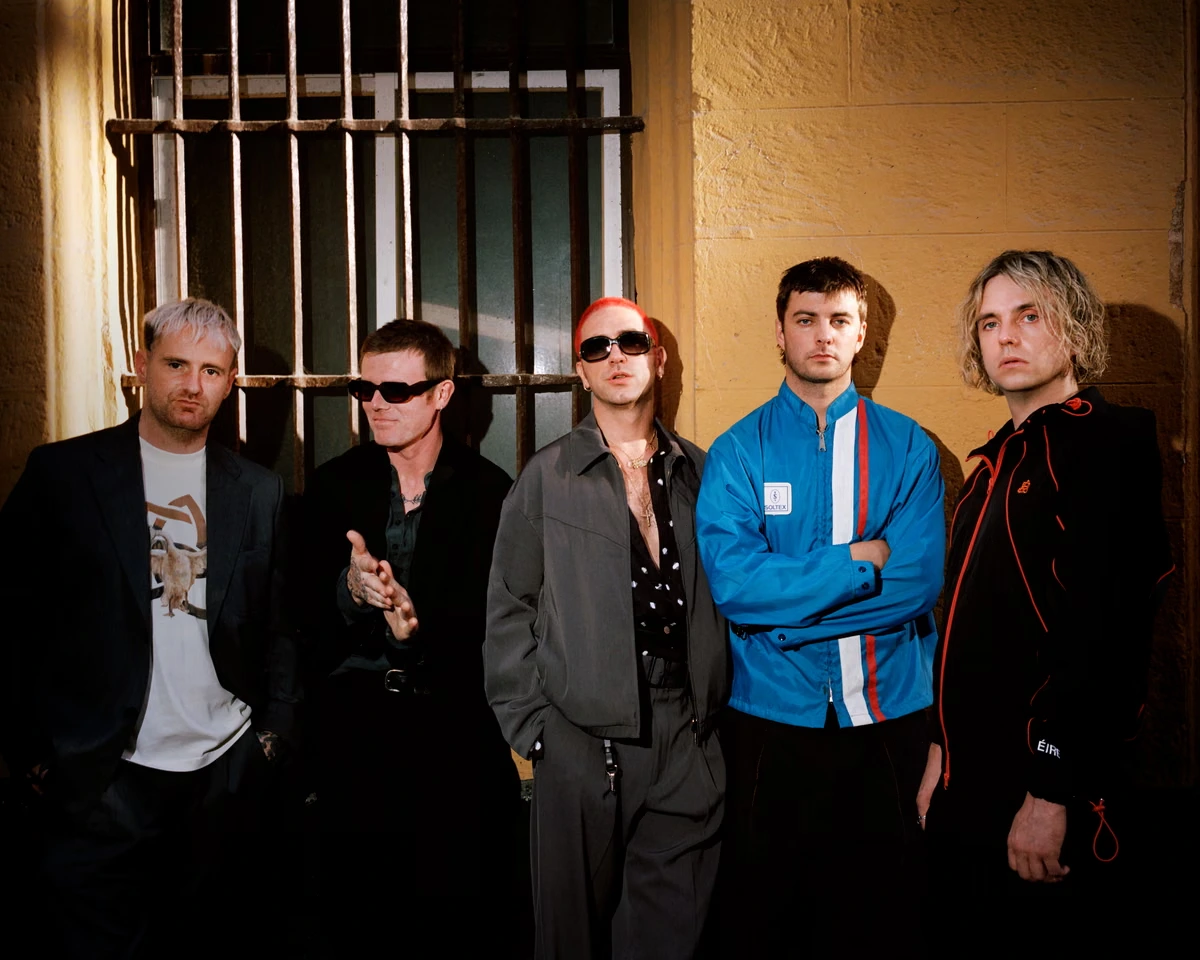
When the Dublin band introduced their last album, 2024’s Romance, it came with a surprise new look. Their uncoordinated jeans and shirts had been replaced by neon hair, shiny trousers and bug-eyed sunglasses that split the difference between Korn and the Prodigy. As they faced up to having traded their anonymity to become arena fillers, it wasn’t hard to read this look as a sort of protective cosplay, a cybergoth Sasha Fierce for five fairly low-key Irish lads trying to make peace with leaving their roots behind. Newly melodic and lavishly produced, Romance made no bones about the band’s ambitions and became their first platinum-certified album.
For their fifth LP, Fontaines’ wardrobes are more or less back to normal as the music reaches new heights, indicating a level of comfort and confidence that resounds through their most formidable, cohesive record. Frontman Grian Chatten has said he wanted to write about the context collapse of social media and the willing degradation of what it means to be human, living in a time when “the mask is wearing the face a little more”. For all that might sound ripped from the headlines, Dopamine Chamber embodies the idea with poetry and a frankly thrilling and terrifying aptitude for seduction. Chatten’s lyrics repeatedly question reality and the truth that animates desire while at the same time offering promises of salvation that may or may not be what they seem. Yet the band’s darkly alluring music, full of heady absolution, makes it impossible not to succumb.
Lead single Marianne makes that intention explicit. “I can help you disappear,” Chatten chants over spiralling strings – glinting wormholes amid the pearlescent cosmic gloom. It is a massive song, a beckoning void. There are few more cringeworthy musical tropes than when bands pre-emptively scale up for stadiums without having the substance to scaffold it – making a meal out of crumbs – but Fontaines pull off that kind of ecstatic overwhelm again and again on Dopamine Chamber.
Ahead of the record, guitarist Conor Curley said he wanted to avoid sounds that immediately recalled historic bands. They don’t quite reinvent the wheel – Happy for You has the Cure’s unmistakably sour, lonely twang; Mimesis a roughshod New Order bassline; Demolition a sledgehammer grunge attack – yet they sound more like artefacts in the band’s gorgeous ruin of a soundworld than pastiche. Happy for You is full of beguiling flotsam, subtle echoes of pastoral guitar twang rippling like seaweed in the waves. You could spend a dozen listens focusing on the fine detail here – the agitated Tongue mixes Lankum’s dank chill with a taunting, pisky-like backing singer – but Dopamine Chamber gets its immediacy from Chatten’s scene-stealing vocal performances.
He swerves between indie rock’s best swoon since Morrissey and an insistent, addictive attack. One Man mixes both: “Do you have a genuine need to be desired / Call me up any time that you wanna fly yeah,” he incants against a wistful string crescendo, radiating both the possibility of redemption and the sense that accepting might mean grasping tight to Icarus’s feathers. At moments, Chatten’s voice hits on the level of pure sensation, feeling almost invasive in its capacity to worm its way into your veins: the way he exhales “I sweeeaaaaar” on Happy for You, or “surely you’ll wake up in yourself” on Mimesis.
Plus if you’re going to invite Rosalía to be the first guest on any Fontaines record, you’d better be able to hold your own. Channelling Morricone grandeur and mid-century balladry, the absolutely astonishing duet Where Is Gone? is as spellbinding as Nick Cave and PJ Harvey’s Henry Lee and a peerless would-be Bond theme that’s too good for the ailing franchise. The pair swirl around one another, beautiful and deadly as thick smoke.
When the band announced the album’s tracklist on Instagram, a weird number of fans were outraged at the Catalan singer’s presence, as if Fontaines had invited in some popsy rather than the best singer of her generation and an autodidact whose last record was a concept album about ancient nuns. Clearly, some fans would like Fontaines DC to remain as pickled in aspic as the “beauty queens / Razor-faced / With private means” that Chatten disdains over the rising hiss of closer Intimate. His bitter broadside underscores that trying to cheat death means choosing spiritual death, the Faustian bargain of our times. By emphatically rejecting that fate, Fontaines have grown in dramatic, majestic fashion to become the best band of their generation – the kind that, to nick a phrase from another band, really might live for ever.