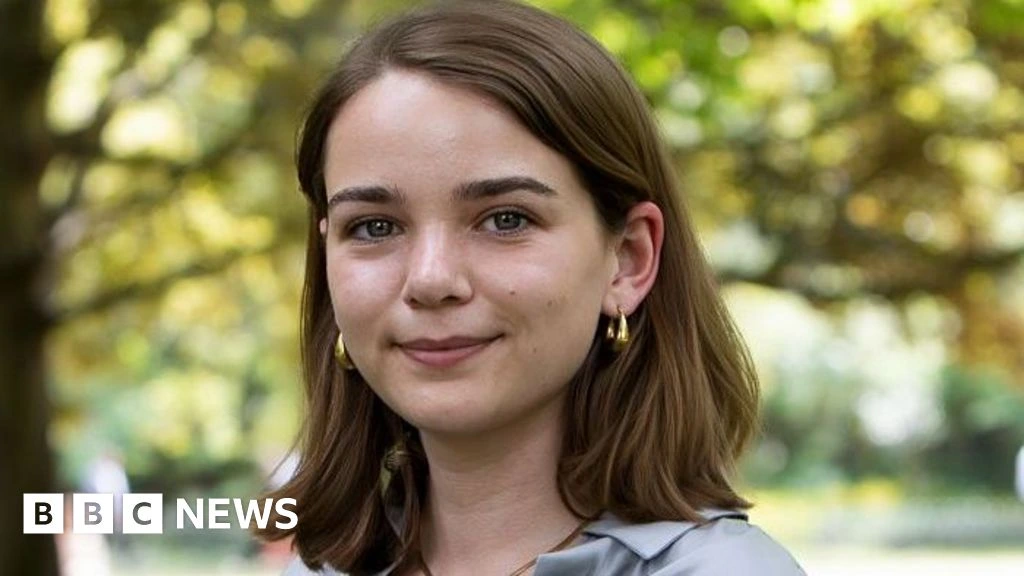
Dani Payne was so anxious about public speaking, she had a doctor's note to excuse her from presenting at school and university.
Dani Payne was so anxious about public speaking, she had a doctor's note to excuse her from presenting at school and university.
Now aged 28 with a job in politics at a cross-party think tank, she's spoken in parliament, sits on discussion panels and presents social media videos.
Now aged 28 with a job in politics at a cross-party think tank, she's spoken in parliament, sits on discussion panels and presents social media videos.
"Most days I do some form of public speaking," she says. "I wouldn't have believed that at 15."
"Most days I do some form of public speaking," she says. "I wouldn't have believed that at 15."
Want to get better, or simply get started? Here are four ways to help you nail your presentation or speech.
Want to get better, or simply get started? Here are four ways to help you nail your presentation or speech.
Payne, from Exeter, says she stopped any form of public speaking after developing a severe anxiety disorder and experiencing panic attacks.
Payne, from Exeter, says she stopped any form of public speaking after developing a severe anxiety disorder and experiencing panic attacks.
But looking back, she says avoiding it didn't help her build "coping skills or resilience".
But looking back, she says avoiding it didn't help her build "coping skills or resilience".
"The more you avoid what you're anxious about, the more you're anxious about it."
"The more you avoid what you're anxious about, the more you're anxious about it."
In her second year of university she was invited to present a subject she was passionate about. "I realised I was losing out on opportunities that I felt really strongly about."
In her second year of university she was invited to present a subject she was passionate about. "I realised I was losing out on opportunities that I felt really strongly about."
She presented research for her dissertation on sexual misconduct in academic fieldwork settings and that was the start of conquering her fear.
She presented research for her dissertation on sexual misconduct in academic fieldwork settings and that was the start of conquering her fear.
Her advice is to look for or create opportunities to speak about something you care about. "Picking something you genuinely feel passionately about will always make it easier," she says.
Her advice is to look for or create opportunities to speak about something you care about. "Picking something you genuinely feel passionately about will always make it easier," she says.
Daisy Schofield, a 32-year-old documentary producer and journalist, had her first panic attack at university during a presentation, she tells Woman's Hour.
Daisy Schofield, a 32-year-old documentary producer and journalist, had her first panic attack at university during a presentation, she tells Woman's Hour.
Woman's HourShe managed to avoid public speaking until she got her first job and had to present company statistics on Teams every Monday.
She managed to avoid public speaking until she got her first job and had to present company statistics on Teams every Monday.
To build her confidence, Schofield practises by using an app on her phone to create a fake audience in a virtual reality headset she bought online for £10.
To build her confidence, Schofield practises by using an app on her phone to create a fake audience in a virtual reality headset she bought online for £10.
"It makes practising feel much more engaging and like the real thing, compared to practising at home on your own, which feels a bit awkward and boring."
"It makes practising feel much more engaging and like the real thing, compared to practising at home on your own, which feels a bit awkward and boring."
Viv Groskop, a stand-up comedian, writer and public speaking coach advises picking a word that encapsulates what you want your speech to convey.
Viv Groskop, a stand-up comedian, writer and public speaking coach advises picking a word that encapsulates what you want your speech to convey.
"It could be something like clarity... you can think to yourself afterwards, 'did I set out to be clear? Was I clear? Yes. It's a win.' And every time you choose a different word."
"It could be something like clarity... you can think to yourself afterwards, 'did I set out to be clear? Was I clear? Yes. It's a win.' And every time you choose a different word."
Groskop also advises putting a post-it note on your laptop camera and reminding yourself to look there and not at people on the screen "because it will mean you're looking down, not at people."
Groskop also advises putting a post-it note on your laptop camera and reminding yourself to look there and not at people on the screen "because it will mean you're looking down, not at people."
When you're presenting in person, Prof Nazanin Derakhshan, a neuroscientist at Birkbeck, University of London, advises not to focus too much on people's faces.
When you're presenting in person, Prof Nazanin Derakhshan, a neuroscientist at Birkbeck, University of London, advises not to focus too much on people's faces.
"Accept that their facial expression may mean anything, and distract yourself internally from interpreting these facial expressions."
"Accept that their facial expression may mean anything, and distract yourself internally from interpreting these facial expressions."
Payne says being good at public speaking does not come "naturally to someone".
Payne says being good at public speaking does not come "naturally to someone".
"You wouldn't pick up a guitar, and be surprised that you couldn't play a song when you've never picked up a guitar before - public speaking is the exact same thing."
"You wouldn't pick up a guitar, and be surprised that you couldn't play a song when you've never picked up a guitar before - public speaking is the exact same thing."
Groksop says people who are good at public speaking have just been doing it more.
Groksop says people who are good at public speaking have just been doing it more.
"Many people are spending up to eight hours a day on Teams or Zoom, and if you think about a television newsreader, they've been trained for that."
"Many people are spending up to eight hours a day on Teams or Zoom, and if you think about a television newsreader, they've been trained for that."
She says no one around you expects you to "immediately be a master public speaker the first time you do it".
She says no one around you expects you to "immediately be a master public speaker the first time you do it".
Derakhshan says being vulnerable is a "big asset" when public speaking.
Derakhshan says being vulnerable is a "big asset" when public speaking.
"We all make mistakes, we all forget things. It's not the end of the world. If you can go back and make a humour of it the audience are quite forgiving and accepting."
"We all make mistakes, we all forget things. It's not the end of the world. If you can go back and make a humour of it the audience are quite forgiving and accepting."
Additional Reporting by Simon Richardson.
Additional Reporting by Simon Richardson.
Additional Reporting by Simon Richardson.