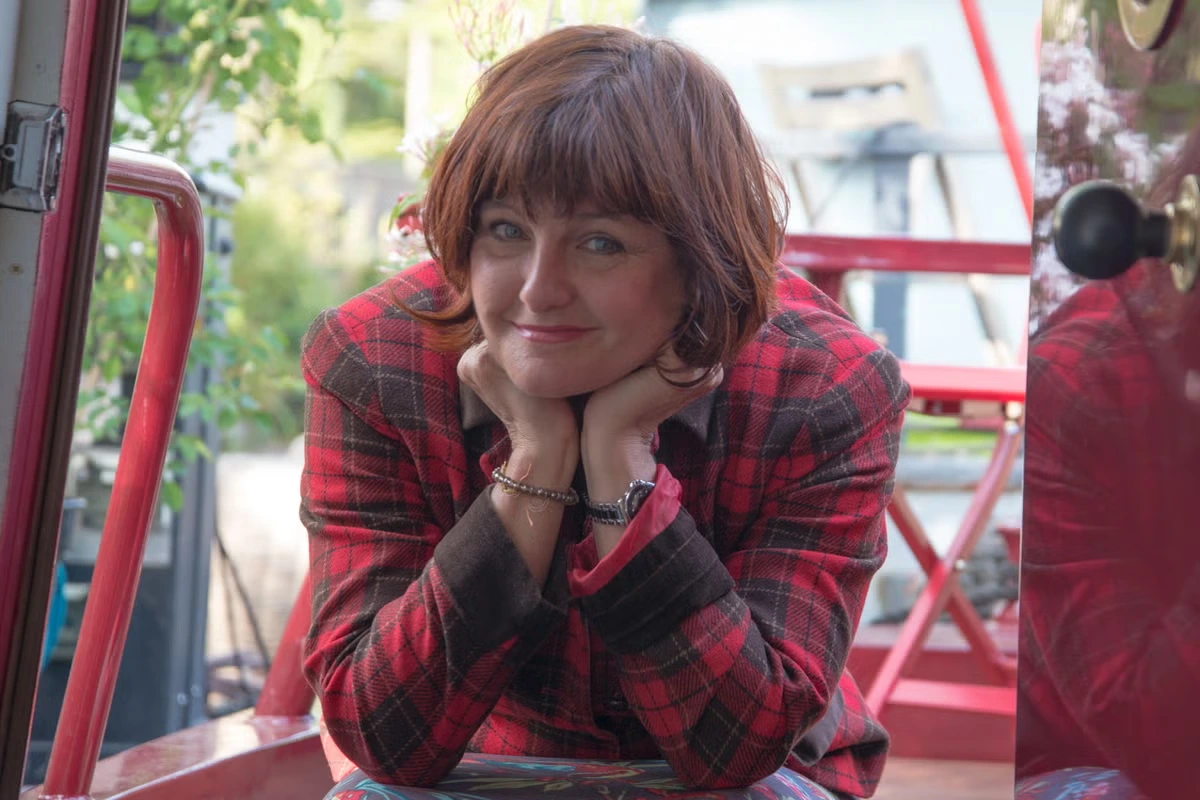
Annette Dittert had worked as a TV correspondent in many different places, including New York, before she came to London in 2008. She immediately fell head over heels in love with the city. “London is just so beautiful”, she says. She loves that the rich history of Britain is so well maintained in the streets and buildings. Another thing she admires here is its culture. “When it comes to entertainment, acting, theatre and music, the British are miles ahead of us Germans,” she says and mentions artists like Raye, who she just saw performing live and found “extraordinary”.
However, when she published her book Dear Britain, in the spring, she never expected it to become such a huge success. For months, the book – in which the German journalist seeks to understand the soul of her adopted home, the United Kingdom – has been on Germany’s bestseller lists.
Dittert, 63, who worked as a correspondent for Germany’s public broadcaster until last year, is now regarded by many Germans as their interpreter of Britain. She was awarded the “Bundesverdienstkreuz” this year, Germany’s highest honour for service to the public, for her contribution to the German-British friendship.
So, how does she explain the success of her book?
“Germany has a large Anglophile community that took Brexit almost personally. Now, ten years on, people are slowly beginning to forgive. It was a real pleasure to be able to tell my British friends, ‘Well, the Germans still love you’,” Dittert tells The Independent.
This forgiveness is, at least in part, due to Germany’s own political situation. “Germany is now grappling with right-wing populist parties such as the AfD and has had to get used to polarised, post-truth debates of its own,” she says.
And prime minister Andy Burnham also plays a major part in this revived love for this sceptred isle, Dittert says.
“Firstly, because he appears to be both successful and popular while coming from the liberal-democratic centre – something that can no longer be taken for granted in continental Europe.
“Friedrich Merz is extraordinarily unpopular, quite possibly the least popular chancellor Germany has ever had, and Emmanuel Macron finds himself in a similar position in France. So Germans now look to Britain with a certain hope that it might be the first country to perhaps reverse this trend.
“Whether Burnham's strategy will ultimately succeed is, of course, another matter,” she adds.
Secondly, and perhaps more importantly, Burnham has spoken out clearly about how much damage Brexit has done to Britain and that he wants to take another look at the possibility of returning to the EU.
“That is something most Germans would love to see,“ Dittert says.
Britain holds a soft power in its pop culture – another big factor in what makes the country so popular among Germans.
London, Liverpool and Manchester have long been desirable to young people from all over Europe for music acts like The Beatles, David Bowie, Oasis or Amy Winehouse. Many Millennials and Gen Z’ers dreamt of studying or living in Britain once – a dream that got shattered by Brexit for most of them.
Of course, the same applies in reverse and where once Berlin was a hotspot for young Brits who were into Techno, arts and cheap beer, the German capital is now full of Americans, Australians and people from other European countries. British expats setting up home there are much rarer.
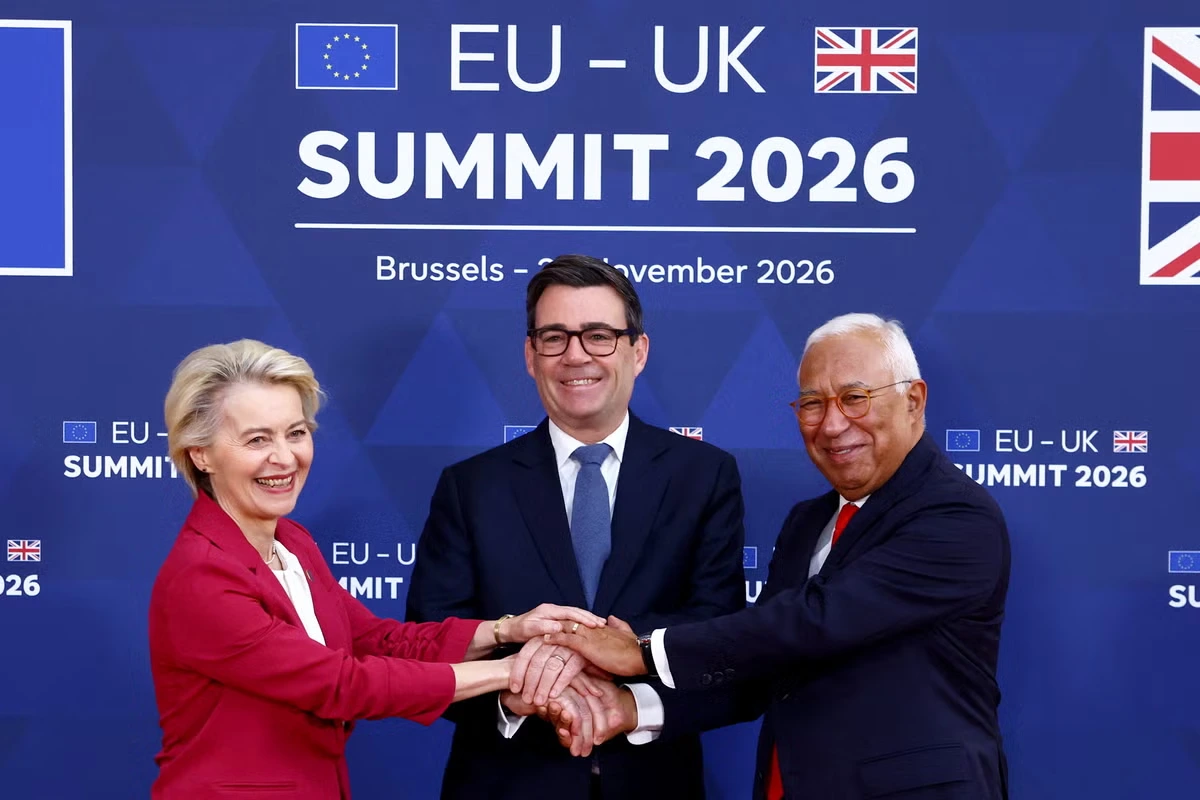
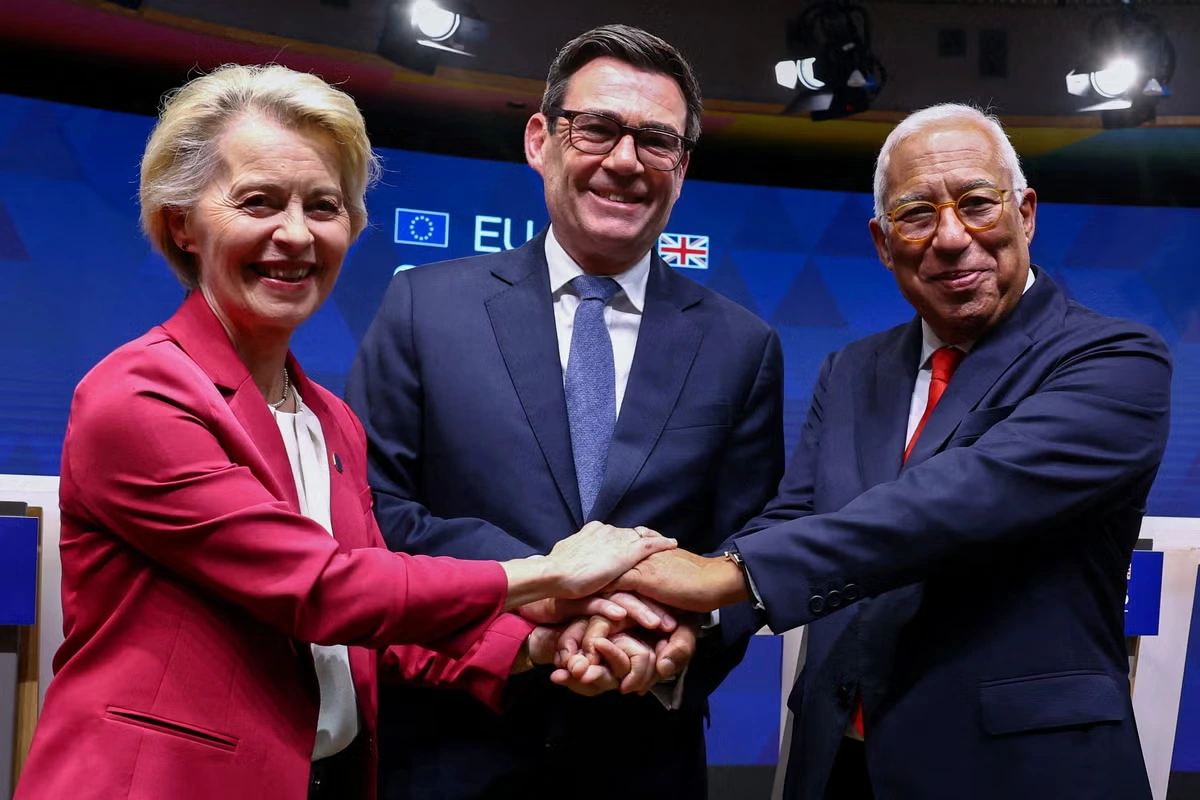
Considering this frustration on both sides, it shouldn’t come as a big surprise that the question of Britain’s rapprochement with the EU has recently become a much bigger topic than the deals on food and drink being signed at the EU-UK summit this week. And Germany is at its heart.
German Finance Minister and Vice Chancellor Lars Klingbeil of the Social Democratic Party was in London on Monday, not only to visit Larry the Cat, but to speak with, among others, John Healey about the new British government’s pro-European course.
“If you want to come back home, we would support that,” he said. German Chancellor Friedrich Merz expressed a similar view in early October, when Burnham visited Berlin. Merz said at the time that Germany would do everything in its power to bring the UK closer to the European Union again.
“No government is more keen to see Britain return to the EU than Germany's. The two countries share a great deal in political culture, mentality and outlook. Within the EU, Britain was a valuable ally for Germany, not least on fiscal policy, where the two often stood together against the southern member states,” says Dittert.
And while the debate often focuses on Britain being worse off without Europe, it’s worth noting that Brexit has also massively weakened the EU top; particularly in the area of defence, but also in its self-image as a liberal-democratic Europe.
Dittert says: “As Burnham said, this was first and foremost in the interest of its enemies, like Russia. Quite how much influence Russia had on the Brexit campaign remains unclear, but it was certainly in Putin’s interest to divide and weaken the EU this way.”
Sebastian Roloff, a member of the German Bundestag who works on EU affairs, shares the view that the EU would regain an important economic and security partner, telling The Independent: “Closer cooperation with Britain would also be a major gain for Germany and would strengthen Europe’s ability to act collectively.”
Whether negotiations on rejoining the EU will ever take place remains entirely open, though. “A return to the EU would certainly be a lengthy political process that requires broad support both in Britain and within the European Union”, Roloff says.
“The decisive factor will be creating the political will on both sides for renewed membership and developing shared ideas about future cooperation.”
The appetite to rejoin seems to exist amongst the German public, with a YouGov poll to mark Brexit’s 10th anniversary showing 63 per cent of Germans now support the UK rejoining the EU - up from 40 per cent of Germans in 2021, and still more than the French (58 per cent).
And it is popular in the UK too. According to a Bloomberg poll conducted this summer, 52 per cent of Britons would support a return to the EU. The Independent launched Europe: The Way Back in June to campaign for a stronger relationship with Europe.
But obviously there’s already a loud counter-movement – the Stay Out campaign launched this week, warning that rejoining the EU could cost taxpayers hundreds of millions of pounds per week, a figure that has yet to be verified.
Criticism also comes from former Prime Minister David Cameron. He argues that Burnham’s move towards the possibility of rejoining weakens Britain's negotiating position against the EU.
However, Annette Dittert doesn’t think that would be a problem. “Brexit was traumatic for many, not only in the United Kingdom but in Brussels too,” she says. “The clearer and more dependable a British prime minister appears, the more willing the other side will be to compromise. The French might see that a bit differently occasionally. But, overall, Burnhams strategy is the right one here, I’d say. Negotiating with the EU is not a game of pub poker, but should rather be a conversation among friends.”
Of course that is not to say that Europe doesn’t have troubles of its own. Young people in several countries have recently taken to the streets over poor living conditions, and far-right parties are gaining ground in many places. Far-right French politician Marine Le Pen could win the 2027 election. Nobody knows what the EU will look like if and when Britain wants to rejoin. So there’s often the question: Ten years on, what kind of Europe would be joining?
“I always find that rather short-sighted,” Dittert says. “Precisely in such circumstances, it should be in Britain's interest to engage on the Continent and help prevent the worst, not least for the sake of its own security.” A right-wing populist Europe that might side with Putin could not be in Britain's interest.
Whatever the outcome of the debate, Annette Dittert still wants to stay in London, which is why she took British citizenship last year. She is still in love with the city.
"Not quite as intensely as at the start, but that's how it is in relationships, too," she says. Some couples, of course, marry a second time. Perhaps that will one day be the story of Britain and Europe, too.
The Independent launched its campaign, Europe: The Way Back, earlier this year, with the aim of rebuilding Britain's future relationship with Europe. Join the community here to receive our free weekly newsletter hosted by David Maddox and Millie Cooke and to engage in the debate. Unlock expert analysis and opinion plus exclusive access to content and events for just £1 for 6 months here.