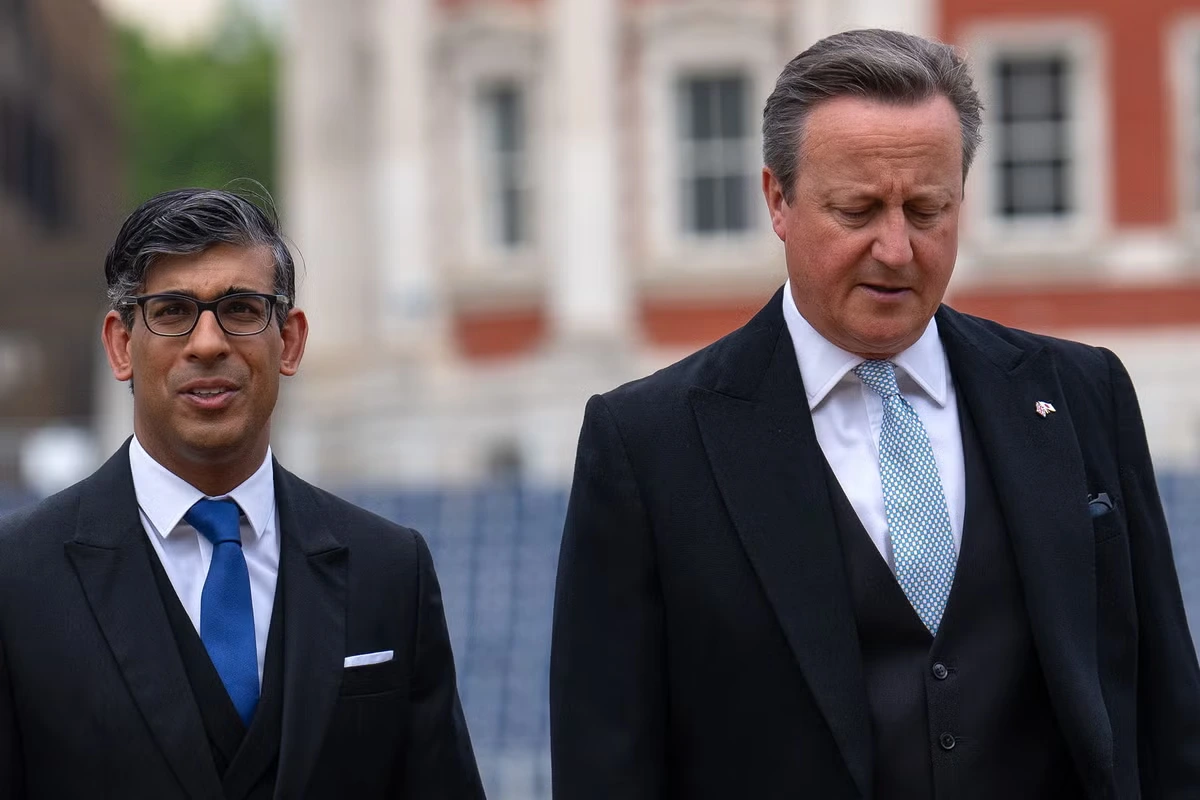
David Cameron begged Rishi Sunak to call off the decision to hold the snap election in July 2024 which led to the biggest Conservative defeat in history, according to a new book.
Former prime minister Lord Cameron, who was foreign secretary in Mr Sunak’s government, told him he was “wrong” and the Tories would do better if he delayed.
Lord Cameron told him his policies were “finally” working and he had duty to see them through, writes Sir Anthony Seldon in his book Sunak at 10, the Last Conservative PM?, which is being serialised in The Independent.
But Mr Sunak, who had the power to hold off staging an election until 2025, and wanted Tory “big beast” Lord Cameron to help him avert a cabinet revolt over the issue, overruled him.
The day after their meeting in No 10 in May 2024, Mr Sunak called an election for July 4, gambling that it would boost Tory chances by springing a surprise on Labour.
But the early election gambit blew up in his face. Labour immediately accused him of “cutting and running”.
Mr Sunak got drenched while announcing the election in Downing Street in torrential rain, and thereafter everything that could go wrong for him did.
He was pilloried for departing early from a veterans event in France to mark the anniversary of D Day, missing a meeting of world leaders. One of his senior aides was caught in a betting scam after using secret No 10 information to place a bet on the date of the election.
And he had to scrap plans for anti smoking legislation because he had not left enough time to get the law through Parliament.
The Conservatives lost 251 seats in the election, prompting some of Mr Sunak’s critics to say the party could have done better if the election had been held in October or November 2025, as most pundits had expected. As prime minister he could have delayed it until January 2025.
Seldon describes how Mr Sunak sought Lord Cameron’s backing to win over the rest of cabinet, some of whom feared, rightly as it turned out, an early election would result in a Conservative “wipeout”.
He writes: “Cameron was surprised to be mysteriously summoned to Downing Street late one evening. Sunak was alone in his office. ‘I’m going early, David. I think it’s best to do it now’, he opened.
“Cameron was taken aback. He wasn’t being asked for his opinion but presented with a fait accompli. He decided to push back. “I don’t think that’s a good idea Rishi,” he said.
“Sunak could see he was disappointed.”
‘“Why do you think that?”
‘“Because we are finally getting on top of our economic, our diplomatic and energy security. Your premiership is about building security. It would be wrong not to see that agenda completed.”
‘“I understand, David, but so many things could get worse, and we have the opportunity to seize the initiative, catch Labour and Reform off guard,” he said.
Lord Cameron sighed. He could see there was no point in arguing. “As I said when you appointed me, I will back you, whatever your decision is as prime minister.”’
Lord Cameron left the No 10 meeting to go on a long planned trip to Albania which he then cut short, getting back the next day just in time to attend a cabinet meeting where his loyal endorsement of Sunak’s early election proved crucial.
Immediately afterwards Lord Cameron was the first cabinet minister to publicly support Mr Sunak’s calamitous decision. He did not say that he had privately urged him not to do it.
Moreover, Lord Cameron’s advice to Mr Sunak to carry on would appear to fly in the face of his own record as prime minister.
When he lost the 2016 EU referendum, he resigned as prime minister the next day even though there there were four years until the next general election was due.
Extracted from ‘Sunak at 10: The Last Conservative Prime Minister?’ by Anthony Seldon and Tom Egerton, Atlantic Books. On sale 27 August, hardback, £25