Readers responding to an extract from The Brexit Effect, in which Sir John Curtice assesses public opinion a decade on from the vote to leave the EU, focused heavily on the gap between the Brexit that voters were promised and the Brexit that they believe was ultimately delivered.
Many commenters agreed with the UK’s leading pollster that dissatisfaction with Brexit has grown steadily since the referendum, pointing to concerns about the economy, immigration and Britain’s influence abroad. Several argued that Brexit had failed to meet expectations and were not surprised by polling showing a sustained shift in favour of closer ties with Europe.
For some, that dissatisfaction strengthened the case for rejoining the EU, with commenters arguing that membership of the single market and wider European institutions would boost growth, security and Britain’s standing on the world stage. Others questioned whether Brexit still retained democratic legitimacy a decade on, given changing public opinion and a new generation of voters who did not take part in the 2016 referendum.
However, critics challenged the idea that disappointment with Brexit automatically translates into support for rejoining. A recurring theme was that any future application would come with significantly different terms, including potential commitments to the euro, Schengen and the loss of previous UK opt-outs.
While opinions differed sharply on the way forward, there was broad agreement that the Brexit debate remains far from settled. Here’s what you had to say:
I suspect most people didn't support it in the first place. Johnson's Brexit deal wasn't what even the Brexit campaign led voters to believe, and therefore never properly had the nation's consent. It was mission creep as soon as the result was announced, with any opposition marginalised, shut out or mocked. It is much too late now to get back into the EU, for various reasons. However, I do support and admire The Independent's campaign to bring us closer to the EU and that, I am pretty sure, is what the majority want.
There's no doubt that the version of Brexit we ended up with bears little resemblance to many of the options that we were told were on the table. For this, I think some of the blame lies with the hard-Brexit-supporting factions within the Conservative Party and the extraordinary power they wielded over their own governments. That, and opportunists like Johnson, whose conviction was dubious to say the least.
I voted Remain, in part because I had an instinctive distrust of Brexit's main proponents. I feel vindicated in this, but at the same time I feel quite strongly that the people who voted for it are not to blame. My own brother did, and although we disagreed, I can't say he didn't make his choice with due consideration.
In order to be sure of winning a binding referendum, support for rejoining would need to be consistently well over 60 per cent (especially if it required a supermajority, as binding referendums are supposed to), and the last time I saw any figures it was sitting at around 58 per cent. It needs to go up a bit to make it worth the risk for any government to propose rejoining, so the more discussion of the possibility and its benefits, the better.
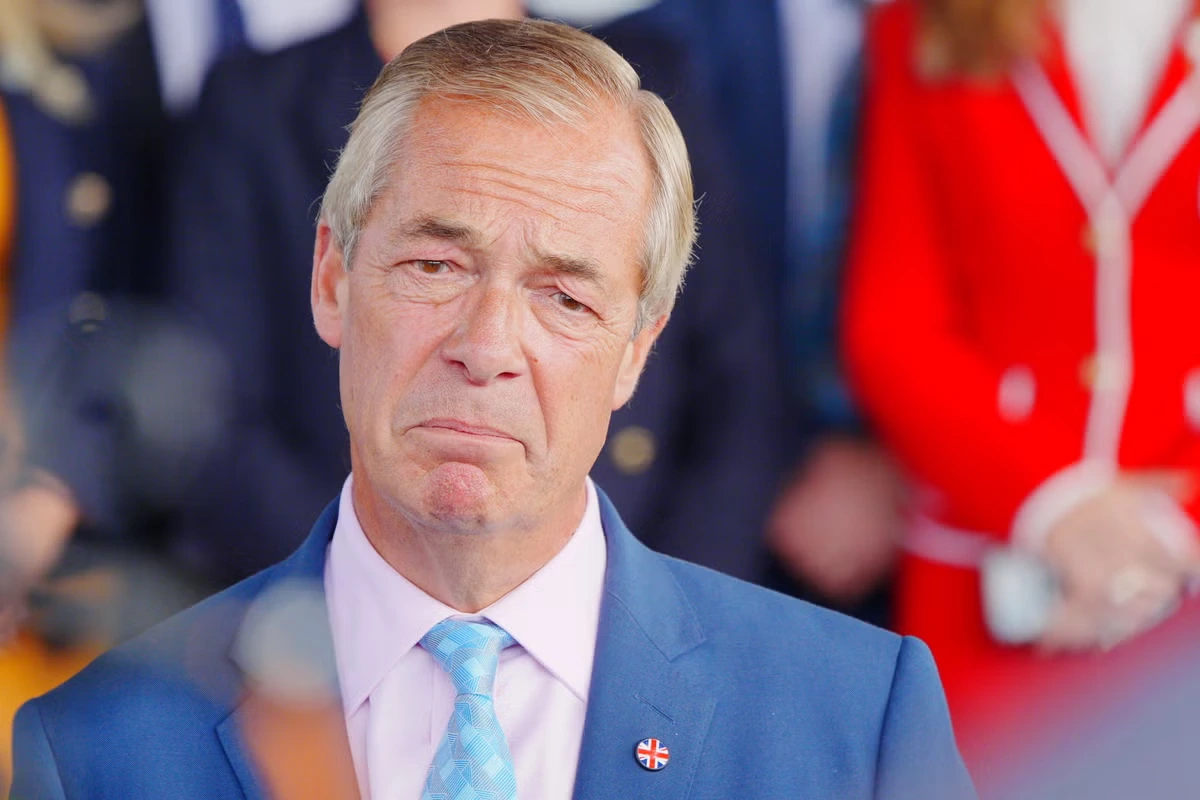
On 4 July 2016, just mere days after the Brexit referendum, Nigel Farage resigned as UKIP leader, saying he had “done his bit”, which was to get Britain “out of the EU”, and that he now “wanted his life back”.
So there you have it, Farage had no interest in negotiating Brexit. Sorry for those who hold onto the belief that Farage would have delivered a purer Brexit. The moment his big dream had to deliver, he ran for the hills. A pattern of behaviour that is quite familiar now. Farage does best when he is doing his bluster at the pub, but he can't cut it when it comes to getting round a table and getting it done.
Looking at the article by Boris Johnson’s ex-wife, she seems to forget about all the opt-out clauses and the original objectives of the Maastricht Treaty that the UK signed.
In many ways, it is better for the EU and Britain to remain outside the EU so that the EU can continue pursuing its plans without constant UK resistance.
And to answer Johnson's ex-wife, it is not the EU that is punishing Britain; rather, it is the British voters, political system and island mentality that are letting the country down.
Let's see what Farage does if he ever comes to power. He will then understand how Brexit has not solved any of the long-standing problems afflicting the country; it has, in my opinion, made them worse.
Sir John is an expert on opinion polls, but our democracy is not run based on them. Sir John is perhaps letting enthusiasm get ahead of reality.
The reality was the referendum, where 72.2 per cent of the electorate voted and the Brexit side won by a margin of over a million votes. Compare this with the turnout at the 2024 General Election, which was 59.9 per cent, the lowest in any general election since 2001. If I were to ask to reverse the 2024 GE results and reinstate Rishi Sunak as PM, how would that sound?
Therefore, here is my proposition. Let us test this through a proper democratic exercise: the General Election in 2029. Let Labour, the Lib Dems and the Greens state in their manifestos that they will reverse Brexit, and let the Tories and Reform state that they will implement Brexit. If the Remain side wins and forms the government, let them go ahead and pull us out of Brexit and into the EU, no questions asked. If, however, the Brexit side wins, we continue outside the EU, no questions asked.
Lest people forget, Jo Swinson led the Lib Dems into one General Election on the basis of scrapping Brexit, and got herself scrapped instead.
Polling has consistently shown a majority in favour of rejoining since January 2021, when we really left and the damage became clear. It is silly to claim otherwise. Brexit has damaged our economy, undermined our national security, and increased immigration. With Europe under threat from fascism both at home (Reform, Restore, AfD, Le Pen etc) and from Russia, we need to rejoin and commit to all European alliances that promote freedom, democracy and human rights. Only five European countries are not members of the EU or do not have free trade agreements with the EEA: Russia, Belarus, Azerbaijan, Armenia and the UK.
We know the big sticking point is going to be free movement, and there is no way of avoiding it. So let's start with that. Can we sell the idea of European free movement? Immigration from Europe would replace immigration from the rest of the world, taking us back to how things were before Brexit, before the Boris wave. We could even have quotas on non-EU immigration just to make sure that happens.
The next thing would be a case for the euro. The EU will insist on us joining the euro for many reasons, not least that it makes it much harder for us to leave again. We need to convince people that joining the euro is in our interest. Maybe it would get us lower interest rates?
Without strong popular support for those two things, it’s pointless to even think about rejoining.
Some elements to consider: (1) The EU looks for a majority of the electorate, not just a limited number who cast a vote. (2) Brexit cannot, under any circumstances, be reversed, as a return to what once was is simply not, and never will be, on offer. (3) New membership is certainly a strong possibility. (4) New membership must, by EU law, include Schengen and the euro to be enacted as and when the new member is fully compliant with all requirements. (5) Any request for a membership dialogue must come from a government, and that request must be supported by a national legislative body. (6) Single Market access only is not on offer to the UK, and never can be. (7) There can be no opt-outs, rebates, or any special treatment for any member. (8) There is no “deal” regarding membership. There are simply rules and requirements that must be accepted and complied with. It is, quite frankly, a “take it or leave it” situation.
All of this has been carefully, patiently and consistently made clear by EU member nations and the various EU institutions. As much of the British public are too slow to understand these basics, perhaps membership is not the best path for the nation.
The only way to know for sure is to have a new referendum.
People who reached voting age since June 2016 should have a right to decide whether they want to remain out of the EU or rejoin. People who lost their jobs because their employers fled to the EU zone should have the right to say whether they support rejoining or not. People who are happy with Brexit should have the right to confirm their 2016 vote. Everybody would have a say.
We need a PM with a spine – so I will not hold my breath.
Isn't it easy to jump on the EU bandwagon when political figures are promising us that it will be the magic solution to all our ills, just as they did with leaving the EU?
Perhaps when we find out how much it would cost us – perhaps far more than it did before – and that we will have to accept laws and regulations that are there for the benefit of mainland EU countries, and will have to tear up many trade deals and lose flexibilities in our economy, then it won't look like such a good deal.
Meanwhile, UK Q1 growth was 0.6 per cent; EU Q1 growth was 0.2 per cent. Perhaps that wasn't mentioned when the poll was taken.
Sign up to our free Europe: The Way Back newsletter here, or by entering your email address using the form below:
What you will get by joining:
There are even more benefits if you subscribe for just £1 for seven months: