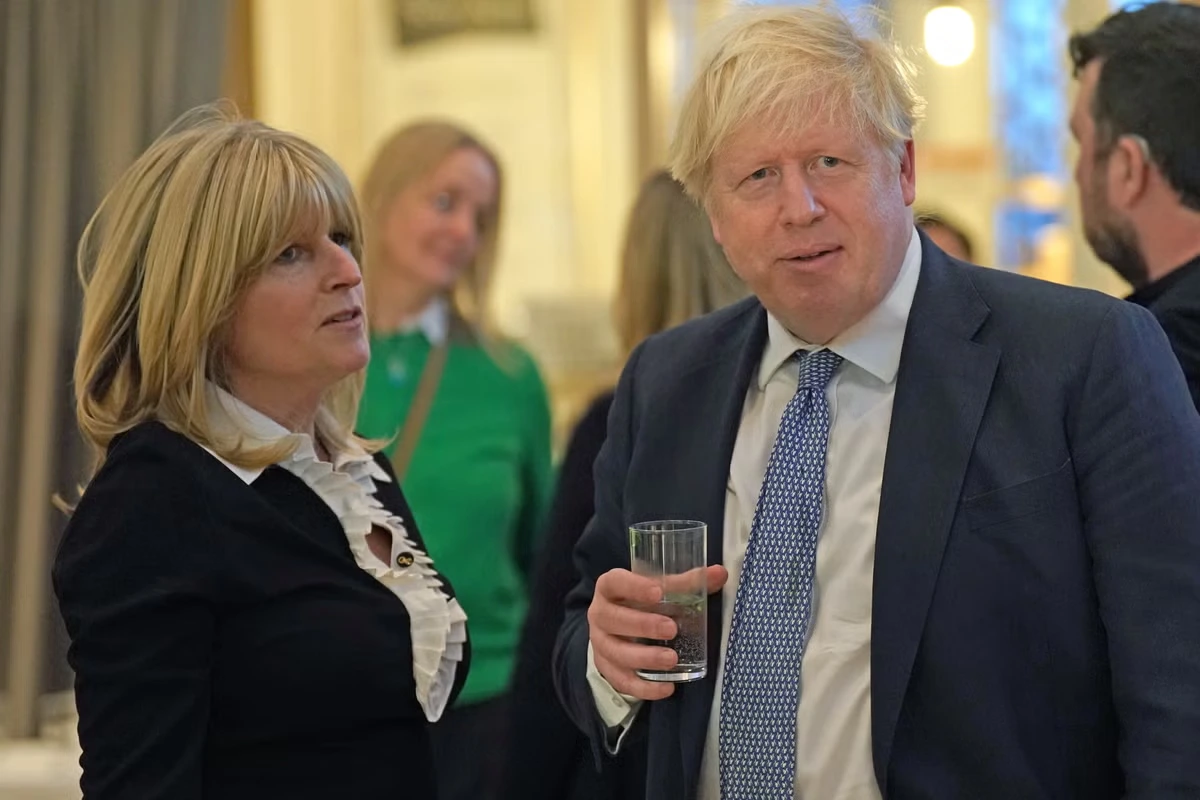
When Boris Johnson wrote his now-infamous newspaper column about the EU referendum, in which my brother declared his support for Leave, it was a tectonic shift signalling this island nation would move further away from, not closer to, the continent of Europe. He gave the Leave campaign rocket boosters that helped launch his side to a narrow but conclusive victory – and his article changed the course of British history.
But there was a twist. That weekend in February 2016, the prime minister David Cameron was in Brussels, trying to get a better deal. Boris – who, at the time, was both Mayor of London and an MP – was being lobbied from all sides to jump one way, or the other, by friends, Romans, countrymen, by Cameron's Cabinet, as well as by the early adopters of Leave like Michael Gove, who'd just declared he would campaign for Brexit.
To clarify his thoughts during the turmoil, Boris also wrote a second column, in which he set out the reasons why Britain should stay in the EU.
Would he go against his prime minister, David Cameron, and campaign instead alongside Michael Gove? Would he be a good little soldier or a rebel commander? Which column would he send? I now know the answer was never in doubt.
As one of the few people who read both columns and tried to persuade him to campaign to stay in the EU – who argued with him before he made his fateful decision, who then campaigned against Brexit in 2019, and wrote a book about my doomed efforts to stop it – I might merit a short footnote in Britain’s decision to leave the EU.
A decade on, I have re-read both of the columns my brother had written on a wet Saturday in early 2016, as the country waited to see which way he would jump. Al – as Boris is known in my family – had handed me his laptop containing both articles, which I read while sitting by a sputtering fire, eating stale Belgian chocolates. I read “Leave” first, then “Remain”, which, at the time, I found much more convincing.
All the while, his phone was on the windowsill, buzzing away. According to the diary I kept at the time: “Throughout, Dave [David Cameron] was texting. ‘Bottom Line: as your PM and your friend, I need you in.’ Al’s answer ran: ‘Many thanks. It will all be in my Telegraph column, that’s the main thing.’ George Osborne also rang, and IDS [leading Brexiteer MP, Iain Duncan Smith]...”
Boris cut a lonely figure, so I told him that he should follow his gut. Either way, I said he needed to explain why he’d taken so long to show his hand, and also to have a killer line at the end, pinning his colours firmly to the mast. I suggested a few other changes to the Leave piece, which seemed to me to be all about “open seas, sovereignty and Rule Britannia”, except the first third, which was all about lorries and cycle safety.
Dominic Cummings, his former Downing Street chief adviser, has since christened my brother “the trolley” in a nasty attempt to paint him as indecisive. But this is a term Boris used to describe himself at that time. According to my diary, I saw him as “an Out-er, after telling a Westminster friend that he was veering all over the place like a shopping trolley and me that his brain was like a traffic light: going red, green, amber, red, green, amber”.
When Boris went back to London the next day, the media had gathered outside his house, waiting for the puff of white smoke. He texted the boss the news he didn’t want to hear: he was going to join Gove and the Out crowd. Nine minutes later, he stepped out of his north London house to face the roiling melée. He would describe the scene, with “hundreds” of hacks, including Laura Kuenssberg and Robert Peston, awaiting the annunciation, as “insane – it was an imperial goatf***”.
Without notes, he delivered a summary of his 2,400-word column that would appear in Monday’s Telegraph. But all the papers would have him on the front page. The last time that had happened, as someone on Twitter said, was when Nelson Mandela died.
And the rest is history. But what of his unpublished Remain column? (If you’re a real referendum nerd, you can find it, in full, in Tim Shipman’s excellent book, All Out War.) It reads very differently to me now.
Ten years ago, when I cast an eye over it, I was gulled by the chunky “Ode to Joy” section, setting out the unparalleled benefits of the four freedoms of EU membership: “Think of the desire of your children and grandchildren to live and work in other European countries; to sell things there to make friends and perhaps to find partners there...”
I was taken in by its nods to the risks of leaving the bloc: it would deliver an economic shock, it would give Scottish independence another lift, it would put lead in Putin’s pencil. I agreed with all of it. Still do.
As for all the trolleying, the red-amber-green traffic lights, I see that differently, too. It was not so much indecision, it was anxiety about being disloyal to his boss. It was also anxiety about advocating a course of action that could hole the good ship Britannia below the waterline unless some rapid free-trade agreements were struck; genuine anxieties that – added to concerns that Brexit could prevent his own children and grandchildren from living and working in Europe, as he and his ilk had done – could deliver an outcome that might overshadow his father Stanley’s considerable achievements as a career Eurocrat.
When I re-read the so-called Remain column again, I was struck by how limp, how pallid were his arguments to stay in the EU. It ends with a dying fall, not a ringing endorsement of the status quo: “I’m going to muffle my disappointment and back the PM.”
It was not a Remain column. It was a second Leave column, written by a true be-Leaver who failed, in the end, to put his loyalty to his party and leader first and to his country and himself second.
Ten years later, neither of us have changed our minds. Those who voted Leave can agree that it’s been a bit rubbish. Those who voted Remain can agree the sky hasn’t quite fallen in.
Which, I suppose, is progress.
Rake’s Progress: My Political Midlife Crisis by Rachel Johnson is published by Simon and Schuster
Sign up to the Independent’s free “Europe: The Way Back” newsletter here, or by entering your email address using the form below: