Memory: the mother of the muses, and the heart of the Blade Runner franchise. Science fiction is forever asking what it means to be human and, in the future dystopia first painted by Ridley Scott’s 1982 movie, the answer is that we are what we remember: we are the experiences we preserve as a collection of short films inside our heads. In the original Blade Runner, Rachael (Sean Young) is devastated to learn that her childhood memories aren’t real, and she is therefore a robot “replicant”; in Denis Villeneuve’s sequel, Blade Runner 2049, K (Ryan Gosling) knows he’s a replicant but hopes his memories are a sign that he is something close to human.
Blade Runner has always been relevant to the age of AI, in that its starting point is that enslaved robots have rebelled. But the new version, the story’s first expansion into television, is acutely topical in an era where we’re increasingly anxious about whether what we’re seeing – or reading – is the work of machines. Fifty years on from the events of the last movie, the replicants have won: “Blade runners” are now replicants hunting down disobedient humans rather than the other way around, and the capture and storage of human memories is illegal. As humanity dies, what it remembers has become valuable contraband.
Since it is ultimately about the video fragments in our minds, Blade Runner has, from the start, presented its conception of the future as more of a mood than a story. One of the many things Blade Runner 2099 creator/writer Silka Luisa gets right is keeping that allusive wooziness, prioritising images over details and vibes over the desire to build a complete, logically functioning world. It’s important to, uh, remember that before diving in.
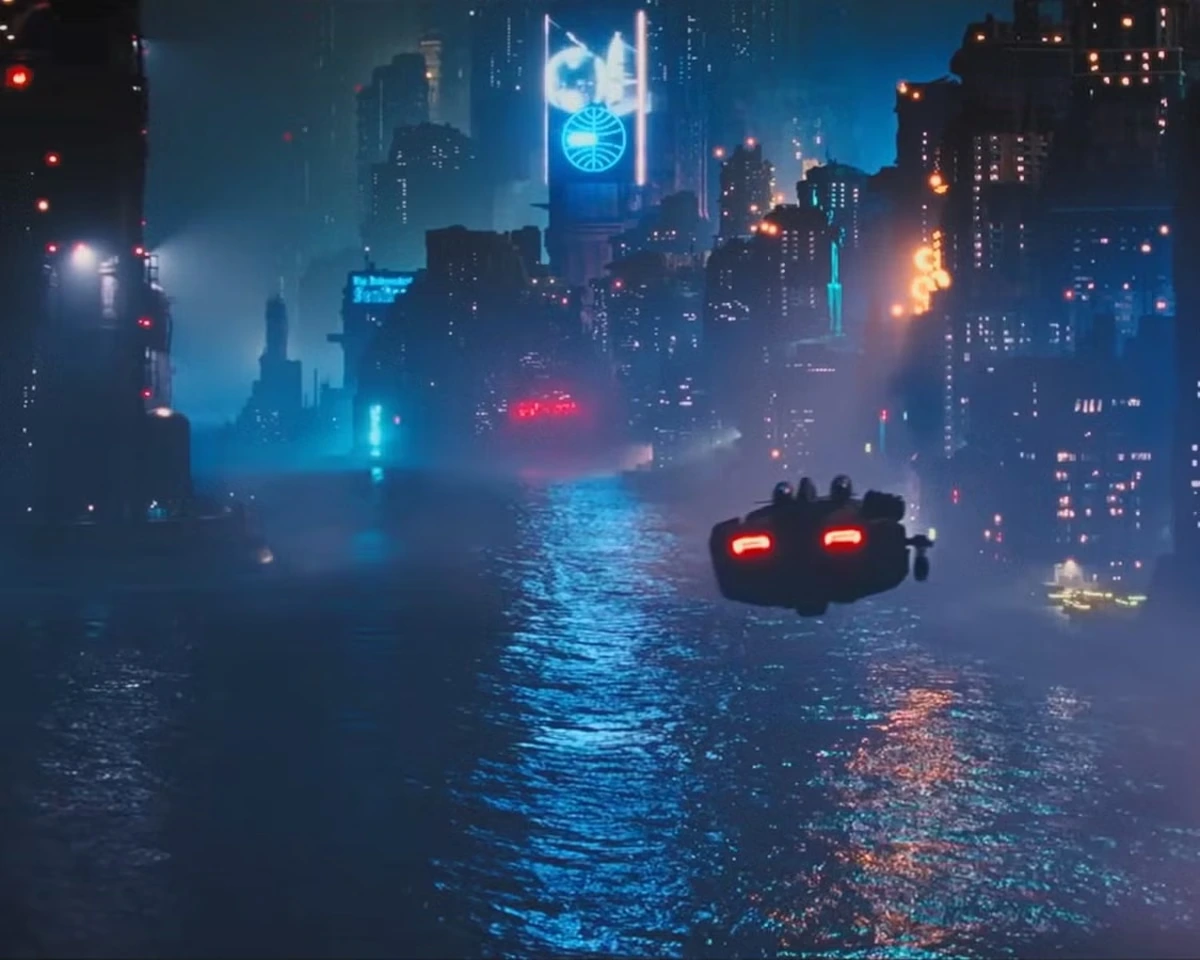
But what images, and what vibes! Switch off all the lights and get drunk on Blade Runner 2099’s rich neons and fathomless, paranoid shadows, its abandoned spaces and urban centres that teem like an unfamiliar capital city too packed for you to find your bearings. Retro cathode-ray screens flicker; dangling wires and botched concrete hang haphazardly from ceilings; to a soundtrack that mixes shimmering synths with insistently soulful saxophone. Anyone unlucky enough to be alive in 2099, human or not, determinedly copes as well as they can with everything being broken, while dreaming of something better.
Our protagonists are Olwen (Michelle Yeoh), a veteran blade runner nearing the end of her lifespan, and Cora (Hunter Schafer), a human posing as a replicant who infiltrates the blade-running operation and becomes Olwen’s sidekick. For different reasons that may not need to make perfect sense, both of them have the same quest: to track down Olwen’s former colleague/lover Marek (Johnny Harris) – who, along with a group of replicants, appears to have gone rogue.
Blade Runner 2099 is a fear-of-discovery thriller, with Cora constantly required to react to situations in an authentically replicant way on pain of death, and an Andor-style political allegory, as a fragile network of rebellious humans plot their resistance, swapping intel in rainy alleyways and backstreet bars. Like Andor, it likes to throw in a British actor when it needs a bit of extra irony or intrigue: as well as Harris there’s Tom Burke, Daniel Rigby and, as an inscrutable administrator who enjoys being unhelpful from within a scratched glass booth, Tim Key.
The striking visuals are indelibly vivid, from the backstreet pleasure parlour where replicants cosplay as humans, hiring skin suits with puckered flesh and distended pregnancy bellies, to the way humans placed under arrest have their heads smothered by sacks with built-in intubation tubes. Death scenes include a forced hanging after a crunching hand-to-hand fight, and an eerily pretty immolation. Every scene has something gorgeously unsettling.
As Olwen and Cora’s shared mission progresses, it becomes clear – not very clear, but as near to it as Blade Runner has ever felt the need to be – that their quest is an emotional one, since they are both chasing elusive memories. The franchise tradition for grandly philosophical dialogue, perched just on the edge of absurdity, is kept up: “You’re so alone you’re not a person any more,” Cora is told as she’s sent under cover, while Olwen’s summary of her own insignificance is a smart twist on the immortal “tears in rain” monologue delivered by Rutger Hauer’s dying replicant in the first movie. “I’ve been to the stars,” she says, wearily. “I know how small I am. Even the sun dies.”
So it’s not a laugh a minute, and perhaps Blade Runner 2099 could have done slightly more to conform to an episodic structure without losing its elliptical end-times cool. But its beautiful doomsday visions are unforgettable.