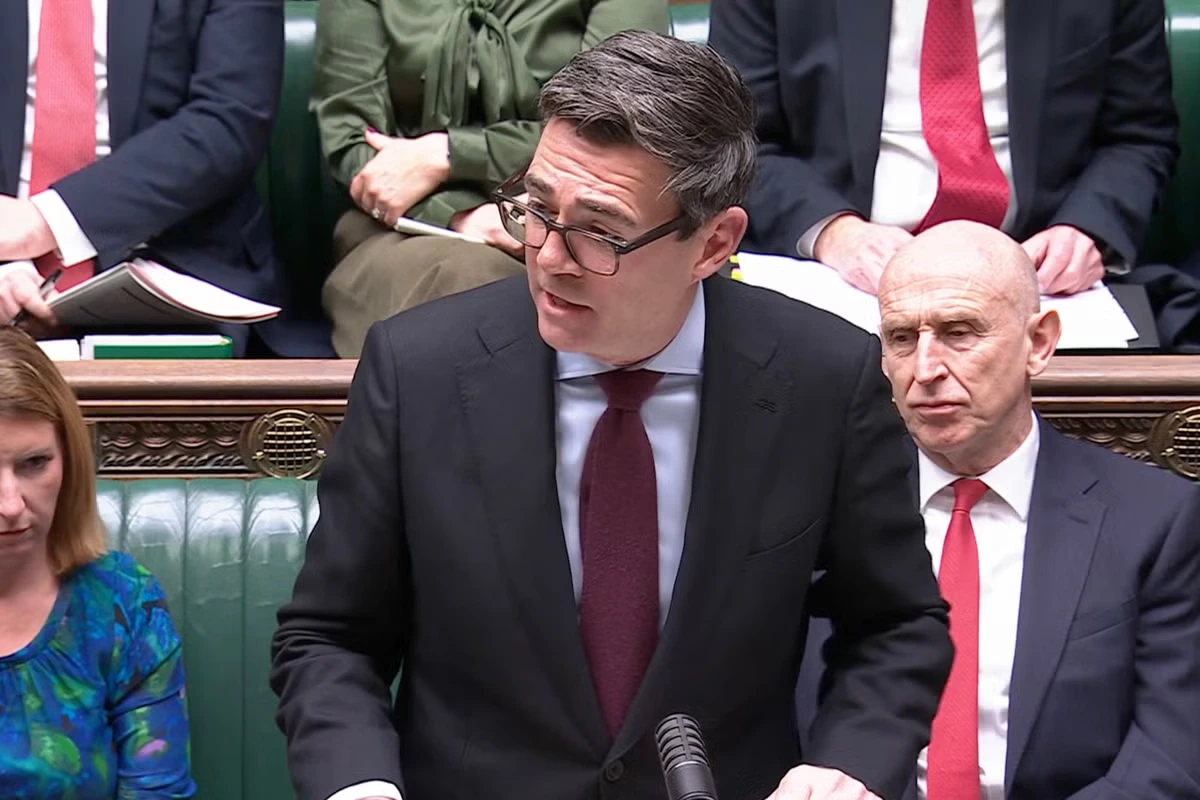
Andy Burnham joked that ChatGPT had generated his opening remarks at Prime Minister’s Questions, after a No 10 aide was pictured using artificial intelligence to refine a speech.
Concluding his first appearance at the despatch box on Wednesday traditionally, the prime minister told the Commons: "This morning, I had meetings with ministerial colleagues and others."
He added: "And, according to ChatGPT, I shall have further such meetings later today."
The joke, which prompted laughter from the green benches, followed reports a speechwriter sought feedback from the AI tool on a draft for Sunday’s Welsh Labour conference.
Images published by The Mail on Sunday showed the chatbot suggesting ways to make the address "a little more emotive", as the aide drank Prosecco aboard a train from London Euston to Holyhead.
A No 10 spokesperson has previously stated that the Prime Minister "writes most of his own speeches".
They continued: “An aide sought feedback on a speech draft that had already been written.”
It is understood the ChatGPT suggestions were not ultimately used.
According to the Mail, the chatbot had written: "I prefer the second (passage). It moves from the miners to their families to the wider community, showing how the experience of industrial work created bonds well beyond the workplace."
Mr Burnham used his speech at the conference on Saturday to talk about “industry” giving people a “deep sense of belonging”, adding workplaces in Wales “created a way of life, the social infrastructure that we took for granted – the working men’s clubs, the sports teams, the choirs, the trade unions”.
Criticising Margaret Thatcher’s legacy, he said the country “took some wrong turns in the 1980s that shattered the way of life for communities up and down Britain”.
“Economic power privatised, political power centralised and, overall, a loss of agency in places up and down Britain,” he said.
“The mines closed, factories closed, steelworks silenced. It was felt everywhere.
“And, you know, that has kind of left us for 40 years in a place where communities haven’t had the power that they needed to turn things around.”