Nato chief Mark Rutte highlighted the efforts being led by Sir Keir Starmer to secure the vital Strait of Hormuz shipping lane during a “frank and open discussion” with Donald Trump.
The diplomat pointed to the “positive” action being taken by the Prime Minister during a meeting in Washington, where he acknowledged the US president was “clearly disappointed” with the response of the military alliance to the Iran war.
In an interview with CNN after the White House talks, Mr Rutte said he had pointed out the “large majority of European nations” had been helpful to America during the conflict and lived up to their commitments.
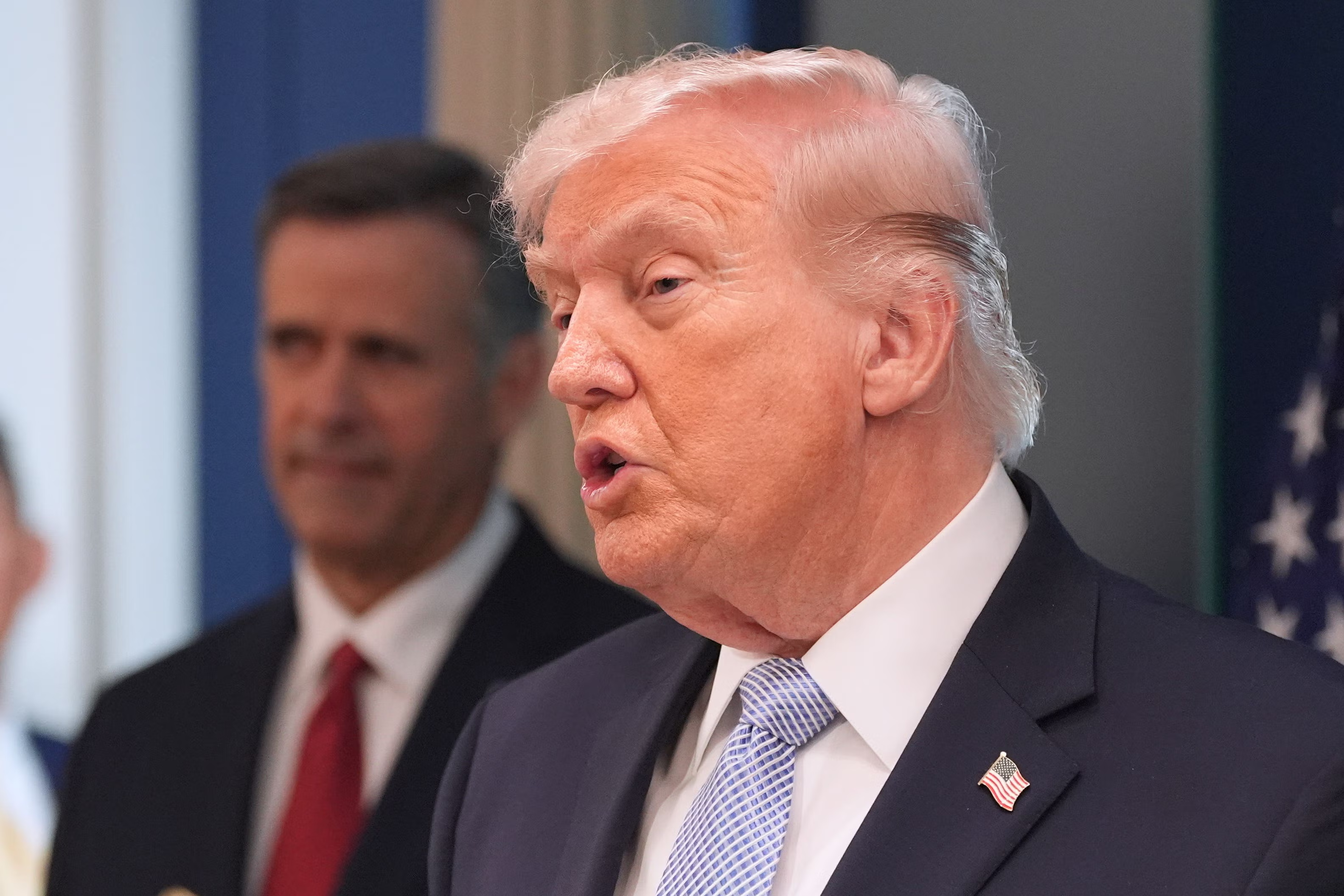
But he had failed to calm Mr Trump’s annoyance as the president later posted on his Truth Social platform: “NATO WASN’T THERE WHEN WE NEEDED THEM, AND THEY WON’T BE THERE IF WE NEED THEM AGAIN.”
Only earlier, the White House said Britain and other Nato allies had “turned their backs” on the American people during the war.
Mr Trump also argued the long-standing security organisation had been “tested and they failed”.
He has previously raised the possibility of the US quitting Nato, branding it a “paper tiger”.
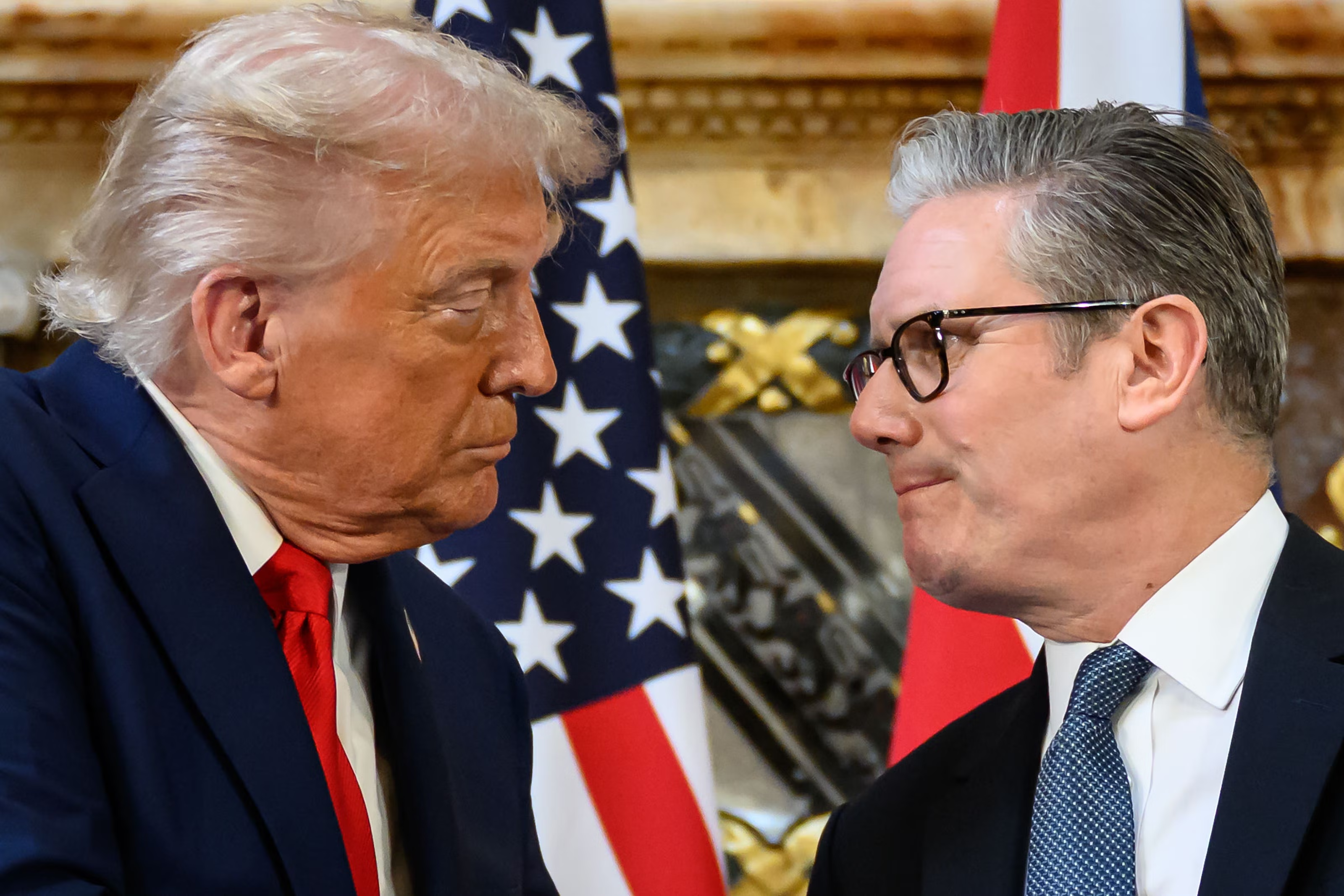
The refusal by the UK to be drawn into the offensive against Iran, dubbed Operation Epic Fury by the US, and to restrict the use of its bases by American forces has put a severe strain on relations between Sir Keir Starmer and Mr Trump.
The US president has also previously complained about the contributions paid in by fellow Nato members, arguing America has been carrying other countries financially.
Ahead of the US-Iran ceasefire being announced, the UK had chaired a meeting of military planners from a coalition of nations examining long-term measures to secure the strait, which had been all but closed off by Tehran during the conflict, causing a shock to global trade.
Military representatives from over 30 nations joined the virtual conference to explore ways to make the shipping route safe and accessible once hostilities have ended.
Following the truce, a joint statement by world leaders, including Sir Keir, said they would “contribute to ensuring freedom of navigation in the Strait of Hormuz”.
But White House press secretary Karoline Leavitt was dismissive of the offer when asked at a news conference.
Sharing a quote from Mr Trump on Nato in response, she said: “They were tested and they failed.”
She added: “It’s quite sad that Nato turned their backs on the American people over the course of the last six weeks, when it’s the American people who have been funding their defence.”
Speaking to CNN, Mr Rutte said: “Let me be absolutely clear, he (Mr Trump) is clearly disappointed and with many Nato allies, and I can see his point.
“But at the same time, I was also able to point him to the fact that the large majority of European nations have been helpful with basing, with logistics, with overflights, with making sure that they lived up to (their) commitments.”
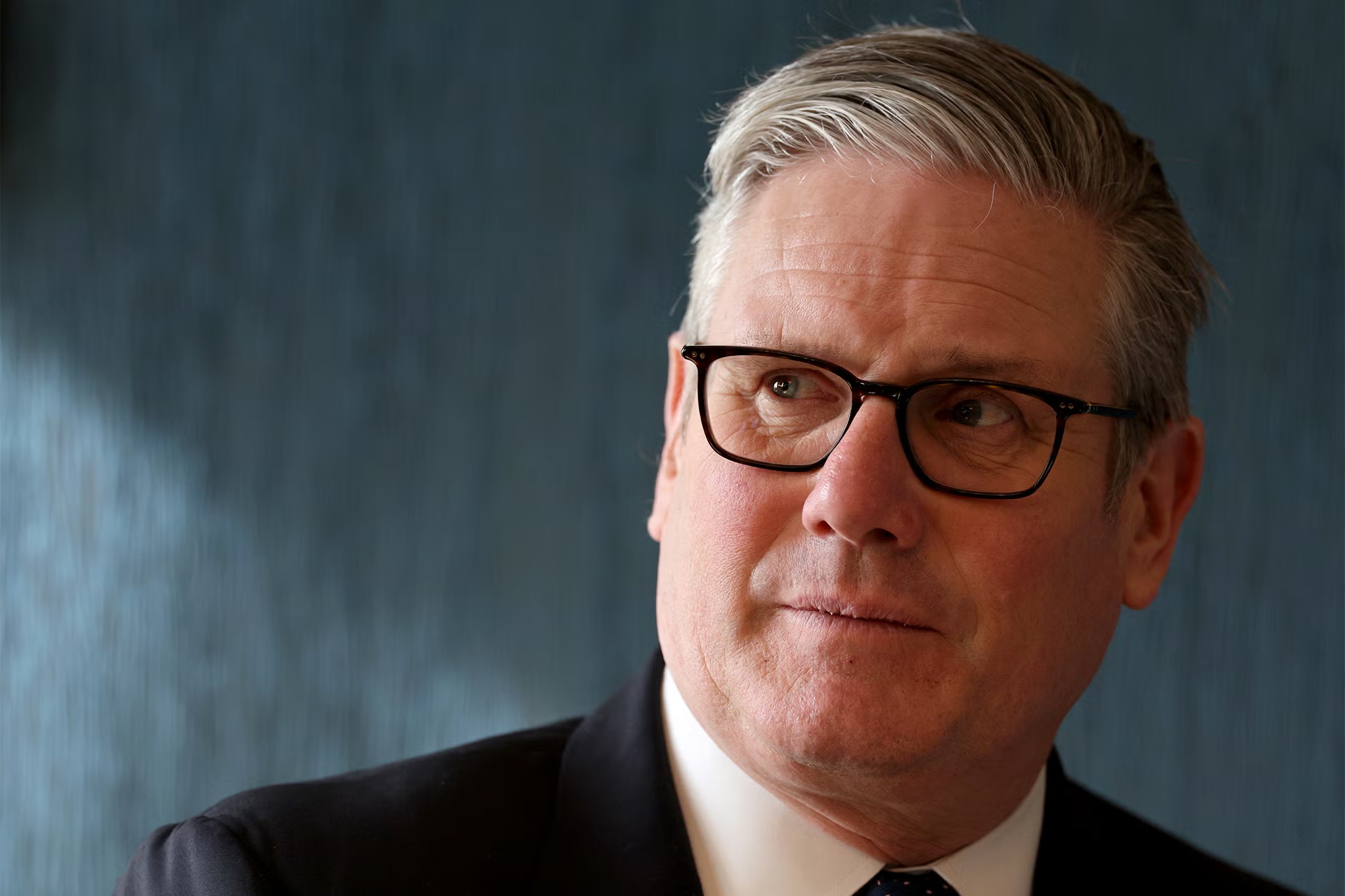
He also said “let’s not forget” steps being taken by the British Prime Minister aimed at ensuring the future free-flow of trade through the Strait of Hormuz.
Mr Rutte added: “So I also pointed him to the positive. But clearly this was a very frank, very open discussion, but also discussion between two good friends.”
He went on: “There is a disappointment, clearly, but at the same time, he was also listening carefully to my arguments of what’s happening.”
Stressing that most European countries had fulfilled their commitments “in a case like this”, Mr Rutte said: “Europe as a platform of power projection for the United States was in full play over the last six weeks.
“Yes, it is true, not all European nations lived up to those commitments, and I totally understand that He is disappointed (about that).”
Earlier, Mr Rutte met with US secretary of state Marco Rubio where the pair discussed “burden shifting” within the alliance.
Following the talks, US State Department principal deputy spokesman Tommy Pigott said: “The two leaders discussed Operation Epic Fury, ongoing US-led efforts to bring a negotiated end to the Russia-Ukraine war, and increasing co-ordination and burden shifting with Nato allies.”