Sobbing, Fatima, 82, frantically searches for a tent to sleep in after fleeing the southern suburb of Beirut, moments before an Israeli air strike eviscerated the buildings next to hers.
Together with her husband, she had clung on in their home in Dahiyeh. The predominantly Shia neighbourhood is home to an estimated half a million people. Israel has ordered its evacuation since opening a second theatre of war against the Iran-backed militant group Hezbollah, after joining the US in bombing Iran.
On Tuesday afternoon, Fatima says she fled in just the clothes she was wearing, as the Israeli military gave residents a final warning to leave immediately. The strikes, which followed shortly after, sent choking columns of smoke towering over the city.
“It was just me and my husband on our own. They told us to get out so we ran,” she repeats in terror, as Israeli drones whine in the skies above this makeshift displacement camp housed in a sports stadium where she is trying to find shelter.
“I am so sick and I didn’t bring my medication. We need help,” she tells the aid workers frantically.
On Monday Donald Trump signalled the imminent end to the US and Israel’s devastating bombardment of Iran, which has killed more than 1,300 people and triggered a region-wide conflict stretching from Lebanon to Kuwait.
The escalation has in turn seen Iran choke global shipping routes and bomb countries including Qatar and the UAE, forcing the closure of international airport hubs. The UK has even sent Royal Navy warship HMS Dragon to the eastern Mediterranean, following a drone attack an RAF base in Cyprus.
The Type 45 destroyer is capable of shooting down drones and ballistic missiles fired by Iran and its proxies.
And there are now fears that even once the US and Israel stop bombing Iran, Israel’s offensive on Lebanon will drag on.
Lebanon was pulled into the conflict in the Middle East last week, when the Iranian-backed group Hezbollah launched strikes against Israel to avenge the killing of Iran’s supreme leader.
Since then, Israeli attacks have killed at least 570 people, according to local authorities. The United Nations says it has also forced 700,000 people, like Fatima, to flee their homes, with 100,000 on the move in the last 24 hours alone.
With few places to go, many have been sleeping in makeshift camps like the one housed at this Sports Stadium, in their cars, on the streets or along Beirut’s seafront.
In Beirut’s iconic Martyrs’ Square, Mariam, 36, a mother of three who also fled Dahiyeh, says she is living in a tent after going to multiple schools that the authorities have turned into temporary shelters, only to be turned away because they were full.
“During the last war with Israel in 2024, my family building was completely destroyed and we have had no money to rebuild,” she adds, nervously watching the skies as planes roar overhead.
“We were renting an apartment when war broke out again. Now we have no money and we have lost everything,” she continues.
In the tent next to her, Kafaa, 42, a Syrian refugee and mother of two, says the night she fled Dahiyeh all she could do was hold her crying daughter and pray.
“The explosion shook the buildings and shattered the windows. We couldn’t see because the smoke was so intense.”
Lebanon’s Minister of Social Affairs Haneen Sayed said on Tuesday that the state was bracing itself for higher displacement than the last war between Israel and Hezbollah pushed more than a million people out of their homes.
“There are far fewer resources this year given the global situation and the regional war that’s happening,” she added, explaining that Gulf countries which had come to Lebanon’s aid last time were now struggling with their own crises, as they have come under fire from Iran.
Dr Hanan Balkhy, the regional director of the World Health Organisation, told The Independent that the current crisis was “unprecedented” because it was multilayered and “multi-country, multi-region”, making the response extremely difficult. She warned that if it did not stop now it could “spin out of control”.
With no credible end in sight for Lebanon, the Lebanese authorities are trying to adapt, turning schools and now stadiums into temporary camps as more and more people are fleeing the bombing.
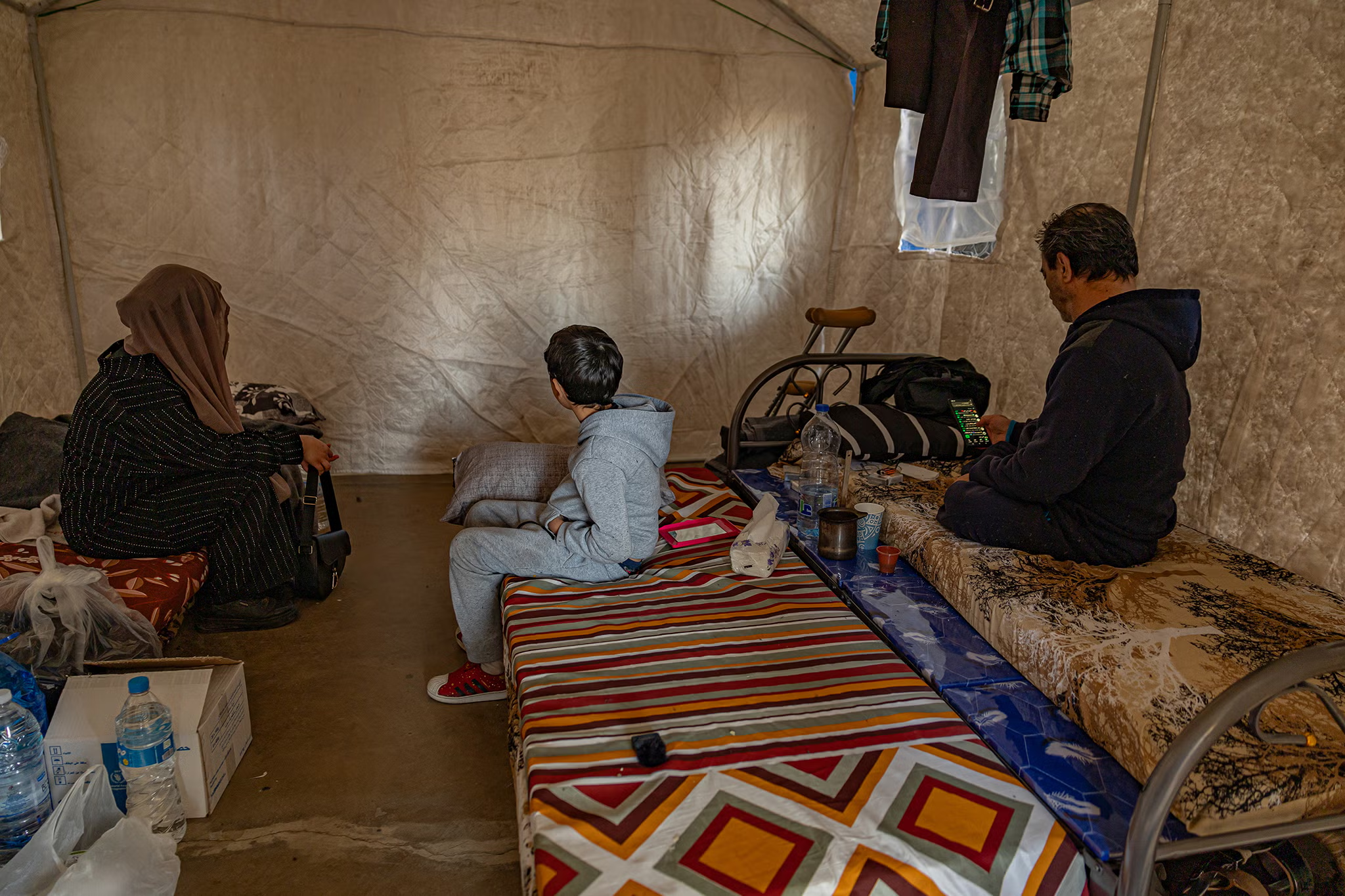
“This is about trying to bring people off the streets and into a place where they have a toilet, electricity and some food,” says Najji Hammoud, who was the General Manager of Sports Facilities at the stadium turned displacement camp until he was suddenly called upon to run a major humanitarian operation. Behind him, UN agencies and the Lebanese Red Cross stockpile supplies and erect tents in the gate area of the complex.
“This is the worst. Even in the 2024 bombing the Syria border was open, and not all of Dahiyeh was in the red zone.
“Now Israel has evacuated everyone.”
In one of the tents, Ali, 65, a single father of two who has disabilities and is unable to walk, arrived at the stadium yesterday in a wheelchair after sleeping rough in his car for five days straight when he fled a village in the south.
“A strike landed right next to us so we escaped with nothing but what we were wearing,” he says inside his tent.
Facing a mounting humanitarian catastrophe Lebanese President Joseph Aoun on Monday signalled his openness to enter direct negotiations with Israel to end the war.
But Israel’s ambassador to France, Joshua Zarka, told Reuters that words were not enough.
“At this stage, I’m not aware of any decision to enter negotiations,” Zarka said. “What would end it is the disarmament of Hezbollah and that is a choice for the Lebanese government.”
Lebanon’s government last year vowed to establish a state monopoly on arms and confiscated part of Hezbollah’s arsenal in the country’s south, without objections from the group.
But Hezbollah has refused to fully disarm, and Lebanese authorities fear that taking its arms by force could ignite a civil conflict.
For now, families told The Independent that they fear that even if Trump ends the war on Iran, Israel will continue bombing Lebanon as its offensive has only just begun.
“We have no idea when this will end,” says Ali in desperation, as his daughter sits with her head in her hands.
“We are normal people, we do not get to decide. We are waiting for the war to end. All we can do is pray.”