The widening Iran crisis could “bring down the economies of the world” and send oil prices soaring, Qatar’s energy minister warned as US and Israeli bombs pounded energy facilities in Tehran.
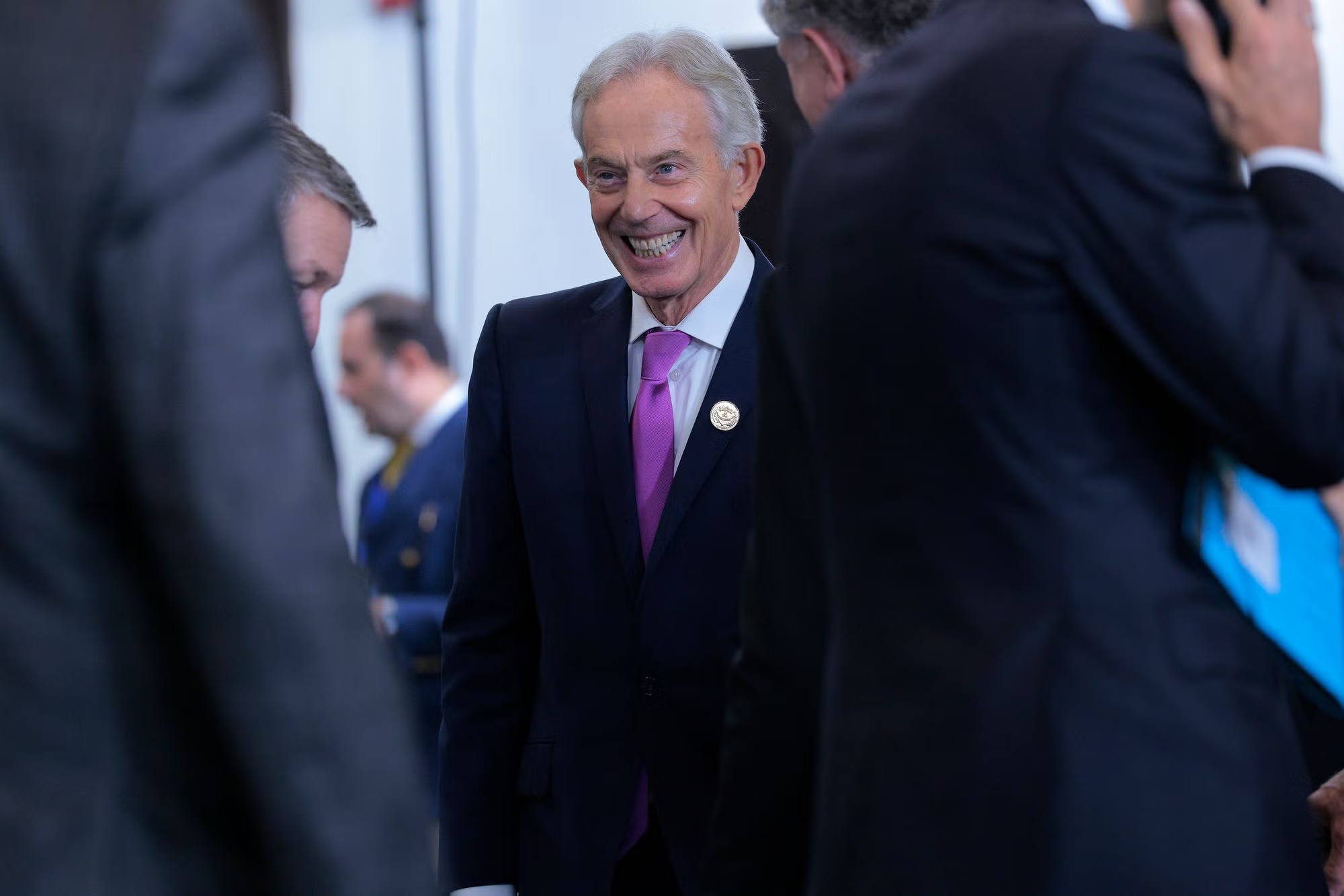
The Gulf state’s energy minister, Saad al-Kaabi, said it would take his country “weeks to months” to return to its normal delivery pattern after an Iranian drone strike at its largest liquefied natural gas (LNGi plant – with Europe likely to suffer a price spike as a result.
His prediction came as Goldman Sachs bank warned the price of oil could jump to as much as $150 per barrel by the end of March, hitting British consumers and businesses hard.
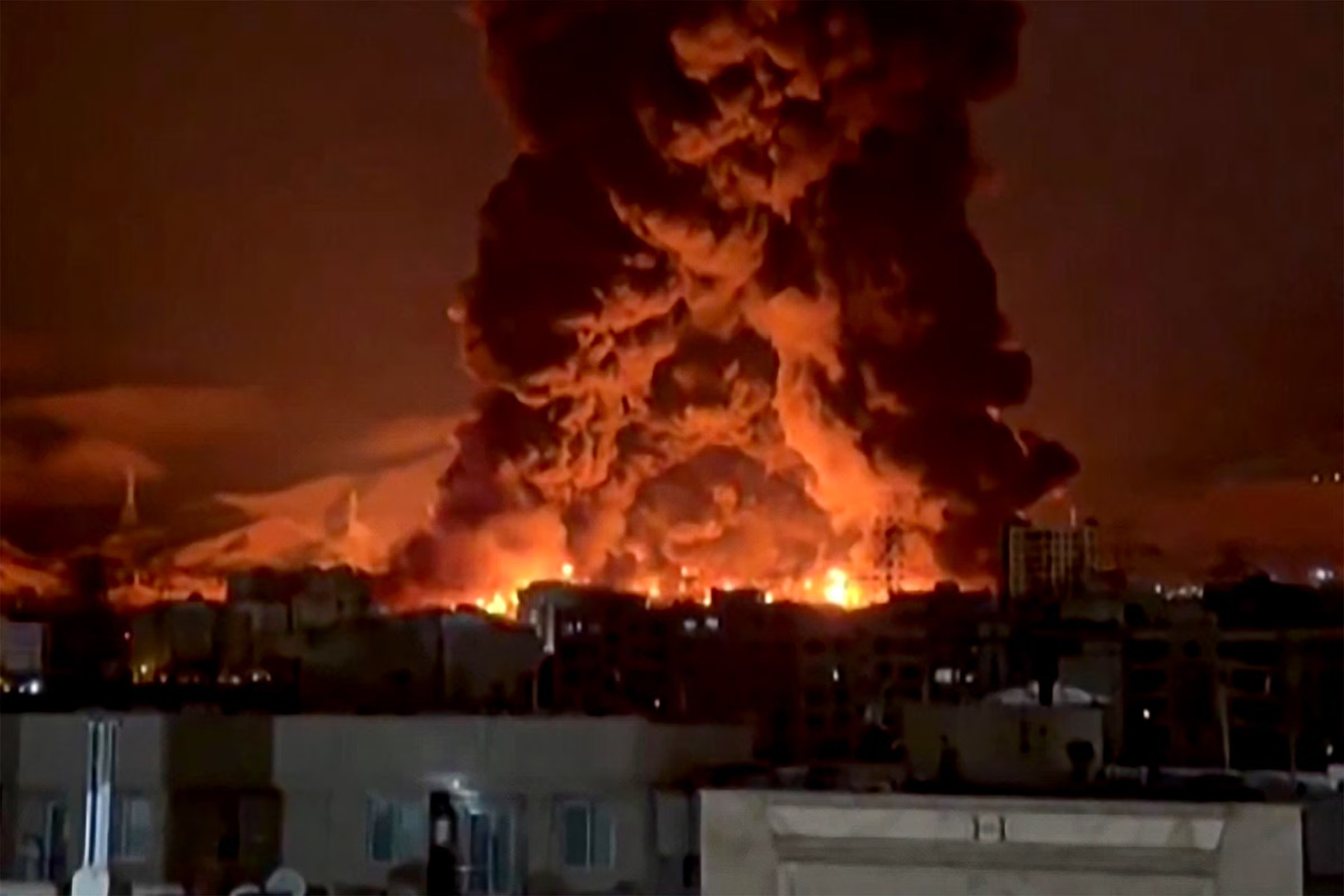
Tehran was engulfed in thick black smoke on Sunday after American and Israeli jets struck four oil depots in the capital, sending fireballs into the sky.
The attack appeared to be the first on an energy facility since the beginning of the war, raising the prospect of a wider assault on infrastructure in the region.
“If this war continues for a few weeks, GDP growth around the world will be impacted. Everybody’s energy price is going to go higher,” Mr al-Kaabi told the Financial Times. “There will be shortages of some products and there will be a chain reaction of factories that cannot supply.”
He added that Europe would feel the pinch as Asian buyers outbid Europeans for whatever gas remains on the market if other countries in the region declare a force majeure.
The crunch in supplies also threatens to hugely increase the price of gas for UK consumers, with warnings that the UK is particularly exposed to a price spike due to a lack of storage.
Around 30 per cent of Britain’s electricity comes from gas-fired power plants – compared with 17 per cent in Germany and just 3 per cent for France – and it is used for heating in more than 70 per cent of homes.
New data published by National Gas showed that its gas stores were at 18 per cent of their former capacity on Friday.
In its separate analysis, Goldman Sachs found that traffic through the Strait of Hormuz had fallen to just 10 per cent of usual levels in recent days, driving up prices to $91.89 per barrel on Friday, up from around $72.50 before the war erupted – a jump of 27 per cent.
Analysts said that the impact of Iran’s blockade already appears to be 17 times larger than the April 2022 peak hit to Russian production, following the full-scale invasion of Ukraine.
A nearly complete shutdown of the strait means the region’s giant oil producers – Saudi Arabia, the United Arab Emirates, Iraq and Kuwait – have had to suspend shipments of as much as 140 million barrels of oil – equal to about 1.4 days of global demand – to global refiners.
As a result, oil and gas storage at facilities in the Middle East Gulf are rapidly filling, forcing oil fields in Iraq to cut oil production. Kuwait and the United Arab Emirates most likely to cut next, analysts, traders and sources said.
Soaring oil and gas prices have already pushed up costs for companies reliant on energy imports, threatening their margins, and raised the spectre for policymakers and investors of a fresh bout of inflation.
Around 40 per cent of the world’s plastic is produced from crude oil, meaning price volatility would impact the cost of consumer goods from packaging to furniture and manufacturing, too.
“If these effects last longer, everyone will start to feel them,” agreed Young Liu, chair of Foxconn, the world’s largest electronics maker and a key partner to Nvidia.
Prof Mohamed El-Erian, of the University of Pennsylvania, told the BBC that the UK would be “hit from multiple sides” by shocks to energy prices.
“Once again, we see the UK more vulnerable to external shocks than otherwise that in turn is going to translate into higher mortgage rates. So the average person will get hit from multiple sides, unfortunately,” he said.
“The average person is going to face higher energy prices, but also higher mortgage rates, and slowly but surely, noticeable increases in a broad range of goods and services because of supply chain disruptions.”
A prolonged price hike could call for the “recession playbook”, Morgan Stanley warned. Goldman Sachs analysts said a temporary spike in oil prices to $100/b could slow global growth by 0.4 of a percentage point.
As prices continued to soar, Iran’s Islamic Revolutionary Guard Corps said on Saturday that a commercial oil tanker was set ablaze in the Strait of Hormuz after being struck by an Iranian suicide drone.
They claimed the Prima, sailing under a Maltese flag, had ignored repeated warnings not to enter the strait.
The IRGC also said they hit a Marshall Islands-flagged tanker in the Strait of Hormuz, Iranian state media reported on Saturday.
Tehran’s oil storage also suffered shocks on Sunday as Israel targeted facilities in the capital.
Israeli prime minister Benjamin Netanyahu promised “many surprises” for the next phase of the conflict.
The Israeli attack on oil storage sites in Tehran sent up pillars of fire, in what appeared to be the first time a civil industrial facility had been targeted in the war.