Crisis always brings opportunity in politics. It tests alliances and allows competitors to stake out ideas and counter arguments that might otherwise be sidelined.
In the case of the high-stakes Iran “Epic Fury” assaults and the confused role of the UK in the aftermath, this international emergency has brought a ministerial power struggle to a head on the home front.
In a contested account of a National Security Meeting in cabinet last Friday, The Spectator’s Tim Shipman alleges Starmer tried hard to convince senior cabinet colleagues that the use of Diego Garcia, the joint US-UK base in the Chagos Islands, could be used for specific purposes to support the US. Defence officials. Those sources separately told me that defining the exact nature of support was crucial to any sign off of the base’s uses.
According to Shipman’s sources, Starmer faced unfriendly fire from his own side – with a rebellion against the idea led by Ed Miliband, and opposition from Rachel Reeves, Yvette Cooper and (more surprisingly) Shabana Mahmood. To judge by the lukewarm denials from those cited in the story, some form of disagreement did take place. And even the PM did not directly deny the story when pressed on it.
Instead, at a terse press conference on Thursday, he used the classic “pivot” technique of focusing on a different question (the decision to allow British bases to be used for defensive action after a separate request was issued by the US – ultimately approved).
This story has thrown into stark relief the extent to which Starmer is a leader who is surviving but not thriving – and the extent to which the “prime” in prime minister looks like a status he is struggling to sustain. Nothing in the PM’s account essentially scotched the story than an alliance against his initial intention forced his hand into yet another change of heart. This matters more than the story of a wasted two days of to and fro between ministers.
It is not unusual for cabinets to have differences of opinion about warfare. Remember the tussle between Tony Blair and the late Robin Cook over Iraq? Even Margaret Thatcher had tetchy fall outs over the Falklands war with ministers.
But, for a number of reasons, it is especially damaging for a PM who has a far less secure grip on his job. The first is that the story shows how conflicted Starmer’s own thinking is on Britain’s role, and how he struggles to impose his will in the crisis situation of a major conflict.
To put it bluntly, it demonstrates a legalistic PM who was trying to find the best workaround to support the US without getting the UK embroiled too directly, and who failed to square the circle.
One extra piece of evidence that backs up Shipman’s account about the perceived volte-face of the UK, which has puzzled allies, is that John Healey, the defence secretary clearly did have to use his channels as a respected go-between to sort out support for the use of Diego Garcia and put it in terms that would not be blocked by his colleagues.
We also know that the “he’s no Churchill” jibes and general invective hailing from Washington is laser-focused on Starmer personally.
But while it is unpleasant to be on the end of Trumpian blasts, the more immediate challenge is at home. Ed Miliband, the former Labour leader and energy secretary, has not commented on stories suggesting he was the leading opponent of UK support for intervention.
But his revealed preferences are against intervention in the Middle East, to the extent that, as leader of the party, he whipped his MPs against intervening in Syria in 2013, even when its “red lines” on the use of poison gas had been established, collapsing David Cameron’s intention to throw the UK behind international action.
Miliband is enjoying a second spring these days as an elusive but powerful “prince across the cabinet table” if Starmer should fall. Even if he does not desire the battered Labour crown, as he insists, he is well positioned for the role of Chancellor in a more left-leaning Labour constellation – and to reshape policy beyond his immediate brief. For that reason, sticking his neck out now allows him to punch above his cabinet middleweight position. His energy brief also means that he has specific knowledge and contacts to wield in the Iran crisis.
By saying that Starmer should stop trying to ingratiate himself with the Trump-led US, Miliband is also touching a third rail – which is the default setting that this Iran campaign is essentially “another Iraq” and that the UK should stay as far away as possible.
Unfortunately, given that Iran has responded with scattergun missile attacks across a region where the UK is highly active in the defence of allies like Qatar and Jordan, it requires a major UK involvement and that is not likely to be without risk or casualties, especially given it narrowly escaped having military personnel hit in Cyprus in the retaliatory attacks.
Inside the cabinet however, Starmer has been subjected to growing criticism over his handling of the crisis. There are signs that this is not limited to the usual Keir-bashers. Yvette Cooper, a foreign secretary who tends to prefer dogged process over quick decisions, was keener on giving the talks on Iran’s nuclear capacity brokered by Oman more time to play out. That, however, would have meant saying attacks on Tehran and other Iranian targets were wrong.
Rachel Reeves may have one eye on the dreadful financial costs of the war – or simply be joining the trio of Brownite-trained top ministers who were more choosy about which bits of the “special relationship” they supported.
Shabana Mahmood, from a different position on the right of the party, is, according to one ally, concerned that over-indulging Trump could lead to dangerous schisms with the Muslim community and that the better course is to focus on the defence of the UK’s interests. All of these positions have some common sense.
The problem is that many other centre-left or centrist governments, from Canada and Australia to Germany, have managed to give limited support to the US without ending up in such a mess about what they really want to stand for.
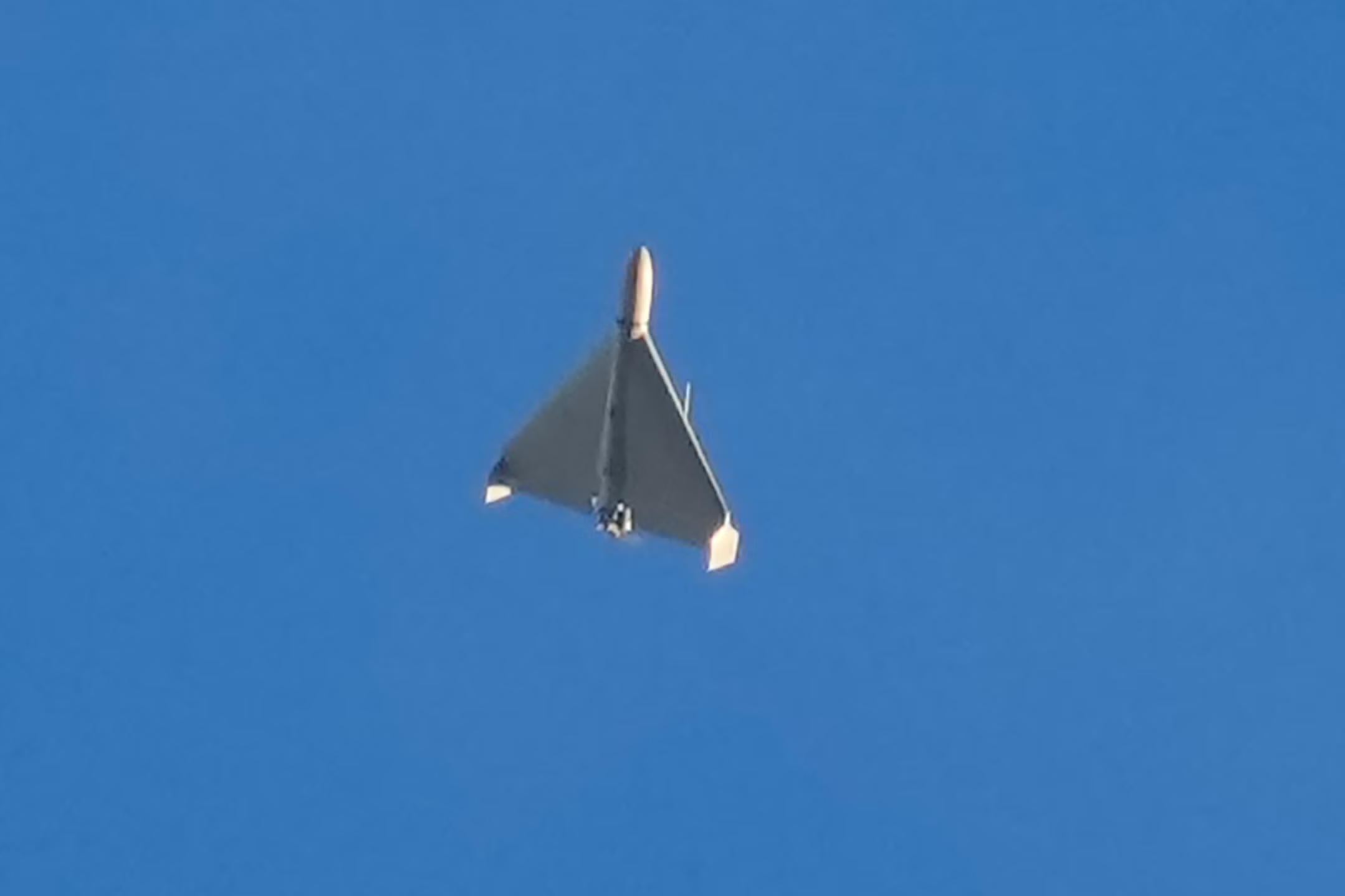
Alas, the UK, while hugely exposed to the dangers of defending its allies in the air over the Persian Gulf, neutralising drones by firing air-to-air missiles and allowing the use of its bases in the end, is being treated as at best a disappointment, at worst, a cowardly ally.
One way or another, Starmer has ended up accused of being too pliant to a US warmonger – and not decisive enough in backing the end of the Iranian regime by others. Many of of his own cabinet now appear to have rubbed salt into those wounds – the hardest blow of all
Anne McElvoy is co-host of Politics at Sam and Anne’s podcast at Politico