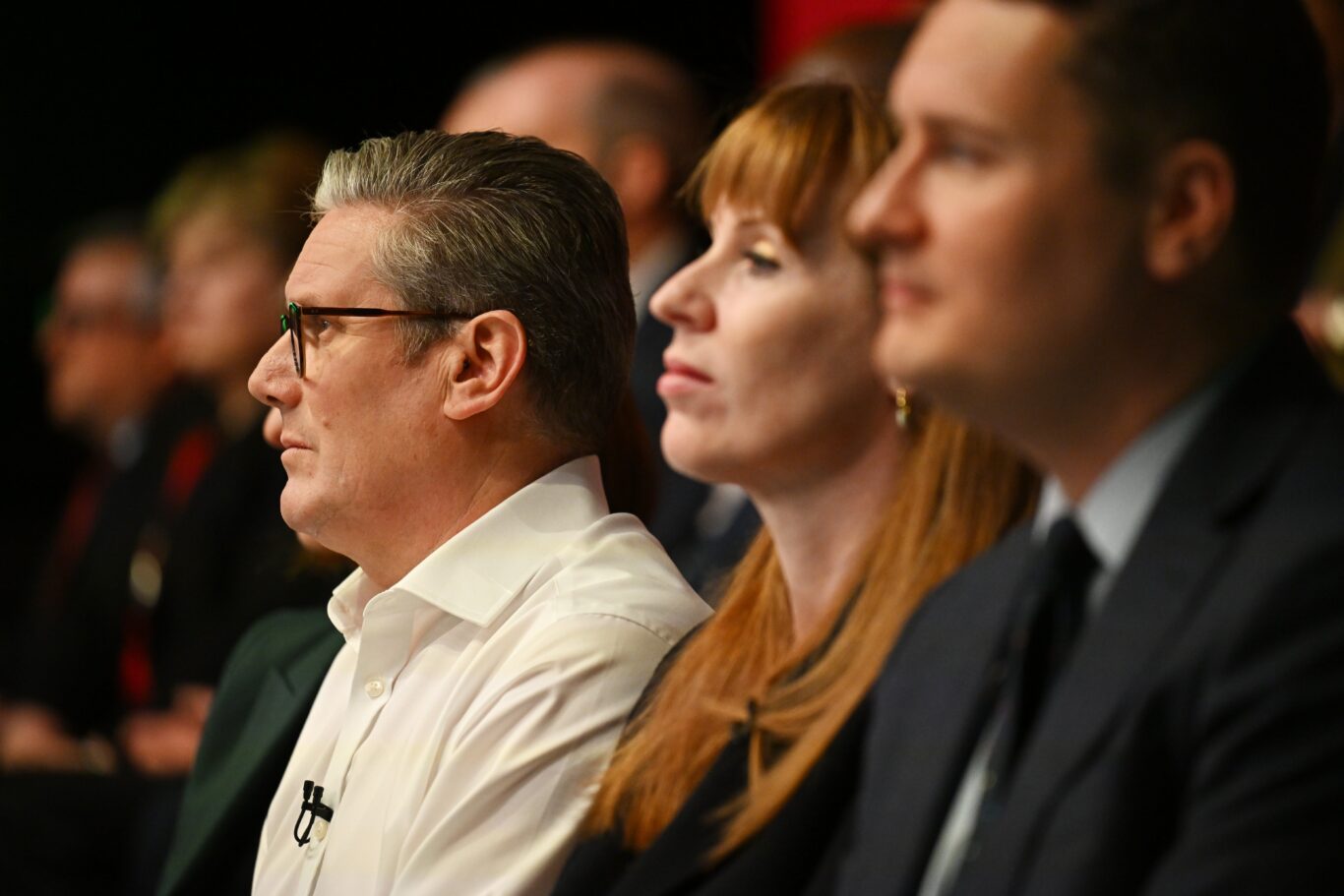
Sir Keir Starmer has backed a ban on some pro-Palestine protests as part of a crackdown on antisemitism in the wake of the Golders Green terror attack.
The prime minister suggested there were “instances” where it was appropriate to prevent such marches happening on UK streets – as they have done in France – and said he would fight “with every breath I have” for a diverse and tolerant Britain.
He also issued a stark challenge to those who take part in the protests, saying if they hear chants of ‘globalise the Intifada’ – “you do have to stop and ask yourself, why am I not calling this out?”
But the government’s independent adviser on antisemitism told The Independent it would be “unconscionable” to outlaw peaceful pro-Palestine protests.
Lord Mann said: “There are multiple small anti-Israel (or similar) protests every week. Usually involving a tiny number of people.
“If they are not calling for violence… then it is unconscionable in a democracy that any such concept could be acted upon. The safety and security of the Jewish community requires effective strong leadership – not gestures.”
Green Party leader Zack Polanski accused the prime minister of “using the pain and fear of Jewish people to threaten further authoritarian restrictions on peaceful protest”.
“This would be the worst response to the attacks in Golders Green and would just produce more division when it’s the job of responsible leaders to bring people together,” he added.
Labour peer Shami Chakrabarti, the former director of Liberty, the civil liberties and human rights group, added: “It’s perfectly reasonable for political leaders to urge sensitivity and restraint around protests in the wake of terrorist violence and the fear it breeds. But it is quite another thing to equate protest with violence or to clamp down on peaceful dissent even further.
“I urge the government to lead by example and demonstrate the balanced judgment they recommend to others.”
The row came as the head of the Metropolitan Police warned British Jews are facing the greatest ever threat in the wake of the terror attack.
Sir Mark Rowley said Jews were facing a “ghastly Venn diagram” of hate from all sides. Asked if the threat to the Jewish community was greater than it had ever been before, he said that polling suggesting the prevalence of antisemitic views showed “that has to be true” in an interview with The Times newspaper.
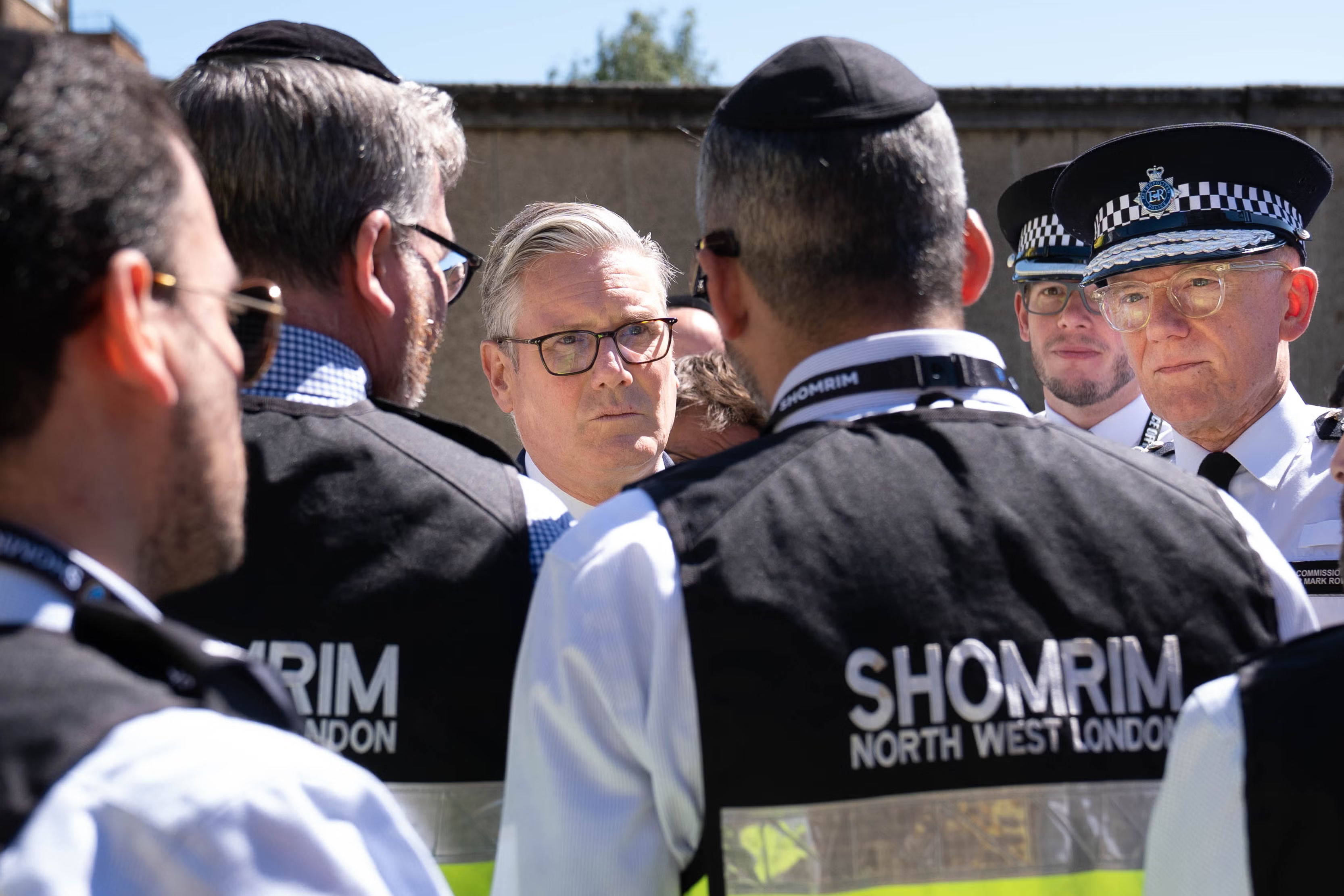
Sir Keir’s call came in an interview with the BBC’s Today programme, just days after he was heckled during a visit to Golders Green, where he was met by a group of protesters holding signs and chanting: “Keir Starmer, Jew Harmer”.
Asked if he wanted a crackdown on the chants or to stop some protests altogether, he told the BBC: “I think certainly the first, and I think there are instances for the latter.”
He added: “I don’t want to get involved in operational policing, but I think when you see, when you hear some of those chants, ‘globalise the Intifada’ the one that I would pick out, then clearly there should be tougher action in relation to that.”
He went on: “In relation to the repeated nature of the marches, many people in the Jewish community have said to me ‘it’s the repeat nature, it’s the cumulative effect’. Now I accept that, which is why we intend to deal with cumulative effects.”
He urged “some people protesting to just reflect on what the Jewish community is going through and the overall impact that this is having.”
The PM also called for a “whole of society response” saying that “too many people are not seeing antisemitism or they don’t want to see it.”
Addressing those on the marches, but not involved in the chanting, he said: “If you are on a march or a protest where people are chanting ‘globalise the Intifada’ you do have to stop and ask yourself, why am I not calling this out?”
He added: “We all have to fight for this together because it is about the sort of country that we want to live in. I want to live in the Britain that I love, which is a decent, tolerant, live and let live, diverse Britain. But that is contested now in a way that it hasn’t been contested in my lifetime.
“We have to fight for the Britain that we believe in with those values. That is who we are. That is what it is to be British. And I will fight for that with every breath I have.”
Conservative leader Kemi Badenoch said the interview showed the PM did not “seem to know what to do about” antisemitism in the wake of the terror attack.
“There are things that we can do,” she added. “We can ban hate preachers from this country, stop them from coming in. We can remove visas from those people who are not British, who are here spreading hate and antisemitism. But we need to do more. Enough with the platitudes, we need action. We need to shame people who think antisemitism is acceptable.”
Lord Walney, the government’s former adviser on political violence, said: “The prime minister sounds committed and sincere but he’s not offering anything different – he needs to stop refusing the law changes that would genuinely reduce the harm being caused by these hate-infested marches.”
But Your Party Chair Jenn Forbes said her party condemned “all attempts to link the safety of Jewish communities with restrictions on protests for Palestine”.
The Golders Green stabbings are the latest in a series of attacks on Jewish sites since the outbreak of Donald Trump and Benjamin Netanyahu’s war on Iran, and have prompted accusations that the UK government has not done enough to tackle antisemitism.
On Friday, Sir Mark called for 300 extra officers to tackle the growing pandemic of antisemitism in the UK.
He also said he was considering whether police powers should be used to limit two upcoming protests in London later in May – one a pro-Palestine march and the other a rally led by the far-right activist Tommy Robinson.
Britain’s terror threat has been raised to severe, meaning authorities believe an attack in the UK is “highly likely” in the next six months, after the stabbing of two Jewish men in Golders Green, London.
Explaining the move on Friday, MI5 said the UK has been experiencing a gradual increase in terrorist threats for some time, driven by a rise in both Islamist and extreme right-wing terror.