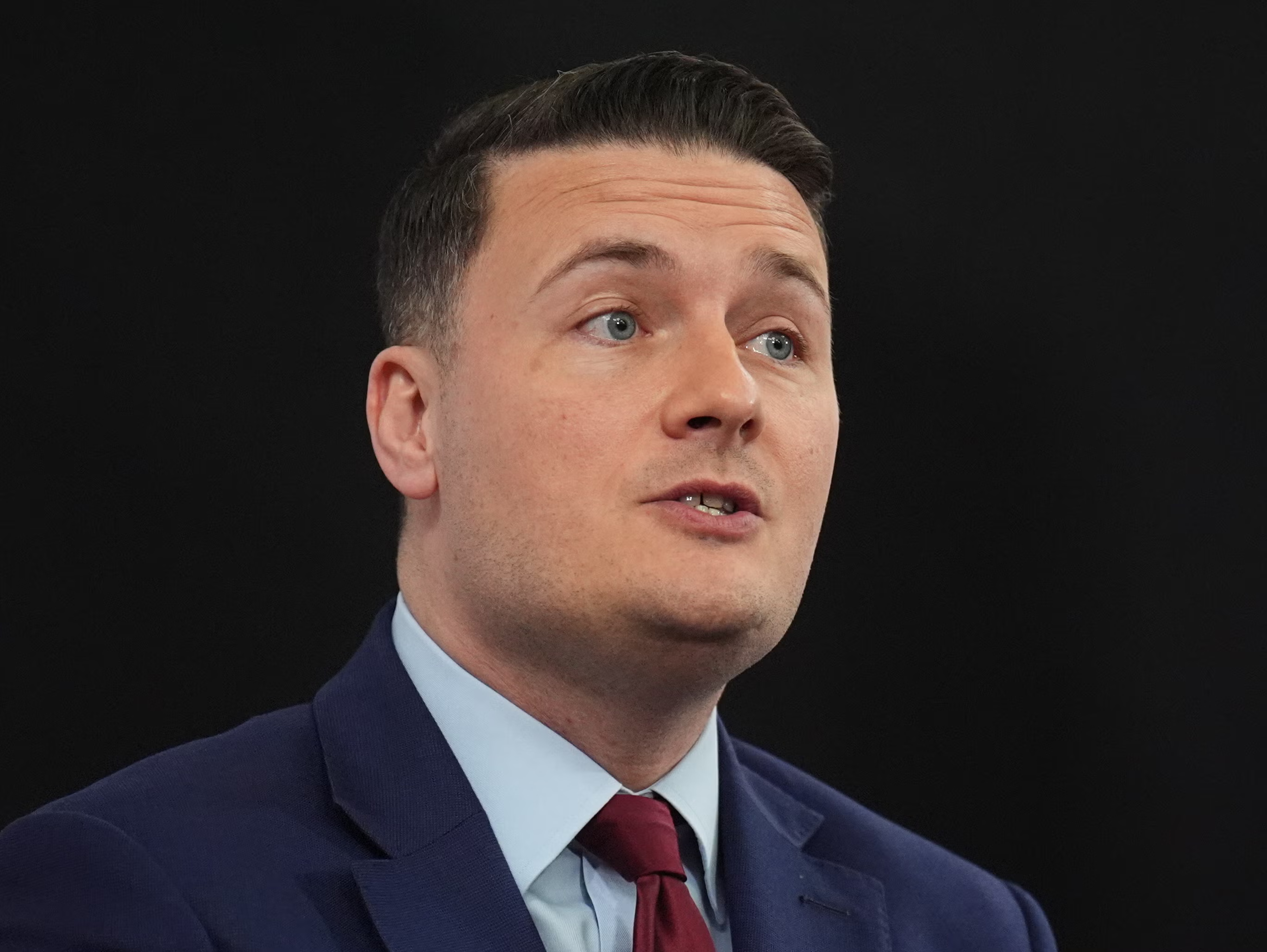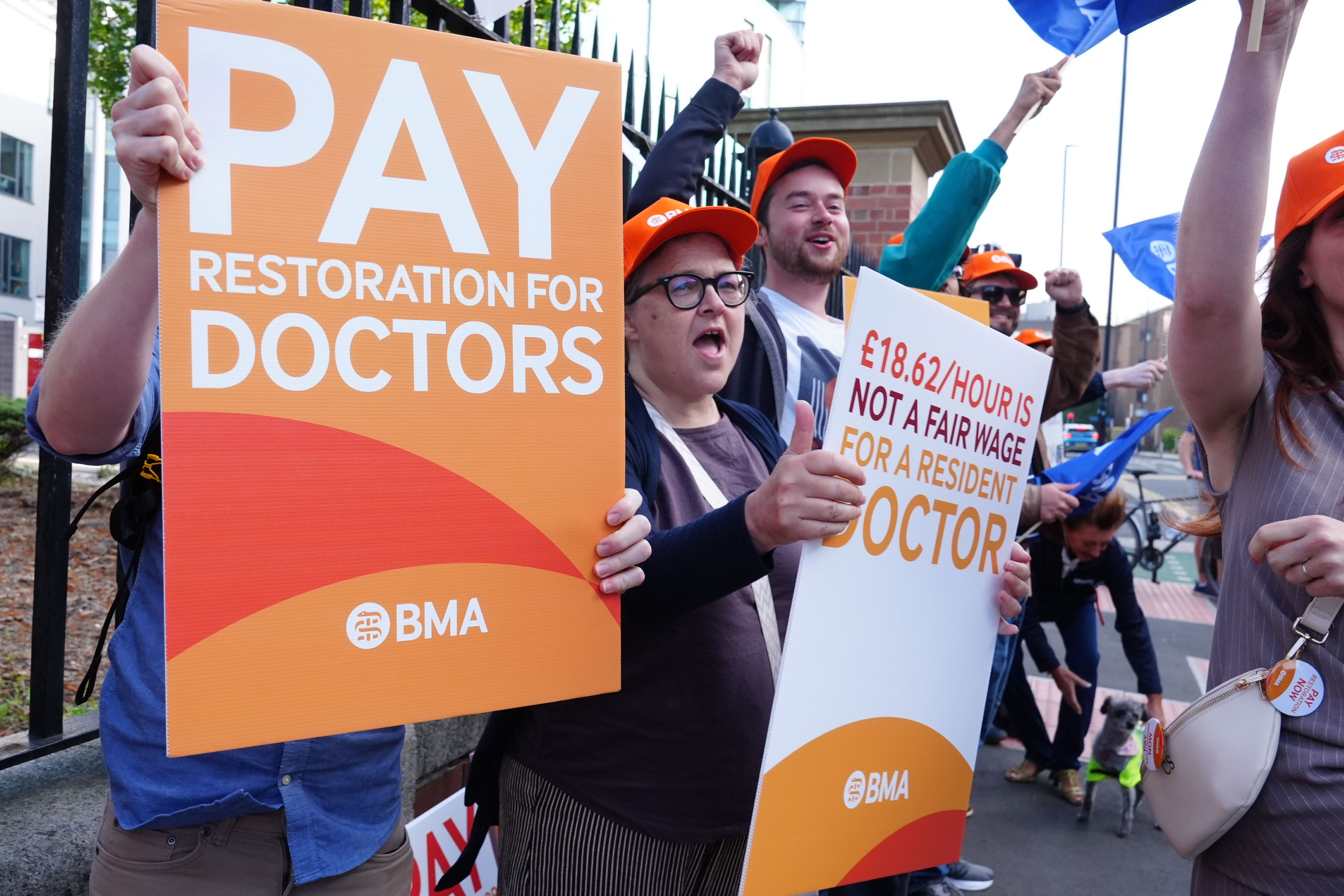
Patients will be left “waiting in pain or anxiety longer than is necessary”, Wes Streeting has said, as resident doctors begin a six-day walkout amid a row with the government over jobs and pay.
Tens of thousands of medics began their 15th round of strike action at 7am on Tuesday, after negotiations with ministers over another pay offer collapsed last week.
The health secretary has urged patients in need of medical attention to come forward as normal, but acknowledged delayed appointments “will leave people waiting in pain or anxiety longer than is necessary”.
“We’ve managed to maintain about 95 per cent of planned care due to take place today – so things like tests and scans, surgeries, procedures,” Mr Streeting told Sky News.
“But I’m not going to pretend that there are consequences for this disruption. If you’re someone who’s waited for your test or scan or your operation, chances are you’ve been waiting a lot longer than I would like you to.
“So psyching yourself up for that moment and then getting the cancellation can be both bitterly disappointing, and in some cases, will leave people waiting in pain or anxiety longer than is necessary.”
Urgent and emergency care will run as usual, and NHS England said that it will keep as much pre-planned care running as possible, while patients are urged to attend appointments unless they have been contacted.
But health leaders have said the walkout will be “challenging due to the shorter notice period” and because of the action taking place during the Easter holiday, when many NHS staff will have booked time off with their families.
It comes after an offer from the government was rejected by the BMA resident doctors committee, despite an ultimatum from Sir Keir Starmer.
The proposal included a 4.9 per cent increase in average basic pay from 2026 to 2027, which Mr Streeting claimed would have left resident doctors 35.2 per cent better off than four years ago.
It also included an offer of 1,000 extra training places, which was then taken off the table last week after the Department of Health and Social Care said it was no longer “financially or operationally” possible.
Mr Streeting suggested voters would think he “had lost the plot” if he were to still commit to offering the extra jobs after the strikes, telling Sky News: “I haven’t taken those places away. The BMA rejected them.
“Their position seems to be, we reject the deal, but we expect the benefits to materialise. Can you imagine what you and your viewers would be saying to me this morning if the BMA rejected this deal, went out on strike, cost the NHS 300 million pounds and the government said: ‘we’re still going to give them the benefits of the deal?’
“You would think I had lost the plot. We are not going to do that.”
But Dr Jack Fletcher, chairman of the BMA’s resident doctors committee, accused the government of having “quietly watered down” the deal on offer to resident doctors.
He added: “Resident doctors are as keen as he is to bring an end to the strikes, but his government needs to put an offer on the table that we can accept and which doesn’t change at the last minute.”
Elsewhere, hundreds of BMA staff are also on strike in an ongoing row over pay.
Why does the BMA think they can get away with telling their own staff they only get 2.75 per cent because that’s all they can afford, whilst rejecting a 4.9 per cent offer because that’s all the government can afford,” Mr Streeting said.
“It seems to me the BMA aren’t willing to put their hands in their own pockets to pay their own staff, but they’re very happy to try and fleece your viewers, asking them to pay even more in tax than I think this country can afford.”
As the strikes loomed, the head of the NHS in England said last week it would increasingly look at clinical models to reduce its reliance on resident doctors.
Speaking to the Health Service Journal, Jim Mackey said that while the strategy was not meant “as a threat to residents”, it is necessary to consider alternative models “if we continue to have a system that feels unreliable, [when] one of the key things the population needs from us is reliability”. He did not say how that might be achieved.
Asked about Mr Mackey’s comments on Tuesday, Mr Streeting said he places “a high value on doctors” and is “not interested particularly in doctor substitution”, but added: “If we are in a period of prolonged strike action by the BMA, of course we need to take mitigating action.
“It’s not my job to micromanage the health service and to tell Jim Mackey and other NHS leaders how to run their services. It’s my job to fund them properly, give them their resources and to hold them to account for performance.
“So Jim’s got my full backing in this.”
Writing for The Independent last week, Mr Streeting said negotiations had raised the question about whether the BMA is “serious about reaching an agreement at all”.
He said he did not “underestimate the pressure doctors are under”, but added: “Negotiation is a two-way process. If one side cannot even agree among themselves on an alternative, it becomes increasingly difficult to see how meaningful progress can be made across the table. Good faith cannot run in only one direction.”