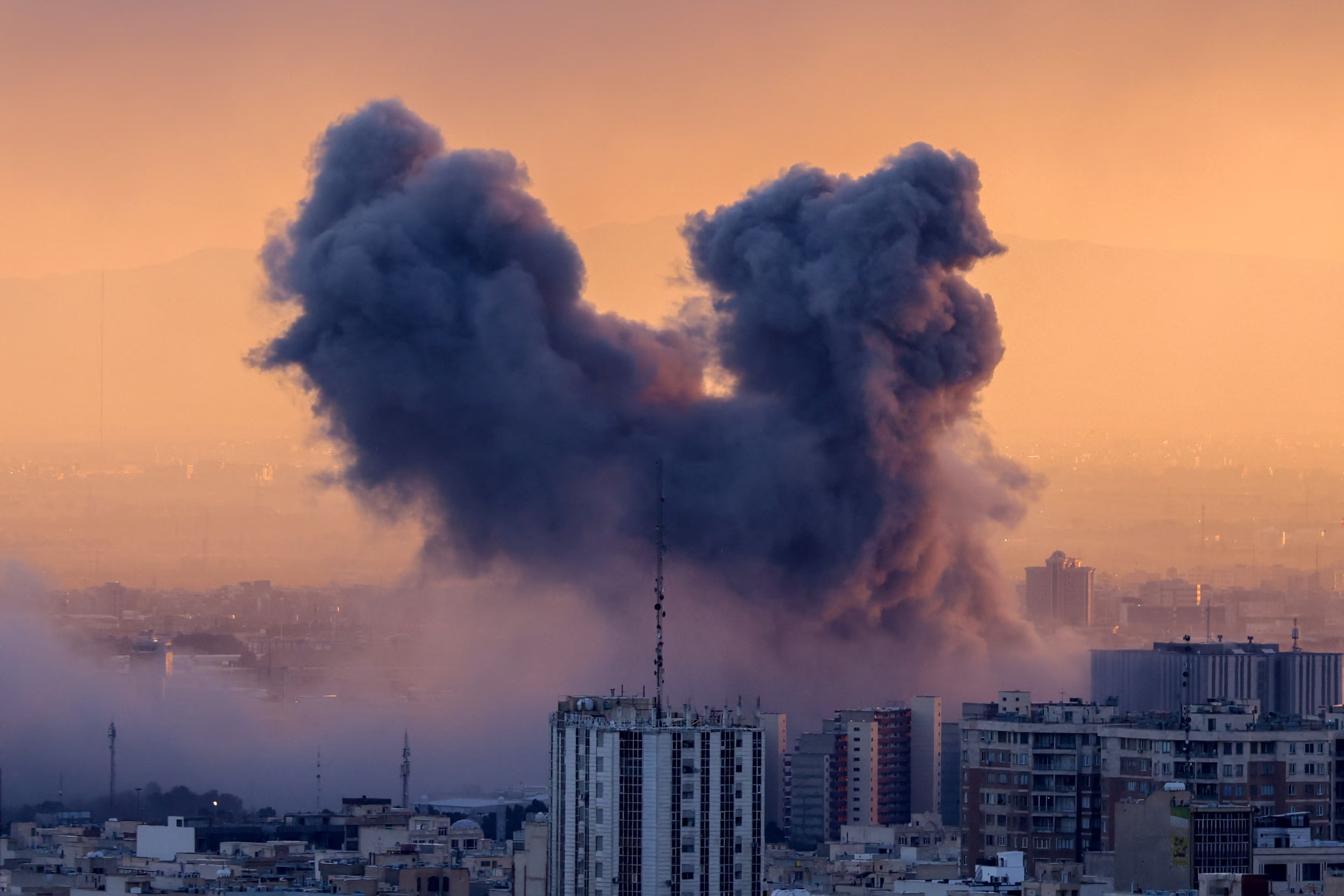
The debate about Britain’s role in the US-Israel war against Iran comes down to a narrow but important difference. Keir Starmer has given US forces permission to use British bases for the defensive – and therefore lawful, in his view – purpose of strikes against missile launch sites in Iran.
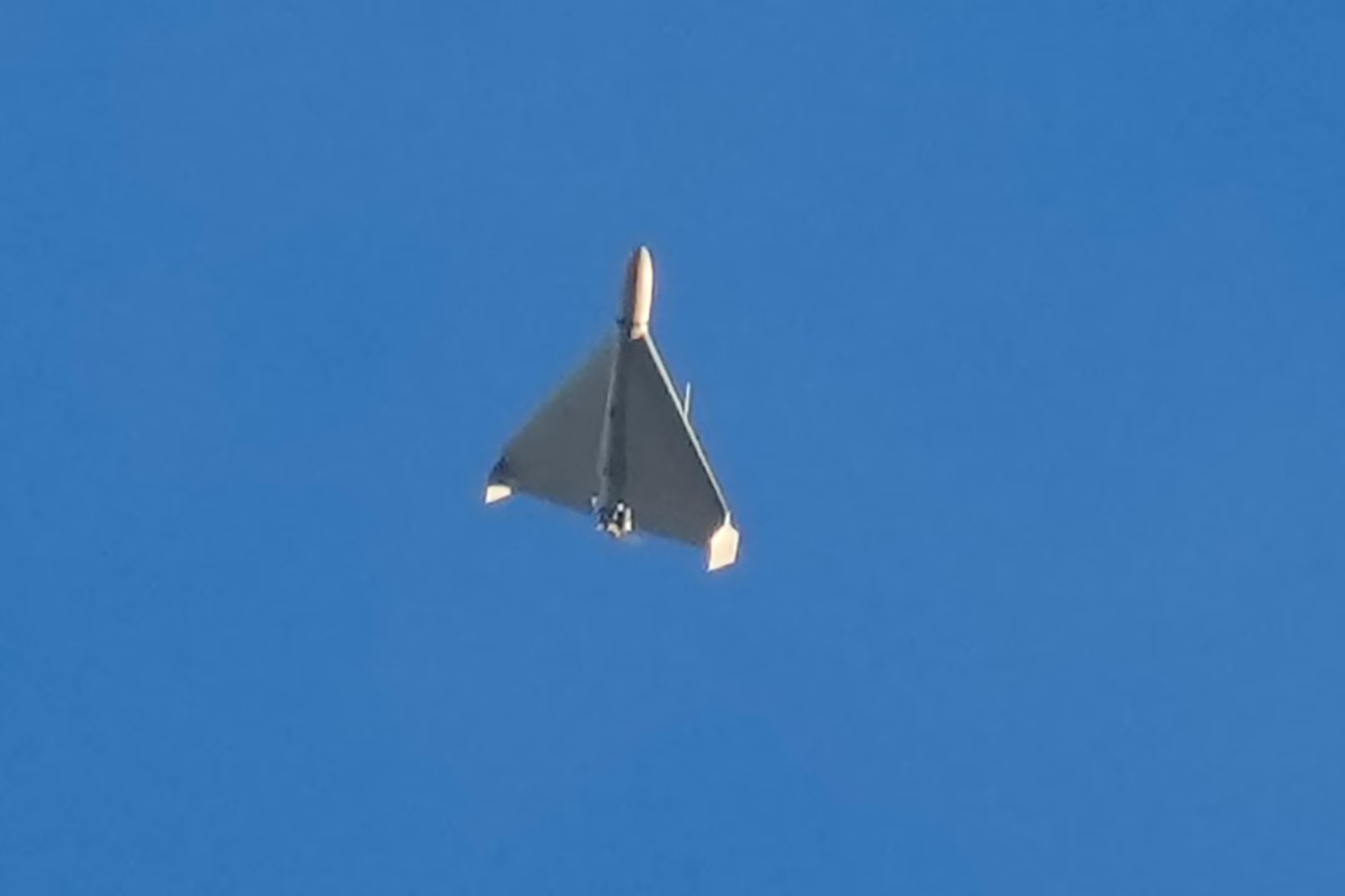
What he has not yet done is to order the RAF to strike against those sites. British fighters have been engaged only in the even more defensive action of stopping drones and missiles coming out of Iran once they are already in the air.
Kemi Badenoch asked on Wednesday why the RAF was not allowed to “destroy missile launch sites to defend British territory”.
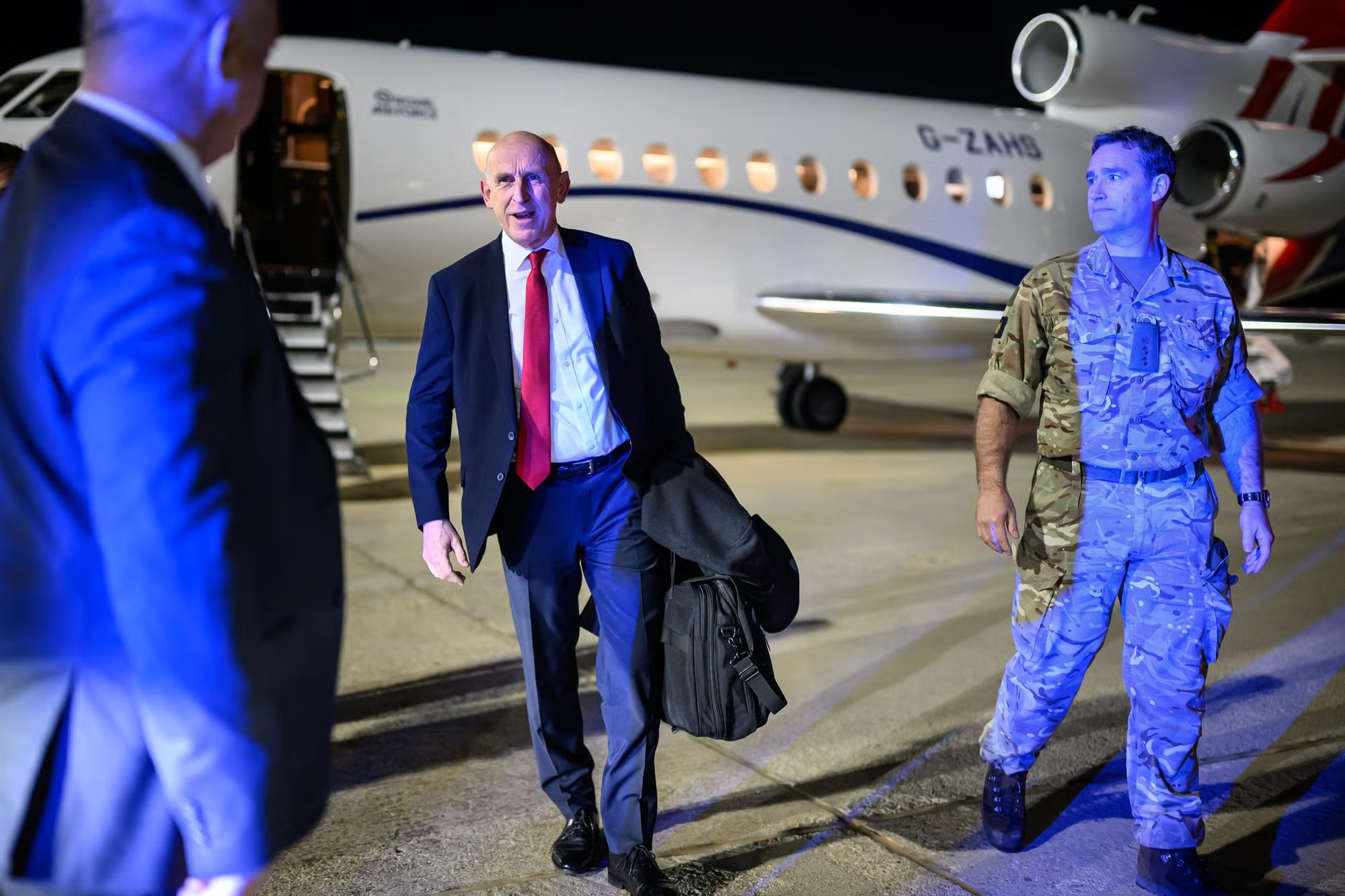
The prime minister did not answer – but John Healey, the defence secretary, last night refused to rule out a change to allow British forces to strike targets in Iran.
Today, David Lammy, the deputy prime minister, went a little further, saying “We can take down sites” in Iran ourselves – if we expect them to be “attacking our people”. He added: “It is my understanding that would be legal.”
Some of the doveish tendency in the Labour Party, such as Richard Burgon, think this confirms their warning of “mission creep”, dragging Britain deeper into war side by side with Donald Trump and Benjamin Netanyahu.
But it is consistent with what Starmer has said from the start, including at the National Security Council last Friday – hours before the first strikes against Iran on Saturday – according to the account leaked to Tim Shipman of The Spectator.
His position has always been that the initial US-Israeli strikes were unjustified, but that “once Iran starts firing missiles at its neighbours, we need to do everything we can to help prevent that”, as Shipman reported.
There is a difference between British forces undertaking operations in Iran and asking Americans and Israelis to do it for us, but strategically and legally the case for pre-emptive defensive action is the same, now that the Iranians have attacked British allies and put British citizens in danger.
What is striking is that Starmer’s approach to the Iran conflict is to rerun the Iraq war as if Robin Cook had been prime minister 23 years ago. Starmer has done precisely what thoughtful opponents of the Iraq invasion wanted at the time: they thought Britain should stand aside from the initial US military action, but offer to help with humanitarian aid and stabilisation afterwards.
Cook was no opponent of military intervention in principle, having been foreign secretary during the Sierra Leone and Kosovo actions, but he thought the invasion of Iraq lacked “a viable, thought-through plan”, as Starmer said of the initial US-Israeli attacks on Iran.
The end result would not have been very different, because George Bush was going to war anyway, but Britain would not have shared responsibility for the bloodshed and suffering.
The parallels are remarkable. It was often said in 2003, and since, that the US and Britain attacked the wrong country, because it was Iran that posed the greater threat to regional security. Iran, or its proxies, even managed to do what the Blair government was mocked for claiming Saddam Hussein might do, namely hit a British base on Cyprus with a missile.
The main difference, of course, is that President Trump is not planning a ground invasion of Iran – that would be a “waste of time”, he said last night. But the essential judgement of the mainstream of the Labour Party, shared with the centre ground of British public opinion, is that the US attack on Iran is unwise, but that defensive action against Iranian retaliation is justified.
As with Iraq, the arguments are often expressed in terms of international law, but the core case against the initial military action does not need to be stated in those terms: that its aims were unclear; that it wasn’t likely to help the Iranian people against their oppressive rulers; and that there were better ways to contain the regime’s threat to countries of the region, principally Israel.
Starmer’s slavish adherence to a high-minded, Doughty Street interpretation of international law is useful to him, however, because it is what the British people would have wanted of a Robin Cook government in 2003.
And what matters to Starmer above all is that he has learned the lesson that Tony Blair learned too late, which is that military action abroad is a bad idea if it is strongly opposed by public opinion at home.
Blair is said to have observed of the strikes on Iran: “If you’re fighting a bear, don’t leave it wounded.” But his conclusion will be different from Starmer’s. Blair would no doubt argue that Britain should help the US and Israel finish the job; Starmer is more likely to agree with the average British voter, who would say that it was unwise to wound the bear in the first place and that Britain should stay out of it.
Starmer will continue to try to manage the impossible ego of the US president, but the spirit of Robin Cook, supported by public opinion, ensures that he will not be dragged into standing shoulder to shoulder with President Trump in Iran.